




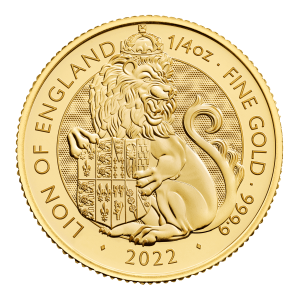
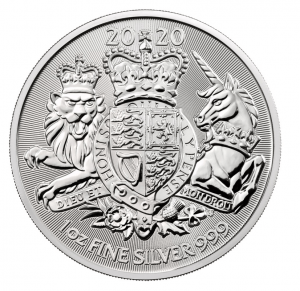


Choosing the right gold (or silver) dealer can make all the difference, both when it comes to credibility and reassurance and also when assessing the vital elements that can affect your investment return, such as coin selection and tax-efficiency.
New investors may hesitate to buy gold because they’re not sure how to go about it or who to trust. Should you buy gold online or should you buy gold in person?
Looking for a great online gold dealer? Read the 7 crucial considerations first
Online precious metals dealer
Buying online is the most efficient way to buy physical gold. Online gold brokers and dealers have access to larger suppliers of gold coins and gold bars and can offer safe delivery direct to your door or, if you prefer, secure storage at a reputable vault.
As online brokers avoid the hefty overheads associated with a traditional brick and mortar high street store, their prices are also likely to be more competitive due to the large volumes they handle.
However, when it comes to buying gold, it is of paramount importance to do proper due diligence before transferring your hard-earned money from your bank account. It is important to remember that even one bad transaction can cost you a lot of money as gold is an expensive purchase. It’s easier for rogue dealers to hide behind the anonymity of the internet, so it’s really up to you to do the proper background checks before entering into a transaction.

Buy gold online only through reputable dealers
Online reputation checking
Nowadays it’s easy to check the reputation of a company online.
There are many ways to do this. Firstly, you can look up a company on the companies house website and check how long they have been in business. For the ‘princely’ sum of £1, you can download information about the company, find out who the directors are and whether the company has been subject to any county court judgement (CCJ) or disciplinary action by the regulators. You can also check whether any of the directors of the company are on the list of disqualified directors. You can also check the credit report of the company, ensuring that its financial situation is stable and it’s safe to do business with. Lastly, look for customer reviews online, including social media sites to dig up any dirt there may be about the dealer. Don’t forget the power of word of mouth and if you know anyone who’s done business with a particular dealer, ask them about their experience.
Is this relevant to you?
A reputable dealer will also be able to help both experienced investors, looking for diversification, as well as those looking to own gold for the first time. There are many different types of gold and silver products, and you should decide which option is best to suit your financial objectives and appetite for risk. Your chosen dealer should be able to offer options such as Tax-free gold, pension gold and monthly savings. And when the time comes to sell your gold, they should guarantee to buy it back from you, which provides you with reassurance on the liquidity of your investment.
Watch “How to buy gold”, an instructional YouTube video from Physical Gold Ltd.
Taking Delivery
Most reputed online dealers will ship your purchase to your door with real-time online tracking. They should also provide insured shipping of your bullion. There are other options for taking delivery as well. You can opt for secure delivery to a reputed vault of your choice, where your bullion can be safely stored. Some online dealers will have a physical office or premises where you can personally take delivery of your gold by arrangement, with proper proof of identity. No matter what your chosen mode of delivery, your broker should furnish you with complete information about how you can receive delivery of your investment. They should also give you storage advice, where applicable.
A good place to start, when choosing a reputable, online gold dealer, is the British Numismatic Trade Association (BNTA), as they register all the trustworthy gold dealers in the UK. We’re also members of the British Numismatic Society, established since 1903 and it’s own set of strict by-laws.
As you can see, transparency is a key element in choosing a dealer and ensuring you have a hassle free transaction. When in doubt, it is important to clarify every point before pulling out your debit or credit card and making payment. A reliable and trustworthy broker will always provide you with the information you need and act in your interest to ascertain the safety of your gold investment.
Work with Physical Gold – a Reputable online gold dealer
If you’re interested in buying gold or silver and would like more information, visit www.physicalgold.com. Our contact details can be viewed at https://www.physicalgold.com/contact, you can call us on 020 7060 9992.
Image Credit: Geralt
Gold Investment
Gold has remained on top of the league tables as an investable asset class. It is considered by many to be a safe haven that hedges investor risks during times of trouble. Apart from this, the yellow metal has remained attractive as it generates steady returns over the long-term. Over the years, the industry has created different avenues for gold investment.
The different types of gold investments
There is now a raft of different gold investment types. Physical gold coins and bars provide maximum security and peace of mind but can be expensive if traded regularly. Electronic gold such as ETFs and online fractional ownership provide exposure to the gold market at smaller premiums but present some counterparty and leverage risks. Ownership of gold mining shares presents a slightly different investment risk but offers the potential for greater upside (and downside) if the company outperforms the market. Gold funds such as the Blackrock Gold & General spread the risk of share ownership amongst many mining companies but have ongoing management fees.
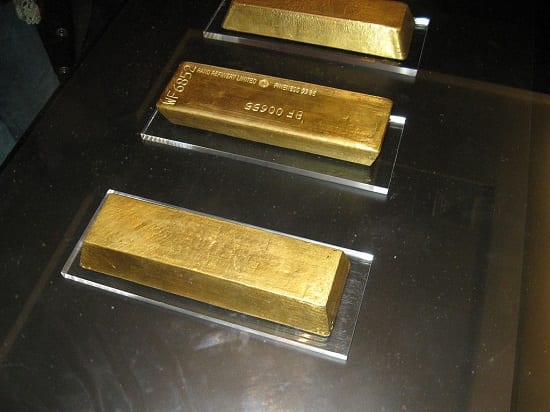
Physical gold provides safety to investors
Physical gold as an investment
It is a proven fact that human beings love to own gold in its physical state. There are certain advantages to this. Firstly, investments in gold bars and coins do not carry counterparty risks. When you buy any paper-based investment, such as stocks, mutual funds, bonds or derivatives, you open yourself up to counterparty risks. This is simply the risk of the underperformance of the company that issued the investment paper. When global stock markets are in turmoil, stocks of even blue-chip companies can crash. The value of your investment erodes considerably in no time and can even become worthless.
In this respect, gold provides you safety, as there is no counterparty involved. The only risk you face is that of safe storage. Of course, you must ensure that the precious metals you buy are delivered to you via an insured courier. You then need to make arrangements for storing them safely at home. This could mean investing in a purpose-built, robust safety vault. Such vaults can even be installed into the floorboards of your home, rendering them difficult to detect. Alternatively, you could opt for storage provided by a reputed dealer. In this case, please ensure that your gold is segregated and stored in an approved commercial vault, where it is free from damage, tampering or theft.

Gold mining companies issue stocks as a gold-related investment
Exchange-traded funds
A forum of paper gold investment is an exchange-traded fund (ETF). These funds issue you certificates for ownership of gold, without you actually owning it. However, you are once again faced with the issue of counterparty risk. Many companies that issue ETFs do not have sufficient gold reserves to back up the number of certificates they have issued. As a result, they may not be able to fulfil their payouts if several investors try to cash in their certificates due to the market crisis.
Gold mining shares
Mining shares are essentially shares issued by mining companies that did out gold from the Earth. By issuing these shares, they raise money from the capital markets, which funds their operations and capital purchase of equipment. But, like any other equity shares you may invest in, the performance of these shares and the returns they generate are dependent on numerous factors. Yields from the mines may slow down, resulting in the devaluation of the stock. The overall performance of the business itself can be a critical factor. Also, the state of the capital markets has an impact on the share value of these companies. So, as you can see there are myriad risks attached to these investments.
Talk to the experts at Physical Gold before planning your gold investments
Our gold market experts can help you make sound decisions when planning your investments. If you prefer to hold physical gold, our team can guide you on which bars and coins to buy and when. Call us on (020) 7060 9992 or simply get in touch with us online before investing your money into the market.
Image Credits: Wikimedia Commons and Wikimedia Commons
.jpg)

Best place to buy gold bullion
Everyone wants to own their own gold bars and coins. You only have to open the papers to read that traditional investments are flagging, and alternative assets should now play a part in everyone’s portfolio. Of course, it is common knowledge that savvy investors always turn to precious metals during times of economic uncertainty. Well, the global markets have had an unprecedented run – probably the longest spell of economic uncertainty ever since 2008. Well, if you look back at the gold price charts for 2011, you will see that at the peak of the crisis, everyone turned to gold. Infact, gold prices climbed to above $1900 for one troy ounce in August 2011.
Bullion prices set to rise
Right now, the news is probably getting worse. If the pundits are to be believed, over 12 years of economic uncertainty has now culminated in what looks like yet another possible global economic crash. The predictions of gloom and doom have now been in the news for a while. Europe has been neck-deep in economic crisis for a long time, driven by a number of factors, including fears of a hard Brexit. Now that Brexit has actually happened, the uncertainty has not gone away. Speculations are rife about how the new rules of engagement are likely to affect the already beleaguered European economy.
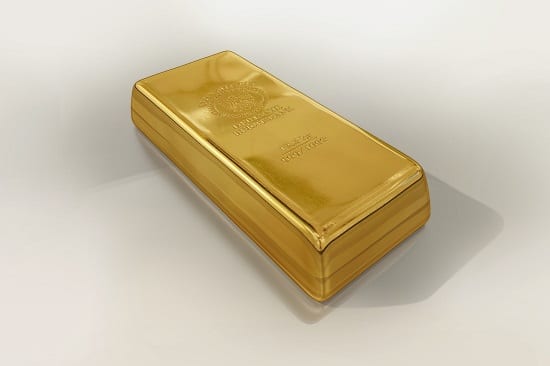
Gold bullion bars are attractive to investors due to lower production costs
Elsewhere in the world, regional political instability and the US-China trade war has created a boiling pot of economic turmoil that could destabilise the global economy once again. Already, gold prices have shot up to $ 1600 per Troy ounce. If we look back in history, this is usually an indicator of investors pulling out of the global capital markets and parking their money in gold.
Bullion once again a safe haven asset
Apart from the global economic downturn, this earlier period of the 2008 economic crisis witnessed a tumultuous time in the US economy, as the debt ceiling crisis unfolded. Due to this, investors lost confidence in the US dollar and turned to gold. Well, in the present day, apart from global geo-political tensions, uncertainty continues to rear its ugly head in the form of Brexit, as well as the unfolding US foreign policy. Once again, it’s time to turn to gold bullion, in order to hedge against the risks of a possible downturn in the global capital markets, as well as forex markets.
Thinking of buying gold bullion? Download our FREE Insiders Guide to gold investing here
The important part?
Just as important to know is that physical gold beats paper gold for security hands down. This is simply because paper gold companies often sell off their gold holdings when gold prices take a beating. Additionally, paper gold – aka ETFs carry counterparty risks. This simply means that the company that issued the paper certifying your investment in gold holdings can underperform and sink. If that were to happen, your paper gold investments are worth nothing. Many paper gold companies also issue gold bonds in excess of the actual physical gold holdings to back them up.
Ultimately, this undervalues your investment as there is now lesser gold to back up your paper certificate. So, if it’s physical gold that you should be buying, in form of gold bullion, it’s important to find out where one can get the best deals. But where is the best place to buy gold bullion?

To get a genuine deal, it’s important to buy bullion from a reputed dealer
Where should I buy gold bars and coins?
Many people we speak to ask us where the best place to buy gold bullion is and they often mention eBay. Clearly eBay is a wonderful marketplace to pick up some great prices on almost anything you may wish to buy. However I would strongly urge you never to buy gold bullion through eBay. Gold appeals because it reduces your overall risk of being hit by market downfalls and shocks. So why would you want to take on the huge risk of buying from eBay.
Unless you have very sophisticated testing equipment, there is no way of knowing the gold is genuine, its purity or quality. You are leaving yourself exposed to fraud. If you are happy that it is the right time to buy then the other consideration is price. Gold is not a great fit for eBay due to the associated PayPal fees. Any seller will have to factor these fees into their gold price and pass them onto yourself.
The Royal Mint
At the other end of the safety spectrum is The Royal Mint. The name itself provides the reassurance that your gold can be trusted and is of top quality and condition. The restriction with this avenue is that The Mint only sells new gold coins (such as the Sovereign or the Britannia), it doesn’t offer circulated coins or gold bullion at all. So if you’re looking for tax free gold coins then The Royal Mint can certainly offer you pretty coins. However, if gold investment is your main driving force, then this is an extremely expensive option. You will essentially be receiving far less gold for your money than if you source the gold elsewhere. You cannot sell the gold back to the Mint so to realise a profit on your gold investment you will need to sell at the prevailing rate to a gold dealer. Paying this initial premium on the gold will severely hamper your returns. However, I’d say that The Mint are a decent source for obtaining presents for a family as some of their coins come in wonderfully packaged boxes, albeit at inflated prices. They also offer a huge number of collectors’ editions if that’s your interest.
Overall best place to buy gold bullion?
A source you can trust to obtain top quality gold bullion,
at competitive prices and you can also sell back to them when you need? The answer is a UK gold dealer. The best place to start is the British Numismatic Trade Association (BNTA) who registers all the trustworthy gold dealers in the UK. If dealers are a member of this association, they need to adhere to a strict code of ethics, and you will have a dispute process should their service and goods fall below this code. Generally, you will have a decent choice of gold bullion and coins with a dealer, depending on their area of speciality. Some may focus on numismatic or collectors’ coins, while others focus on investment gold coins and bars. Prices are very competitive (particularly for bulk deals) or buying a kilo gold bar and crucially they may be able to provide access to circulated tax free gold coins which provide the best value of all. You will receive full documentation with any good dealer and even benefit from market guidance on the gold price and types of gold.

Bullion coins are easily available at low premiums
Identifying a reputed gold dealer
Many investors are daunted at the prospect of looking for a trustworthy gold dealer. However, this can be a simple task if a common-sense based approach is followed. As explained earlier, the BNTA can be an excellent starting point. As a regulatory body in the industry, they have a verified list of several gold dealers in the country. The first step is to select a few dealers from that list and vet them yourself, before trading.
Remember, online dealers, are likely to provide you with a larger catalogue of products than the traditional high street gold dealer, who may offer you limited choices. It’s also easier to check the market reputation of an online dealer via the Internet. If the business has had a long track record of being in the market, they are likely to have several customers who have posted reviews online. Going through these reviews would give you an idea of the trust factor of each dealer.
Communication is key
Calling the dealer is an excellent idea and any reputed dealer worth its salt will be open to answering any questions that you may have regarding investments. They would also be able to offer you a buyback scheme and documents guaranteeing the quality of the gold they’re selling. Of course, if the dealer refuses to buyback what they’re offering, clearly something could be wrong. Most reputed dealers would also offer you the option of storing your gold with them in an LBMA approved vault. They would also offer you a secure, insured delivery option in the event you choose to collect the gold at your home. Once you’ve gone through these steps, you’re likely to shortlist a couple of reputed online dealers whom you can start doing business with.
Get in touch with us for advice on identifying a specialist gold dealer
So next time you’re looking to buy gold, look no further than a specialist gold dealer. The Physical Gold investment experts can help you identify specialist gold and silver investments. To speak with our investment experts, please call on 020 7060 9992 or get in touch with us online. Our team of experts are always on hand to assist you in making the right investment decision. Start off modestly, perhaps with 1oz or 100g gold bars. It’s the best call you’ll ever make. Also, why not read our beginners guide to buying gold, here?
Image credits: Matthias Wewering and Brett Hondow
Physical gold is a much sought-after asset class that is coveted by investors all over the world. But how do you buy and sell gold if you’re a complete newbie to the gold business? If you’re going to build a gold portfolio, you’re going to need a substantial sum of money to make it happen. So, how do you avoid the common pitfalls that scores of investors fall for? Well, a great start is to discover all the gold trade terminology that is in vogue, so you don’t get caught on the wrong foot.
Our 7 step Cheat Sheet highlights all the important considerations before buying Gold. Download FREE

Ascertaining purity is an important step in the gold buying process
Carats (karats)
The purity of gold is measured in karats. It is a measure of the fineness,
or purity of gold for 24 parts, which is considered to be 100%. The standard has been long adopted by the US federal law. 24 karat gold is very difficult to obtain and the label is allowed only for 99.95% purity of gold. Normally 22 karat signifies a purity of 91.66% – 95.83%. Gold jewellery is normally made out of 14k gold which indicates a purity of 58.33%, or 18k (75%).
Troy ounce
The spot prices of gold, as determined by the New York based COMEX exchange sets the price of gold in USD per troy ounce. This simple measure indicates the weight of gold and has nothing to do with the purity.
Authenticity hallmark
Gold jewellery follows an international standard, referred to as ‘hallmark’. These are numbers which indicate a measure of purity. For example, the number 22K916 indicates that the item contains 22k gold with a purity of 91.6%. Similarly, 14K585 means 14k gold with 58.5% purity. In the UK, hallmarking is conducted by the Assay Office, while South East Asia follows the BIS hallmark system.
Gold units of measure
The weight of gold is not measured in troy ounces across the world. Different geographical regions have different ways of measuring gold. While the troy ounce is the accepted unit of measure for gold in the West, parts of South East Asia, including India – the second largest consumer of gold in the world, measure gold differently. Grams or Tolas are the preferred unit of measure in South East Asia. When compared, 1 Tola equals 11.33 grams, while 1 troy ounce = 31.1 grams.

South East Asian nations are some of the world’s largest consumers of physical gold
Gold Colour
When we think of gold, a deep yellow colour comes to mind. However, this is far from the truth, as gold is available in different colours. Apart from the traditional yellow coloured gold, the precious metal is available in white, which can be manufactured using 2 different routes. The first one is an alloy of gold and nickel, which creates a white appearance. However, gold is often used in conjunction with Rhodium, to achieve a polished white exterior and also create a hard surface which is extremely durable. Rose or pink gold, on the other hand, is an alloy of gold and copper, while green gold is made out of gold and silver. Yet another relatively rare colour of gold is purple.
Numismatics
The term refers to the collection of coins. The value of collectable coins (e.g. Gold Sovereigns) differs greatly from the price pertaining to its weight in gold. Demand from collectors and the rarity of the coin determines its value. The authenticity and value of collectible coins are certified by the Numismatics Guaranty Corporation or the Professional Coin Grading Service (PCGS).
Call our team of experts to know more about investing in gold
Investing in gold can be a daunting experience is you’re just starting out. However, you can benefit from speaking our team of experts who can guide you on the best way to invest in gold, particularly bulk purchases. Please call us on 020 7060 9992 or get in touch with us online. We are always willing to help.
Image credits: Michael Steinberg and Gopal Vijayaraghavan
As with all other commodities, buying gold in bulk can have significant price advantages when compared to smaller retail purchases that most investors make. How does this work? After all, gold bullion is traded internationally on spot prices set by the COMEX exchange in New York.
Advantages of buying gold in bulk
It’s true that whether you buy large or small quantities of gold, you still need to buy it at the current spot price. However, there are significant advantages to buying anything in bulk. This is a principle known as economies of scale. Bulk or wholesale buying always favours retailers, as they are able to gain certain price advantages based on the entire deal and then offer discounts to retail customers when selling off their stock.
Download the FREE Cheat Sheet to buying gold now
Here’s the deal….
Cost savings when buying in bulk
In the same way, buying coins and bars in bulk allows the buyer to benefit from significant savings on factors such as admin fees, shipping, insurance, packaging, etc. These are costs that any buyer incurs even if they are buying smaller quantities, however, when these costs are spread over larger volumes, they are much lower per ounce of gold. The cost of insurance greatly reduces per ounce, while a bulk purchase may well attract free shipping. This creates price advantages and the buyer can enjoy greater savings on every shipment.
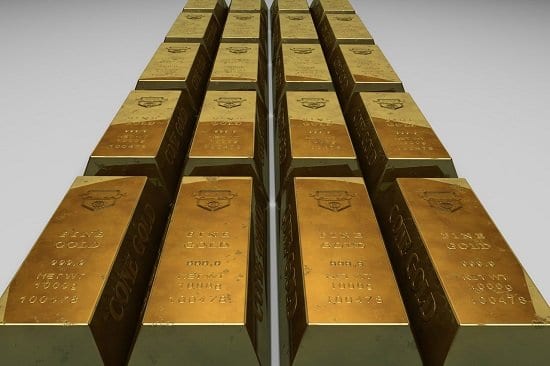
Bulk buying of gold can create advantages in pricing due to economies of scale
Buying gold in bulk
Gold bars are manufactured in the global mints and gold coins are struck there too. So, this can be the first port of call when buying gold in bulk. The Perth Mint or the US Mint would sell gold in bulk, provided the buyer meets certain criteria.
For example, the United States Mint insists that a wholesale customer must be a licensed trader of numismatic coins, precious metals or a registered financial institution. Even if the buyer meets these conditions, the mint would first check the financials of the company, including its standing in the market. Therefore, most individual buyers would not qualify and transactions would be restricted to trade only.
The Perth Mint is, infact, looking for global distributors for their bullion products, but similar conditions apply. The purchasing entity/company needs to show ‘a significant track record of success’ in the precious metals, numismatics or gold bullion investment industry. Another option could be gold retailers who are operating an online store and may be interested in a large volume transaction.
At Physical Gold, our online store offers certain products in bulk and even offer bulk discounts on them. For example, our Metalor 100g VAT free gold bars with a fineness of 999.9 is available for bulk purchases. At the current gold prices, one bar would cost you £5,100, but if you buy in excess of a hundred, the price drops to £5,072. That’s a saving of £28 per bar. So if you were to buy, let’s say, 150 bars, you would save £4,200. You may also like to view our 1oz and 1KG gold bars too.
Similarly, you can order bullion gold coins like Sovereigns or Britannias in quantities of above 500 and avail of discounts.
If you are buying gold in bulk, find out “How much is a gold bar worth?” in our YouTube video.
The website even has a feature by which you can set an alert to buy at a certain price. Once the price falls to that level, an automatic notification will be generated and you can complete your purchase.

Homework and due diligence goes a long way in ensuring that the gold you buy is genuine
Homework and due diligence
Gold prices change all the time and as a serious buyer of gold, especially if you are interested in buying in bulk, it’s important to be aware of the current prices. Once you have done your homework and identified the right wholesale bullion dealers you want to trade with, you should call them and discuss the spot price and talk about the best deal they can give you on different volumes.
All retailers and wholesalers worth their salt will always
have a bullion expert you can speak with. If the company doesn’t have a number you can call and only wants you to get in touch online, there’ s something fishy and you should steer clear of such dealers. It’s equally important to research the subject of buying gold at your own end and finding out the dos and don’ts. Another great way to check if your dealer is legit is to look up their reviews and ratings online. If customers have been scammed earlier, they’re sure to report it on review sites and social media. If the dealer’s online reputation is mud, steer clear.
Call our bullion experts to find out more about buying in bulk
Our team of bullion experts are always happy to help and we’re just a phone call away. Call us on 020 7060 9992 and speak with our experts. You can also drop us an email and we’ll call you right back. With the right advice, you can make an informed decision about buying gold or buying silver in bulk or ETF and hopefully, your investments will bear fruit in the years to come.
Image credits: Pixabay and Michael Steinberg
Is it a good time to buy gold as an investment?
The phrase we hear more often than any is; “Is now a good time to buy gold?”. I’ll address that in this update.
One good phrase for timing the gold market is; “Its not the timing of the market, but time in the market”. Trying to buy at the bottom and sell at the top may sound like a wise strategy, but in reality it’s impossible and can lead to reducing your returns and security. The fact is that holding gold over the long term has proven over the years to provide a secure storage of wealth and outperform inflation.
But I don’t want to just beat inflation, I want big returns…..
It’s human nature to want to beat inflation by a large margin and gain more substantial returns. So timing in and out of the market plays a role in achieving this.

Add gold to your portfolio
While it’s impossible to predict the future, despite many so-called market experts making gold price predictions, timing is about stacking the odds in your favour. This means you look at market fundamentals and choose to invest in assets which look most likely to perform well.
While allocating your money into different asset classes is always recommended, it’s fair to say that now seems like a good time to buy gold.
Because gold has such a long history, we’re able to see how gold has performed before to help predict how it might perform over the next few years.
The gold price has almost always risen in times of severe economic downturns.
Are we heading into an economic downturn?
Even before the pandemic, markets were overheated and global debt at record highs. Since Covid took hold, Governments around the world have opted to print more fiat money to support their suffering communities in the form of furlough support. Now, nearly 2 years on from the start, there seems to be a lethal cocktail mixing which could lead to the mother of all recessions.

With financial markets, there is always an element of counterparty risk
The following ingredients are now in play;
- Inflation is rising quickly around the world. This is expected when Quantitative Easing programs around the world have been operating at full tilt. Increase the supply of a currency, and it’s value will fall. But we’re also witnessing inflation from broken supply chains. Petrol, building materials, electronic components for cars, food, carbon dioxide, the list goes on. They are all contributing to prices rising at alarming rates. Consequence; Money in the bank is losing value every day. The cost of living is rising. Interest rates will rise soon, increasing mortgage payments for many.
- Tax hikes are being put in place to try to reduce (or more realistically stem) the spiralling debt. This can be in the form of increasing National Insurance, reduced tax free thresholds for taxes like Capital Gains, and reduced welfare. Consequence: Less disposable income for the average person means economic growth will be strangled
- Continued restrictions are dampening trade. Travel limitations and business restrictions are preventing businesses getting back to anywhere near full capacity. High streets are quiet and shops are closing. Furloughing has ended so the safety net is now gone. Consequences: We’re likely to see a spike in companies going under and individuals losing their jobs
- Equity and property markets will likely fall in response to negative growth, poor company performance and less ability to afford to move home.
- Continued uncertainty will dampen consumer and corporate confidence. With further spikes in Covid cases, potential further lockdowns and possible ‘long-Covid’ consequences, companies will limit investment and consumers spend less.
How is gold supply and demand at the moment?
During the height of the pandemic, we saw enquiries increase around 700% year on year. That initial rush has calmed, but demand from new investors now seeking the security and protection gold offers as a safe haven, continues to grow. Overall demand remains above pre-pandemic levels and we expect this to rise as recession kicks in.
Institutional money will also increase gold holdings as many competing asset classes suffer. They will look to move allocations out of stocks, bonds and cash, and into gold.
And gold supply….?
Supply of new coins and bars is managing to keep pace with demand. However, due to very few gold holders wishing to sell, we still see huge shortages in the secondary market. It has now been 2 years since we saw decent amounts of sellers in the markets. With the looming economic difficulties ahead, I can’t envisage this changing anytime soon. Premiums on many gold coins are increasing.

Shortage of pre-owned gold coins
Where is the gold price?
As of the time of writing (November 2021), the gold price is moving upwards. It remains more than 10% below it’s all time high in 2020, but has gained around 8% in the past month, as momentum builds.
This was expected as we moved out of the furlough support and inflation began to take hold. While we can’t predict with certainty where the gold price will move in the short term, it seems that now represents good value.
With all these elements working together and interest rates likely to rise for the first time in a decade, it seems like now is a good time to be buying gold.
[button size=”medium” style=”primary” text=”Shop Tax Free Gold” link=”https://www.physicalgold.com/gold-coins/” target=”_blank”]

Gold or Diamonds?
Investors often wonder about asset class diversification. When it comes to holding physical assets, of course, there are precious metals. But, what about precious stones? The Queen of all precious stones is the diamond and has been immortalised in song for decades. Dame Shirley Bassey sang – ‘Diamonds are Forever’. Jim Croce sang about a big diamond ring in his song, ‘Big Bad Leroy Brown’. Of course, the Beatles sang, “I’ll buy you a diamond ring, my friend …” So, should you be investing in diamonds? Is it likely to be a better investment than gold?
Unless you’re an expert with years of experience, diamond investment poses huge risks that you could pay over the odds. The diamond market is also far less liquid than the gold market, meaning you may not get the price you want when it comes to selling, and it may take some time. Gold is a far more structured marketplace with transparent pricing and dealers who can help guide you. Gains can be large with diamonds, but gold acts more like a market hedge and security.

The Jacob Diamond is the fifth largest diamond in the world and belongs to the Nizam of Hyderabad, India
Ethical issues
The diamond market has had its fair share of negative publicity, owing to ethical issues of exploitation of poor labourers and employment of children in the industry. The ‘blood diamonds’ controversy is still around and imports of diamonds to the UK and the European Union from South Africa and other diamond producing countries is highly regulated. As an investor, you need to be abreast of these issues surrounding the trade. Gold, on the other hand, does not have this kind of controversial social impact. It has been around for thousands of years and currently, the gold market is extremely transparent and structured.
Intrinsic value
Physical gold investments have an intrinsic value that has been around for thousands of years. Gold is perceived as a repository of value and a safe haven during times of economic adversity. Other asset classes do provide quick returns over the short term. However, there is a good degree of volatility associated with these. Gold is seen as a stable, solid precious metal that has intrinsic value and delivers healthy returns over the long-term. Let us consider the global stock markets. During a stock market crash, the value of your investments can fall to zero. But, this can never happen to gold.
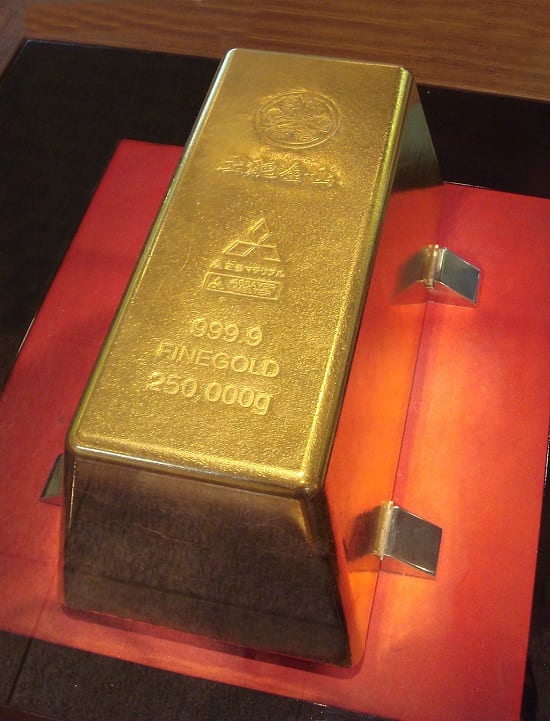
This 250kg gold bar could well be one of the largest in the world
The rising price of gold
As the world stands on the precipice of another major economic crisis, the spot price of gold has already crossed $ 1800 per ounce. So, we are coming close to the peak price of gold, which was achieved at the height of the last recession in 2011. At the time, gold touched an all-time high of $ 1917.90 per ounce. These price rises are driven by investors rushing to hedge their risks and moved their money to gold. As an investor, if you had invested in gold even a year ago, you could already be raking in profits. Of course, gold can provide stability and balance to your portfolio and ensure your investments against adversity. Gold investments can also protect you against market forces like inflation.
Tax benefits
As a UK investor, you can reap good benefits by investing in gold. Gold bars and coins are available in the UK are VAT-free, as they are manufactured using investment-grade gold. Coins that are legal tender in the country also offer the added advantage of the exemption from Capital Gains Tax. Investments in precious stones like diamonds do not carry such benefits.
Contact Physical Gold for more information
If you are wondering how to diversify your investments across asset classes, please call our investment team. A member of our team can assist you with an impartial perspective on the right investments to make and also discussed the merits and demerits of investing in diamonds. Call us today on (020) 7060 9992 or drop us a line via our website.
Image credits: Wikimedia Commons and Wikimedia Commons


What are fractional gold coins?
The term fractional gold refers to coins that have less than one troy ounce of gold in them. Most numismatists will tell you that coin releases undertaken by large mints around the world include sizes that have less than one troy ounce of gold. The one exception may be the world-renowned Sovereign coin which weighs approximately a quarter of an ounce. Being a ‘full’ Sovereign, it tends not to be referred to as fractional.
When we think about it, it seems like an awfully small amount of gold. So, why should anyone want to invest in fractional gold? Are there any advantages or disadvantages? Why is fractional gold considered to be a hot investment category?
In this article, we will discuss the pros and cons related to buying fractional gold.
What type of fractional gold coins are available?
Most major precious metals mints will produce fractional versions of their flagship one ounce gold coin. Examples of well-known fractional coins from around the world are Krugerrands, Maple Leaf coins, Philharmonics, Eagles and Nuggets. Alongside the 1oz gold coin, there will usually be versions made in half ounce, quarter ounce and tenth ounce weights. Some mints even produce tiny 1/20 oz fractional gold coin. Usually, mintage volumes of fractional coins are far lower than the original 1oz version.
For UK investors seeking to be tax efficient and buy UK coins, there are a number of fractional UK gold coins available.
- Gold Britannia 1/2oz, 1/4oz, 1/10oz
- Gold Half Sovereign, Gold Quarter Sovereign
- Gold Queen’s Beasts 1/4oz
- Gold Tudor Beasts 1/4oz
- Gold Lunar 1/4oz, 1/10oz (limited)
Pros of investing in fractional gold
Its worth considering buying fractional gold coins for several reasons. With gold’s popularity with retail investors growing each year, demand for smaller fractional coins is also increasing. Their many benefits appeal to smaller investors and collectors and mints have responded by producing more fractional coin varieties.
Price
Well, the simplest factor that comes to mind is, of course, the price of the gold. Needless to say, larger and heavier coins are way more expensive. If you’re a numismatist or a hobbyist, you may not want to commit very large sums of money while spending on building your collection. Fractional gold coins allow you to build a collection without breaking the bank.
Download our FREE 7 step cheatsheet to buying gold coins here
Ideal and affordable gifts
Buying gold for a loved one as a gift is becoming more popular as it’s a thoughtful gift which is aesthetically appealing and interesting. With one-ounce gold coins costing upwards of £1,600, these coins can prove too expensive for most gift buyers. The fractional gold coin versions offer the ideal affordable gift option for birthdays, Christmas and special events.
Building your own collection
Building your collection from scratch can be an absorbing experience. So, that’s all the more reason why you need to get more bang for the buck. Investing in fractional gold coins will mean that you’re buying your bullion in smaller sizes and can, therefore, acquire more for the same price. If you keep at it, over and over the years, your collection will grow and you could have a formidable gold coin collection.
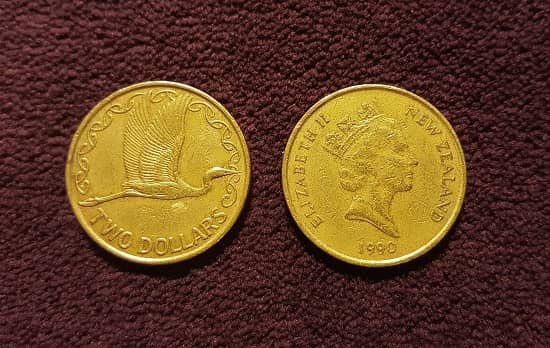
Fractional coins have less than an ounce of gold
Trading in your gold coins
Many collectors frequently sell a few gold coins for a bit of liquidity and cash flow. Fractional gold coins are ideal for this purpose, as it is possible to trade in them without selling off the more expensive coins from your collection. This is why some collectors like to invest in fractional gold coins.
Easy liquidity
Numismatists all over the world are constantly on the lookout for trading opportunities that can help them acquire better coins for their collections. In terms of liquidity, fractional gold coins are great as they offer good bartering opportunities, which is not always possible with gold coins that contain a higher amount of gold, with a larger value.
Cashing in on the higher demand for gold
As the price of gold rises, the value of your fractional gold coins is also likely to increase. As discussed earlier, fractional gold coins are typically cheaper to buy and so, investors looking to make quick returns from the price of gold would buy these coins when the price of gold falls. Later on, as the price rises, they can cash in these coins and get quick returns.

Many investors like to trade in fractional coins due to its price advantage
Hedging against the risk of economic uncertainty
Gold investors are always looking to hedge their risks in the event of a global economic crash. However, liquidity is also an important factor. In the event of a global economic meltdown, most investors would move to gold and the price of gold would rise swiftly, as it did in 2011. At a time like this, if an investor wants to free up some of their capital, fractional coins are ideal as they can be sold to raise funds for smaller purchases. Selling a large amount of gold is not always ideal as the investor may not want to liquidate large amounts of gold, when not required.
Disadvantages of investing in fractional gold coins
Although it might seem that
investing in fractional gold coins is a smart idea for investors, these investments also carry certain risks.
Higher mark-up price
As mints produce large amounts of gold coins, their setup cost for manufacturing these are typically more expensive when it comes to producing gold coins that contain less than an ounce of gold. Usually, 1-ounce gold coins are available at the best price. Therefore, fractional gold coins would always have a higher mark-up price when compared to other gold coins produced by the same mint.
Premium prices
Mints often charge mark-up’s that range between 9 to 15% on fractional gold coins. Many investors see this as an undesirable factor, as the mark-up is not recoverable when trading in the coins.
Talk to our gold experts before you buy fractional gold coins
At Physical Gold, our gold experts have many years of experience in being able to advise investors on products that are ideal for building a gold portfolio, while maximising the opportunity to invest at the best possible capital layout. Call us now on 020 7060 9992 or get in touch with us online to speak with a member of our team. We would always be happy to discuss your investment plans with you and advise you on the best products that suit your investment goals, no matter how small your requirement.
Image credits: Pexels and Pixabay
Many investors who believe in precious metals would look for an alternative to gold at some point in time. Usually, this is silver. Silver is far cheaper than gold and offers precious metal investors an easy entry into the market. However, in recent years, the popularity of platinum has risen. Several jewellery brands manufacture platinum pendants and rings. Many people love the mirror-like finish of platinum and its colour. So, does it make sense to invest in Platinum?
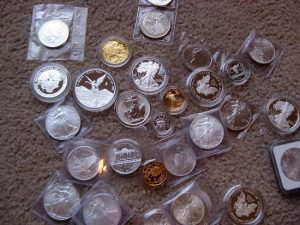
A mix of platinum, gold and silver coins
What is Platinum?
Platinum is a white metal that can be found naturally on our planet. It is rarer than gold and its value and demand have appreciated over the years. Platinum has certain characteristics that are different from gold. The white metal is heavier and harder than gold. Since it is less malleable than gold, it can be used in a pure form when manufacturing bars, coins, or jewellery. Today, platinum jewellery is a lot more expensive than gold jewellery.
Platinum is also virtually scratch-proof. Gold does not have this property. When gold objects are handled roughly, they get damaged and scratched. Due to their hardness, platinum objects are virtually scratch-resistant, but they may develop small bumps and ridges. This ridging of platinum is natural, and many people believe that it lends an antique look to platinum products.
Investing in Platinum
Traditionally platinum has traded at a higher price than gold, but this dynamic has reversed in recent years. You could argue that platinum represents great value in that respect. However, the platinum investment market is far less developed than gold. This means that there’s considerably less choice in products to buy and more importantly, spreads between buying and selling prices are less competitive and therefore wider than with gold investment.

Gold enjoys a more regulated and vibrant global market
The price of Platinum
The other advantage of investing in gold instead of platinum is usually the price point. Historically, platinum has been more expensive than gold. However, with the rush of investors to buy gold to protect their wealth, gold prices are currently trading at US$1,780 per ounce.
In comparison, the current price of platinum is around US$1,214 per ounce. So, in the current scenario, platinum is more than $500 cheaper than gold. Many investors are therefore investing in platinum to take advantage of these price points. Platinum price charts are showing that the white metal was trading below the $800 mark in April last year. Since then, it reached a peak price of US$1,296 per ounce in February this year. So, the price of platinum is also being driven by investor demand.
The Ultimate Insiders Guide to Tax Free Gold Investment. Download the FREE guide here
Advantages of gold over platinum
Gold enjoys greater liquidity than platinum and is a lot easier to buy and sell. The gold markets are vibrant and present in every part of the world. It is a more regulated market, allowing investors to buy and sell with greater transparency. Due to the popularity of platinum, the Royal Mint has issued a platinum Britannia coin. However, gold coins offer greater flexibility, divisibility, and liquidity. Classic gold coins like the gold Sovereign have been around for more than two centuries and carry great prestige and rarity value. This cannot be found in platinum investments.
Talk to Physical Gold about your precious metal investments
Physical Gold is one of the most reputed precious metal dealers in the UK. We can offer you the right advice on which precious metal is to invest in. Get in touch with us on (020) 7060 9992 or contact us online by visiting our website.
Image credits: Eric Golub and Pxhere