






Property ownership has always been the holy grail of most UK residents. As a country, we are seen as a nation of property owners. In many ways, this makes sense. After all, why should you rent a property to provide an income for a landlord, if you can acquire your own? Over the last three decades, this sentiment has been targeted by mortgage providers and banks.
Easy property acquisition
The late 80s, 90s and early 2000s were a time when mortgages could be acquired for next to nothing. Banks were willing to fund up to 95% of the value of the property, with easy terms of payback. Many people re-mortgaged their properties after paying back the loan, to simply acquire capital based on the equity value that the property had accrued. However, the 2008 financial crisis and the decade that followed has made property acquisition more difficult. Now, the property that you bought and you’re living in cannot be considered an investment. An investment property is usually a second property that you have purchased to rent out and make profits on its equity value, as property prices rise. Of course, the increments in value would vary on the location and size of the property.

The UK is a country of homeowners
Comparing gold investments with properties
Both are asset classes worth considering when constructing a portfolio. Due to the physical nature of the assets, both are tangible investments that do not carry counterparty risks. However, the two asset classes behave quite differently. Property markets are subject to volatility depending on the economic situation in the country. The 2008 financial crisis was triggered off in the US when large numbers of people defaulted on their sub-prime mortgages. Banks and mortgage providers are not in the core business of buying and selling property. Therefore, when a large number of foreclosures happen, the bank is stuck with all these properties and the value plummets fast.
Property investments also carry additional costs like council tax, if not rented and maintenance costs. However, gold investments do not have any counterparty risks or maintenance costs. Also, the sale of a property may take a substantial amount of time, while gold enjoys far greater liquidity and the returns are immediate. Both investments tend to appeal to the same people as they share their tangible nature and appeal to those worried about the true value of paper assets. Both perform extremely well over the long term but can be volatile. This volatility can provide buying opportunities in both gold and property investment. The UK property market has taken a significant hit recently.

Gold investments are free from capital market downturns
Property markets react adversely to an economic crisis
Property markets are prone to devaluation when the country’s economy is plunged into crisis. Gold, on the other hand, has an inverse relationship with poorly performing stock markets, money markets and the economy. When the world goes into crisis, investors move to gold. This is evident from the gold peaks that we witnessed during 2011 and 2020. Therefore, we can surmise that investments in an immovable asset class like real estate carry greater disadvantages than gold investments.
Discuss your investment strategy with Physical Gold
Physical Gold is one of the most reputed UK gold dealers, and the company’s investment team offers free advice to investors on the right asset classes to invest in. Call us today on (020) 7060 9992. Alternatively, you can also reach our investment team by getting in touch online via our website. We look forward to hearing from you.
Image credits: ChrisGoldNY and Pixnio
While some investors prefer gold coins, others prefer gold bars. Gold bars can be a great repository of value and they are a vehicle for investors who believe in owning a tangible asset like a chunk of gold, in the form of a gold bar. Let us now explore why gold bars can be a great addition to your portfolio and where to buy them.
Advantages of investing in a gold bar
Gold bars present an attractive value proposition for investors because they provide an opportunity to buy gold at a lower price per gram. This is possible because the manufacturing costs of producing a gold bar is lesser than minting a coin. Gold bars do not carry an intricate design element.
The bars are produced by pouring liquid gold into a mould, and the purity value and the refiner stamp is engraved on the bar. Gold bars also come in a variety of sizes and weights. There are large gold bars that can weigh a kilo. However, if you are buying gold bars to strengthen your portfolio, it is better to invest in smaller bars than larger ones. This creates divisibility, variety, and liquidity for your portfolio.
This approach can provide advantages when selling. Investing in a large gold bar like a kilo simply means that you have to let go of a large quantity of gold at a single price point in the market. However, selling smaller bars allows you to take advantage of the price movements and generate better profits.
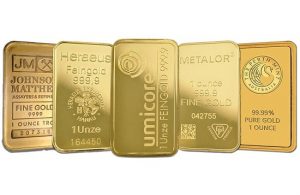
Gold bars offer investment-grade gold at a lower price per gram
Avoid premium brands
Premium brands like PAMP or Metalor can be attractive to investors, however, remember that you are paying a premium simply for the brand name. When buying a gold bar, the only things you need to check are the refiner stamp, serial number, weight, and purity value. It’s often a good idea to invest in pre-owned bars, as they provide better value for money with the same gold content.
Where should you go to buy a gold bar?
There are many options available to investors if they wish to purchase a gold bar. There are high-street gold dealers or jewellers who can sell you a gold bar. Alternatively, you can also find gold bars on auction sites like eBay. But, should you buy an important and valuable investment product from these sources?

Investment-grade gold bars are VAT free in the UK
Gold investment bars should be bought from a professional dealer only. If you want to buy gold bullion bars, then they should also come with a serial number, be certified and have a purity of 999.9 at least. Don’t be tempted to buy lower grade bars or from eBay. Finding a reputed UK gold dealer is the first step you should take when buying a gold bar for investment.
How can you identify a reputed UK gold dealer??
Most reputed gold dealers in the UK will be registered with the British Numismatic Trade Association (BNTA). So, by visiting their website, you can easily shortlist several reputed gold dealers near you. The next step is to call them and find out if they provide a certificate of authenticity and a buyback scheme. Most reputed dealers will also offer free advice for you to buy the best gold bars.
Talk to Physical Gold about buying your gold bars
Physical Gold is a highly reputed UK gold dealer and the company’s investment team offers free advice on buying gold bars to investors like you. Call us on (020) 7060 9992 or reach out to us online via our website. Our investment team will be happy to answer your queries and advise you on buying the right gold bars for your portfolio.
Image credits: Wikimedia Commons and hamiltonleen

Gold coins have been a source of great attraction for many individuals over the centuries. Numismatists who collect gold coins are thrilled with the idea of acquiring a precious and rare gold coin. Investors choose to buy gold bullion coins due to the returns they can make on their investments. Of course, there are certain compelling advantages to buying gold coins.
They are easy to store and often come packaged in monster boxes. They provide divisibility to an investor’s gold portfolio. Also, they have a certain aesthetic value, which many investors prefer over gold bars. However, if you’re thinking of investing in gold coins, there are certain parameters to be aware of.

Gold coins are a fascinating investment
Checking gold coin authenticity
How will you know that the gold coins, you have just invested in are authentic? You will need the services of a gold expert who can certify the authenticity of the coins. But, there are certain checks you can do at home that can help you decide whether the coins are genuine or not. Gold, like other precious metals, has a high density. Therefore, the size of the coin would depend on its weight.
If the gold content of the coin has been tampered with and a certain percentage of base metals introduced into the coin, it will be lighter than it should be. Therefore, you can measure the diameter, thickness, and weight of the coin. To do this test at home, you will require a set of Vernier callipers and a weighing scale used by jewellers. You can also use a magnet to detect the purity of gold in the coin. Since gold is non-magnetic, a pure gold coin will not be attracted by a magnet. There is also a device called the Fisch Tester that allows you to test popular gold coins like the Krugerrand or the Gold Britannia.

Gold weighing scales are often used by jewellers
Apps to test your gold coins
Yes, in 2021, there is an app to test gold coins as well. These apps emit a sound and generate a ‘ping test’ by measuring the echo your coin produces. One of these apps is called Coin Trust and there is a drop-down menu that allows you to select the particular coin you’re testing and proceed from there.
Buy your gold coins from a reputed coin dealer
If you know which coins to buy, then simply purchase them online from a trustworthy broker. If you need guidance as to which gold investment coins to buy, then any good dealer will be able to advise you. Generally, stick to bullion finish coins, rather than proof finish, and only buy really well-known coins. In the UK, Sovereigns and Britannias are best as they’re also tax-free.
The simplest way to buy authentic and genuine gold coins, without going through the hassle of testing them at home is to buy your gold from a reputed UK dealer. Most reputed dealers will provide you with a certificate of authenticity, which is stamped by a coin certification agency like the PCGS or NGC. Storing the gold coin is important and you should never remove the coin from its original packaging so that there are no doubts regarding genuineness when you want to sell the coin.
Call Physical Gold to find out more about buying gold coins
Physical Gold is one of the U.K.’s most reputed gold dealers and has a team at your service that can guide you on how to buy gold coins and advise you on the authenticity of the coins you own. Please reach out to us on (020) 7060 9992, or simply send us an email and our team will connect with you to help you purchase the right gold coins.
Image credits: Mark Herpel and Pxhere
Managing a good personal portfolio can allow you to retire peacefully, knowing that you have a nest egg to fall back upon. Diversifying an investment portfolio is always a good practice. But, asset allocation is the most important thing. Identifying the right asset classes that will bring good returns to your portfolio can be tricky. Gold has always been an asset class that has attracted investors due to the stable returns generated by the precious metal. It is also a great store of wealth and provides investors with an opportunity to hedge their risks. In this article, we will explore the pros and cons of putting your money into fixed deposits and how this asset class compares to gold.
Why invest in fixed deposits?
Most UK high street banks have different fixed deposit schemes that generate steady returns over time. If you already hold an account with a high-street bank, applying for a fixed-term deposit is easy. So, the three main conditions that you need to fulfil when applying for a fixed deposit is that you must be over 18 years of age, have an account with the bank and be a UK resident.
Download the free Cheat Sheet to buying Gold and Silver for Investment
You can invest your money with the bank for a fixed term, which is usually six, nine or 12 months. Another feature of these schemes is that the interest rate is also fixed. So, if the Bank of England base rate changes during the term of your fixed deposit, there will be no change in the interest rates provided to you. A popular fixed deposit scheme is the ISA.

High street banks like NatWest are popular for their ISA schemes
What are the other features of fixed deposits?
There are a few other features of fixed deposits that we need to be aware of. Most high-street banks have a minimum deposit that you must make. For example, NatWest asks for a minimum deposit of £5,000. Also, once you start the deposit scheme, you cannot add or withdraw money from that account. You have to invest your money for the entire term period.
Cash ISA accounts
A cash ISA is a popular scheme because you can take advantage of the tax-free allowance every year. The current tax-free allowance for an ISA is £20,000 during the financial year 2021/2022. A cash ISA can also be opened with only £1. However, fixed-rate ISAs are a different product available from many high-street banks. The minimum deposit amount is lower than other fixed-term deposit schemes. For example, to open a fixed rate ISA with NatWest, you need to invest £1000.

Gold investments generate better returns than fixed deposits
Gold versus fixed deposits
Overall gold is better than cash in the bank. Fixed deposits such as cash ISAs and bank deposits promise an explicit and predictable return. Gold investment, on the other hand, can go down or up in value and at various rates. The current low-interest-rate environment means that fixed deposits offer 1% or lower returns. This can even be taxed if outside of an ISA, reducing the yield still further. These rates are well below inflation which means the value of your money is diminishing in real terms. Gold is riskier in the short term but has the ability for high returns and at a minimum, has proved to beat inflation, successfully acting as a store of wealth. Buying UK gold coins is also tax-free.
Importantly, the returns generated by gold over the short term is far greater than investing in a high-street bank deposit. Bank deposits also carry counterparty risks. If the bank goes out of business, it may be difficult for you to recover your money. If we examine gold price charts over 20 years, it becomes clear that gold has always generated steady returns over decades. However, interest rates in the UK have fallen abysmally over the last 20 years and were only 0.5% during the 2008 financial crisis.
Discuss your investment plans with Physical Gold
If you are building a portfolio that can bring you peace of mind during your retirement years, talk to our investment experts. At Physical Gold, we are happy to offer free advice to investors and explain how you can maximise your returns by investing in precious metals. Call us on (020) 7060 9992 or simply drop us an email via our website.
Image credits: Howard Lake and hamiltonleen
Over centuries, gold has remained an asset class that investors can trust. Investors have repeatedly turned to gold during periods of economic uncertainty. Gold is generally seen as a precious metal that generates steady returns over the short term. In recent years, the world has been plagued by economic crises and investors have always turned to gold. A glaring example from the recent past is the highest peak price ever achieved by gold in August 2020, when it touched close to $2,000 per ounce.
However, with all the interest in gold, it is pertinent to find out how safe is gold investing?

Investors enjoy the safety of gold
Gold as safe haven insurance for investors
In 2011, during the peak of the 2008 financial crisis, gold breached the $1,900 barrier for the first time. At the time, the global recession was also at its highest. The collapse of Lehman Bros was quickly followed by the downfall of many UK banks and investors who lost their confidence in the global economy and capital markets. Clearly, they decided to move their investments to gold as a safe haven. The partial recovery that the global capital markets made since those years was nipped in the bud by renewed economic uncertainty from many factors.
It was abundantly clear from the gold price trend that investors moved their money to gold in search of a safe haven. Interestingly, as the world plunges once again into a possible economic catastrophe, the spot price of gold has already crossed the $1400 mark.
Brexit created uncertainty across the European economies, while the US-China trade war and a host of other geopolitical factors ensured that the global economy never made a full recovery. This phase was followed by the global pandemic, which came upon us in 2020. By August 2020, gold had once again breached price barriers to reach a new high. Looking back at these events, we can conclude that investors frequently move to gold, due to the safety and security it provides.
Counterparty risks
There are numerous factors that established gold as a safe investment vehicle. The lack of counterparty risk is one of them. Counterparty risk is present when an investment you make is dependent on fulfilment by a third-party. For example, investing in direct equity implies that you are putting your money into a listed company. To generate returns, that company must perform.
Similarly, when you invest in a gold ETF, the exchange-traded fund needs to perform in the market for you to realise your investment. When that does not happen, the value of your investments can sink to nothing. Almost every market-linked investment vehicle carries counterparty risks. However, when you buy physical gold, you possess a tangible asset that you have taken ownership of. It is not linked to the delivery system of any company or market. Therefore, counterparty risks are non-existent.
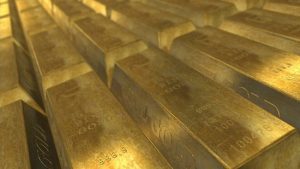
Gold investments are not subject to counterparty risks
The rise and fall of gold prices
The gold price can go down as well as up, depending on supply and demand. Over the short term, there’s the risk that your investment could fall in value. Over the medium to long term, gold has proven to increase in value quicker than the inflation rate, proving to be a reliable store of wealth. Buying in paper form, like ETFs, gold futures or gold shares, poses further risks with leverage and counterparty exposure. Owning gold investment coins and bars negates both of these risks.
It’s important to note that gold prices have never collapsed over the medium to long term. It is a defensive asset class that provides steady, long-term returns. Most asset classes that provide quick returns are risky, on the other hand.
Over the last 10 years, gold prices have never sunk below the $1,000 price point. While equity and debt investments, mutual funds, debentures or derivatives can all be devalued to a point where they are worth next to nothing, gold continues to have an intrinsic value that provides safety.
A quick look at the gold charts reveals that gold is not just a safe investment in times of trouble. The spot price of the yellow metal was under $400 way back in 1996. From these modest prices, it hit an all-time high in 2011 and then settled down to $1600 levels by 2012. An asset class that quadruples in value over a 20-year horizon is certainly a safe investment. Additionally, it is capable of unlocking great value and generating steady returns.
Get in touch with Physical Gold to discuss your gold investments
Physical Gold is one of the U.K.’s most reputed gold dealers. We provide free investment advice about any precious metal investments that you choose to make. We are always happy to discuss your investment plans and identify the best options that can generate optimal returns. Please call us on (020) 7060 9992 or contact us online and our investment team will be in touch with you right away.
Image credits: Marco Verch and Wikimedia Commons

For the longest time, gold has been the investment class of choice for investors who wish to hedge their risks and build wealth. Gold is an asset class that does not suffer from the volatility of other asset classes like equities. Gold can deliver steady returns over the short term and provide insurance for an investor’s portfolio. The yellow metal also beats other market forces like inflation and currency devaluation. Therefore, many investors are keen to move their money to gold, especially during times of economic uncertainty.
The economic impact of the pandemic
The global pandemic caused by COVID-19 has affected capital markets around the world since 2020. Of course, the price of gold rose to its highest ever point in August 2020, as investors started to move their investments to gold. This crisis is not over yet, and many countries around the world are grappling with the public health crisis and economies around the world continue to suffer due to restrictions and lockdown.

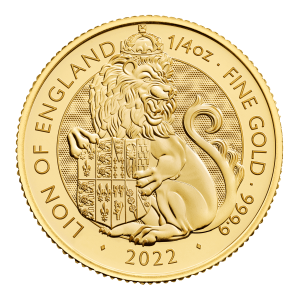
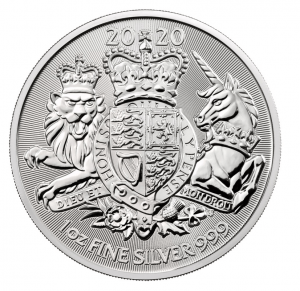
The Royal Mint produces beautiful coins, but they aren’t the best value for money
Buying investment-grade gold
As an investor, if you are thinking of purchasing gold to strengthen your portfolio, you need to be able to identify the right places to buy gold. There are many options, including high-street dealers, private auctions and online gold dealerships. However, many of these are fraught with risk, and it’s important to identify the safest avenues for your gold purchases.
Needless to say, high-street dealerships do not provide you with a wide range of gold products. Also, many would not give you a certificate of authenticity and there is no way for you to tell whether the gold you are buying is genuine or not. Similar risks would be encountered when buying gold from a private auction on sites like eBay.
If you’re wondering where to buy gold for investment, then the best bet is to focus on specialist dealers. These brokers should be a member of the British Numismatic Trade Association (BNTA), have a track record and positive customer reviews. Many of these dealers will have an online shop with live pricing and offer quantity discounts on investments. The best ones will also provide free advice and guidance as to which are the most suitable coins and bars.

It’s always important to check the authenticity of the gold you’re buying
The Royal Mint
One other option is the Royal Mint. The mint has been the torchbearer of British coinage for centuries. So, the gold coins that you buy from the mint can be trusted and they would also be immaculate in quality and condition. However, there are certain drawbacks to buying gold from the Royal Mint. They only sell new coins, avoiding circulated coins or bullion. The gold coins are sold at a premium and the mint does not offer a buyback scheme. Therefore, you can procure beautiful coins that come with great packaging from the mint. But, you would receive far less gold for your money, when compared to buying gold elsewhere.
Looking for a reliable gold dealer
The best place to buy investment-grade gold is from a UK gold dealer. The British Numismatic Trade Association (BNTA) publishes a list of gold dealers were registered with them on their website. This is the best place to start. Once you identify a few dealers, it is important to establish a relationship with them and explain your investment objectives. This can help the dealer identify the best deals for you and notify you when these come on the market. You need to ensure that the dealer provides a buyback scheme and a certificate of authenticity. Reliable dealers will also answer your queries and provide storage options, as well as an insured delivery service.
Talk to us before you purchase gold for investment
Physical Gold is one of the U.K.’s best-known, reliable and reputed gold dealerships. Our website can provide you with many options to build your gold portfolio and our experts are always happy to discuss your purchases and help you identify the best options. Call us today on (020) 7060 9992 or reach out to us online and we will be in touch right away.
Image credits: Wikimedia Commons and Jeremy Schultz

Portfolio diversification is a key consideration for many investors. During a market downturn, like the one we witnessed throughout 2020 due to the global pandemic, many investors turned to gold. Other precious metals also witnessed healthy demand, but gold is generally seen as a safe asset class that is used to hedge market risks. The price of gold rose steadily throughout 2020 and eventually reached its highest point in August. However, many investors want to consider alternatives to buying physical gold. This can have the added advantage of further diversification for your investment portfolio.

Physical gold avoids counterparty risk, but gold ETFs have certain advantages too.
What are gold ETFs?
A Gold ETF, otherwise known as an Exchange Traded Fund, is essentially a mutual fund that invests in gold. The fund may consider diverse routes of gold investments. These may not be limited to physical gold alone. Many ETFs invest in gold mining stocks, gold manufacturing companies and other gold-related investments. Of course, the fund would also invest in gold bars, coins and other types of physical gold. The fund can also invest in other forms of paper gold, like government bonds. These decisions are made by the fund manager and his team, who can acquire better margins in the market as an institutional investor. Retail investors would generally not have the opportunity to acquire gold at these prices
Advantages of investing in gold ETFs
Buying a gold ETF can be a good investment to provide a safe haven element to your overall portfolio. The value of the ETF should rise when stock markets fall, providing a sound hedge against market downturns. As an electronic investment, it benefits from efficient buying and selling margins, but also poses additional counterparty risks that coins and bars do not.
Additionally, a gold ETF may be able to provide you with some additional benefits, listed below:
- The fund provides a hedge against other market forces like inflation, currency devaluation and fluctuation in the currency markets.
- Since gold ETFs are part of a regulated marketplace, you need not worry about local price fluctuations.
- Anybody can invest in the fund during the operating hours of the stock exchanges. One need not worry about bargaining with gold dealers about premiums and price differences.
- As an investor, you can use your gold ETFs as security collateral for obtaining loans from financial institutions.
- Investments are simpler to make, and you need not worry about the risk of theft, paying locker charges, insurance costs or the costs associated with storing your gold securely.
- Since the price of gold is not subject to large market fluctuations, investments in gold ETFs can stabilise your returns, even if equity investments are performing poorly.

Gold ETFs can provide further diversification to an investor’s portfolio
Download the FREE Insiders Guide to Gold & Silver Investment. Click HERE
Disadvantages of gold ETFs
- Counterparty risks – these are risks generally associated with any paper investments. If the fund or the company performs poorly, the value of your investments can erode quickly. So, it is a third party risk associated with your investments. When you buy gold in its physical form, you take control of the asset and these risks are non-existent
- Your gold ETF investments can attract long-term Capital Gains Tax (CGT). After a year, you may be liable for paying certain taxes, however, in the UK, most investment-grade gold can be bought CGT free.
- When investing in a gold ETF, you may need to pay certain brokerage charges. It’s important to shop around and find a good fund that levies minimal charges
Call us to find out more about gold investments
Physical Gold is one of the most reputed gold dealers in the country and our advisory team can assist you in making the best gold investments. Call us today on (020) 7060 9992 or reach out to us online via our website.
Image credits: hamiltonleen and Marco Verch
Silver and gold are both precious metals that are attractive to most investors. Many investors are keen to strike a balance between the two precious metals in their portfolio. To do that, one must understand the differences in the way these precious metals behave.
Setting your objectives
The initial step in deciding whether to buy silver or gold depends upon your investment objectives. Gold has always been perceived as a repository of value. Gold investments can offset the investment risks that your portfolio is exposed to. So, if your investment objectives are to build wealth and remove risk, gold can be the right choice for you. However, silver investments are more volatile, but the profit potential is great. So, if your objective is to make significant profits in the long run, silver is an excellent choice for you as an investor.

Silver investments can be lucrative over a long-term horizon
Profit potential
Over the last year, as the global pandemic engulfed the world, investors rapidly moved their money to gold. This was an expected development since gold is generally perceived as a safe haven for most investors. As a result of the large demand for gold, the price of the precious metal shot up to its highest levels. Currently, the spot price of gold is US$1,736 per ounce. However, in August 2020, gold prices breached the US$2,000 mark to reach its highest ever level of US$2,067 on 7th August 2020. Investors who had invested their money in gold with a five-year horizon had the opportunity to make great returns when selling.
A year in turmoil
2020 was an interesting year for other precious metals as well. Due to the high demand for gold, the gold-silver price ratio widened to an all-time high above 150:1 in March 2020, when gold reached its peak. However, the ratio has now fallen to 66:1. The current spot price of silver is US$26 per ounce. This is a significant rise from March 2019, when silver was trading at USD $15 per ounce. However, the industrial demand for silver continues to rise, in the face of dwindling supplies. This has led to speculation amongst investors that eventually the price of silver is likely to skyrocket, providing an excellent opportunity for profits.
Divisibility
Silver has in recent times between around 75 times cheaper than gold so is ideal for those with modest investment funds. Silver Britannia coins cost around £20 each so a silver portfolio can comprise of many coins offering increased divisibility over gold where you may only have one item. Due to its low price and vast uses in technology, there are numerous advantages of silver when compared to gold.

Gold has always been a great repository of value
Affordability
Silver offers investors the opportunity to enter the precious metals market at a low price point. However, the production costs of silver bars and coins are proportionally higher when compared to gold. If you consider the value of a gold bar, its production price becomes negligible. This is not the case with a silver bar. But, due to lower prices, silver offers investors a great chance to lock in prices and reap profits in the long run.
Tax efficiency
All investment-grade gold is VAT free and Capital Gains Tax exempt in the UK. Therefore, gold can be a better investment from a tax standpoint. Buying physical silver will add 20% to the overall price of the purchase due to VAT. Despite this, many investors find Silver attractive, due to the lower capital investment.
Discuss your silver and gold investments with the experts at Physical Gold
Our precious metal experts offer you free advice on investing your money into gold or silver. Our in-depth research of the precious metal markets enables us to offer you the right advice when it comes to making investments. Call us today on (020) 7060 9992 or reach out to us online through our website.
Image credits: kschneider2991 and Pxhere
As a precious metal, gold has very little competition. Its amazing chemical properties make it invaluable in the industry. Gold is used to manufacture jewellery, as a conductor in electronic components and even pulled out into wires. More importantly, gold is purchased by investors as coins and bars. Due to its price stability, investors often convert their money into gold during times of economic crisis. Investment-grade gold will normally be 22 carats or higher, with a fineness of 99.9%. All investment-grade gold bought in the UK is VAT exempt and CGT (Capital Gains Tax) exempt up to a limit.
However, when gold is used in industry, it needs to be melted down, according to the requirements of certain applications. Gold is often melted and then merged with other base metals like copper to achieve a certain level of hardness. Since gold is a soft metal, jewellery and other items cannot be formed when the metal is in its purest form. Gold is also alloyed with certain metals to obtain specific colours, which are popular amongst customers. The formation of gold bars also requires the metal to be melted and poured into casts.

Gold is converted to its liquid state at a temperature of 1064 Celsius
The melting point of gold
Gold changes its form, i.e. melts from its solid-state into a liquid at 1064°C. Its boiling point can also be obtained at 2856°C. As we can see, these are extremely high temperatures and the gold melting point is usually achieved in specialised industrial facilities. If other metals are already present in the gold, then the temperature required to achieve the melting point of gold will vary. Therefore, 18-carat or 14-carat gold will typically contain a larger percentage of other base metals, causing a variance in the melting point of gold.
The process to arrive at the gold melting point
As discussed above, this industrial process usually requires a furnace to apply the heat in order to execute the process efficiently. The extremely high temperature at which the gold melting point is reached can be generated by a high power furnace. It is important to understand the difference between the words ‘melting point of gold’ and smelting. The process of melting simply converts the metal into a liquid state. In this case, the chemical qualities of the metal remain unchanged. There is simply a change of state. Smelting, on the other hand, is a different process in which impurities contained within the gold are burned off. Therefore, the temperature required to do this may vary from the gold melting point. Once these impurities have been burnt off, the remainder in most cases is almost pure gold.

A furnace is usually required for the commercial melting of gold
Other processes that can achieve the melting point of gold
The process of melting gold has been around for thousands of years, long before the invention of high-powered furnaces. How did we melt gold through these years? Well, did you know that the ancient Egyptians used a combination of charcoal along with blowpipes to hit the gold melting point? They were also able to remove impurities from the gold by using this process. For jewellery craftsmen or individuals who want to melt their own gold at home, or operate a small-scale industry, there are propane-powered gold melting kilns available today. Flux can be used in these devices to extract impurities. However, only small amounts of gold can be processed by using these kits.
Call Physical Gold for any gold-related questions
At Physical Gold, our experts are happy to help you with queries related to precious metals. We can also advise you on making the best purchases when it comes to gold or silver. Please call us on (020) 7060 9992, or get in touch with us online by visiting our website. We are always happy to help.
Image credits: andressolo and PxHere
Gold is considered to be the most popular precious metal, due to its repository of value. Over thousands of years, nations across the world, kings and queens, governments and their banks have all accepted gold as the principal precious metal. There are other precious metals that exist, a couple of which are more expensive than gold. However, gold continues to enjoy unfettered liquidity across the world.
Gold is widely traded as a commodity and the COMEX gold prices decide the rate at which gold is bought or sold at any given point in time. This is known as the spot price of gold and it is calculated in US dollars per Troy ounce. But, have you ever wondered how is gold formed? Many of us know that it is mined in a few countries across the world. But, more importantly, where does it come from?

Gold nuggets like these can be mined out of the Earth
Where does gold come from?
It is common knowledge that gold can be obtained from gold mines. However, gold flakes are also available in rivers and streams and certain parts of the sea. It has a yellow metallic colour, which has led to many people calling it the yellow metal. Gold has certain rare properties which include malleability, conductivity, and ductility. It is known as an element with its symbol represented by ‘AU’. Its properties of ductility and conductivity make it attractive to the industry as an electrical conductor. How is gold formed? It is interesting to know that the formation of gold took place long before our planet was formed.
Many scientists believe that the element was formed during collisions between supernovae and neutron stars even before the birth of our solar system. However, during the formation of our planet, gold was deposited in the core of the Earth. Cosmic events that took place over millions of years on Earth, such as the Earth’s collision with asteroids made some of this gold available to us.
Is it possible to synthesise gold?
Yes, in theory, scientists can create gold by bombarding Mercury with radiation. As the decay of mercury takes place, the formation of gold can take place. However, in reality, it is difficult to produce gold through this route. The finite amount of gold available on the Earth needs to be mined and extracted.

It is thought that asteroids like these bombarded the Earth millions of years ago to bring gold to the surface
Where can we find gold inside the Earth?
As explained earlier, when our planet was formed, heavy elements such as iron, and gold made their way to the core of the planet. However, when the asteroid collisions took place billions of years ago, the layers of our planet were churned. This resulted in large amounts of gold being deposited into the upper layers.
How much gold is there on Earth?
Well, it is difficult to calculate exactly how much gold could be found inside the Earth’s crust and mantle. However, a 2016 survey conducted in the United States revealed that approximately 196,320 tons of gold have been extracted and produced ever since human civilisation started. Gold is an extremely dense metal (19.32 g/cm³) and does not occupy a lot of space. It is estimated that there may be 1,000,000 tons of gold embedded within a kilometre of the Earth’s surface. Of course, the volume of the precious metal inside the mantle and the core of the Earth is unknown but could be a lot more. With advancements in technology, it may be eventually possible to access these deposits of gold as well.
Call us to know everything about precious metals
Physical Gold is a highly reputed precious metal dealer in the UK. Our experts can address all your queries related to precious metals. Call us on (020) 7060 9992 or reach out to us online through our website.
Image credits: James St John and Wikimedia Commons
.jpg)