





Until 2009, few people, if any, had heard about the virtual currency called Bitcoin. In 2008, this new form of currency, otherwise known as a cryptocurrency was invented. To date, no one knows who created the Bitcoin, but its invention has been attributed to a person or a team of individuals who used the name, Satoshi Nakamoto. The cryptocurrency was formally launched in 2009 and came into the market as open source.
Advantages of Bitcoin
As a cryptocurrency, Bitcoin has certain distinct advantages. It is a decentralised digital currency that does not have any control or governance by the banks of any nation. It is not controlled by the government of any country. The currency operates across a peer-to-peer network, eradicating the need for any third-party or intermediary. All transactions that use this cryptocurrency are verified electronically by network nodes. These transactions are encrypted and stored on a distributed ledger system known as a blockchain.

Bitcoin has become the most important cryptocurrency
The blockchain derives its name from the way it operates. It is a chain of blocks, where every block contains a hash code connecting it to the previous block, all the way to the first one, which is known as the genesis block. This ensures that the system cannot be easily hacked into, as it is extremely difficult to alter the information contained across the entire chain. When a Bitcoin transaction happens, the information is sent to this network using purpose-built software applications. At this point in time, the network nodes validate these transactions and write them into the respective ledgers. The information is then broadcast to the other nodes within the system. Apart from data protection, the system also ensures that double-spending is prohibited. To make this happen, every input needs to have a previous unspent output within the blockchain. The first commercial transaction using Bitcoin took place in 2010 when the cryptocurrency was used to pay for two pizzas. At the time, the value of the Bitcoin was very low and the transaction was done for 10,000 Bitcoins.
How are Bitcoins generated?
Bitcoins are created through a process known as mining. It is essentially a service that creates records by using the processing power of computers. This activity maintains the sanctity of the blockchain, ensuring its consistency and completeness. At the same time, the process also ensures the security of the transactions, by making them un-alterable through the use of an SHA-256 cryptographic hash, which links across the blocks through the entire chain. However, every new block must have proof of work (POW), to ensure its acceptance by the entire network.
In the early days, Bitcoin miners used powerful computers known as GPUs (graphics processing unit) for this operation. These computers were faster and more adaptable in creating POW algorithms. However, today mining operations for Bitcoins been taken over by companies and these companies use large data centres, fitted with dedicated, specialised mining hardware. The mining companies generate Bitcoins through this intricate, expensive and energy-intensive process. Despite the complex security process, Bitcoins have been stolen from exchanges. The cryptocurrency has also come under criticism for the gigantic amounts of electricity used by the mining companies, at a time when the entire world wants to conserve energy and move towards green energy.

Bitcoin mining is extremely energy-intensive

The legal status of Bitcoin
Due to the decentralised nature of the cryptocurrency, its regulation has been difficult. Since the currency is mainly traded in online exchanges, its use in the early days was fraught with controversy. Bitcoins have certain unprecedented characteristics that no other currency has seen before.
- There is no central authority.
- There is no central repository server – the cryptocurrency operates through a peer-to-peer network.
- Central storage like currency holdings in a bank does not exist. Bitcoins use a distributed ledger system.
- The distributed ledger is accessible to everybody, and anyone can store it on their computers.
- The administration of the cryptocurrency is also distributed. Its ledger is maintained by a network of Bitcoin miners.
- An amazing feature of the system is that anyone can become a miner.
- Additions to this distributed ledger system are highly competitive. Any miner can create a new block, and it is impossible to predict who will.
- New Bitcoins are generated as a reward for creating a new block. Therefore, anyone within the network can achieve this target. According to the protocol, only 21 million Bitcoins can be created.
- New Bitcoin addresses require no approval system for its creation and anyone can create it.
- Transactions do not need approval, and a confirmation is generated by the network once the transaction is deemed legitimate.
Several national banks across the world felt threatened by the new autonomy and lack of control presented by Bitcoin. In September 2017, China started the process of imposing a ban on trading in Bitcoins. The ban formally came into effect in February 2018. In the US, warnings were issued about trading and investments in Bitcoins. In July 2018, the Commodity Futures Trading Commission in the United States reiterated that any form of trading in cryptocurrencies is speculative and that there could be inherent risks associated with theft from hackers, as well as fraud and misrepresentation. Earlier, similar warnings had been issued by the European Banking Authority, regarding the price volatility of Bitcoins, absence of regulatory structure and the risk of fraud.

Bitcoin uses a peer to peer network to validate transactions
Risk of price manipulation
In May 2018, an investigation was launched by the US Justice Department about the possibility of price manipulation. The final price settlement of Bitcoin futures in the US is dependent on four cryptocurrency exchanges. The investigation looked into transaction data on these four exchanges in order to detect any unfair market practices.
History of the Bitcoin price
Bitcoin inventor Satoshi Nakamoto is estimated to have mined close to 1,000,000 Bitcoins, before handing over the controls to the Bitcoin Foundation and retiring from public life. By 2011, Bitcoins started to have parity to internationally accepted currencies. At the time, the Bitcoin price in US dollars was only $ 0.30. In 2011, the average USD to GBP price was 1.60. Therefore, the Bitcoin to GBP conversion was approximately 18p. Some people bought Bitcoins at this price. Imagine how rich they are today! Bitcoin closed in the year 2011, with the Bitcoin to GBP price at £3.29. However, Bitcoin to GBP prices faced extreme volatility at the time, with the Bitcoin to GBP price rising to £19.68 in June that year, before heading into a downward spiral.
The following year, 2012, saw the prices of Bitcoin in GBP rise to around £8.36 at the close of the year. However, volatility continued with the prices falling by as much as 49% to 57% throughout the year, followed by a period of stabilisation. This rollercoaster ride of the Bitcoin in GBP prices kept prudent investors away. However, that year also witnessed the creation of the Bitcoin Foundation. This was done primarily to lend a direction to the development of Bitcoin, leading to renewed hope in the prices of Bitcoin in GBP.
The rise of Bitcoin
2013 was an important year for Bitcoin. The year witnessed the greatest price rise of 1 Bitcoin in GBP. At the start of the year, the value of 1 Bitcoin in GBP was £8.36. However, by the end of the year, the price of 1 Bitcoin in GBP had risen to £484. But, it was also a year in which the cryptocurrency became mired in controversy. In March of the same year, there were problems with the blockchain and the distributed ledger system split into two independent chains for a few hours, before the problem was rectified.
In the same year, the US authorities also seized around 30,000 Bitcoins from an illegal trading site called Silk Road. The authorities also started taking action against Bitcoin exchanges in the US if they had not registered with the appropriate legal authorities. After China prohibited the use of Bitcoins, prices started falling drastically. At the start of 2014, the price of 1 Bitcoin in GBP stood at £484 but reduced to £206 by the end of the year.

Blockchain’s distributed ledger system is at the heart of Bitcoin’s security
Bitcoin revival
From this period of uncertainty, Bitcoins made a slow recovery. By the end of 2015, 1 BTC to GBP conversion price rose to £285. The price continued to rise throughout 2016 and by the beginning of 2017, the price of 1 BTC to GBP had risen to £804. 2017 marked the revival of Bitcoin prices, partly fuelled by a software upgrade on the Bitcoin network. This upgrade, called Segwit, improved prices by around 50%. By July 2017, the price of one BTC to GBP was approximately £2,216. By the end of the year, the price of one BTC to GBP stood at £10,816.
The Chinese ban on Bitcoin trading, which started in February 2018 saw prices plummeting. The Bitcoin to pound price dropped to approximately £4,974 on 5th February 2018. By January 2019, the Bitcoin to pound price was £2,882, down by 72% from the peaks achieved in 2018.
In February 2019, the Quadriga Fintech controversy surfaced, when the company’s founder was reported dead in India. The Canadian cryptocurrency exchange, subsequently filed for bankruptcy, with around $200 million unaccounted for. Despite this market shock, Bitcoin continued to perform well and by June 2019, the Bitcoin to pound price had risen to £10,000. In an act of legitimacy, Intercontinental Exchange, the company that owns the New York Stock Exchange (NYSE), started a Bitcoin exchange to trade in its futures.

The Bitcoin Foundation steers the direction of the cryptocurrency
The COVID-19 pandemic
It would be unbelievable if the global pandemic had not impacted Bitcoin. As the pandemic took hold around the world, BTC to GBP prices fell to approximately £3,225 and below. However, 2020 witnessed a lot of support for the cryptocurrency from financial companies, who moved a percentage of their total assets to Bitcoins. The payment gateway, PayPal also allowed its customers to buy and sell Bitcoin using their payment platform. By November 2020, the BTC to GBP price had recovered and stood at £16,016.
This new BTC to GBP price was at an all-time high, and reinforced the faith of investors, as the cryptocurrency was able to buck its performance, while under pressure from the economic situation caused by the pandemic. The revival of the Bitcoin GBP price witnessed other corporate powerhouses following suit in the support of Bitcoin. These included life insurance companies, who were converting a part of their assets to Bitcoin and the high-tech automobile company Tesla that invested £1.08 billion in Bitcoin. Based on these factors, the Bitcoin GBP price went up to £35,597. Earlier in 2021, the Bitcoin GBP price rose by approximately £3,846 in an hour, when the Bitcoin received an endorsement from Elon Musk, founder of Tesla. With that rise alone, the Bitcoin price GBP reached a price of £28,691.

A Bitcoin mining farm
Current status of the Bitcoin price GBP
The live price of Bitcoin to pounds is a dynamically changing price, just like any other global currency. Most live price charts will update the Bitcoin price GBP within five seconds. After a turbulent start, Bitcoin has now established itself as the most important cryptocurrency, which is in high demand. Due to this, the Bitcoin to pounds price is quite high. However, investors believe that the Bitcoin to pounds price will continue to rise in the future.
From a high of £35,597 on 8 February 2021, the Bitcoin price pounds has already reduced slightly to £34,301 on 12 February 2021. But the Bitcoin price pounds had earlier in the day reached a high of £34,487. So, as an investor, these illustrations should give you an indication of the fluctuation and volatility of the Bitcoin price pounds. Many precious metal investors are now turning to Bitcoin, as there is speculation that it may replace precious metals as a repository of value.

Bitcoins may soon replace precious metals as a repository of value
Call us at Physical Gold to compare cryptocurrencies with precious metals
Our precious metal experts at Physical Gold can help you with the right advice and knowledge when it comes to comparisons between cryptocurrencies and precious metals. Call us today on (020) 7060 9992 or simply get in touch with us online through our website.
Image credits: PxHere, nifco, Tumisu, TLC Jonhson, Wikimedia Commons, Freeimg.net and Wikimedia Commons


Coins become increasingly attractive to collectors and investors as their rarity increases. Bullion coins may be easily available in abundance at low premiums, making them attractive for investors. However, coins with a history are always more attractive to collectors and numismatists. The gold Sovereign coins, which have been around for centuries are a classic example.
The Sovereigns are available with the portraits of several British monarchs during whose reigns, these coins were issued. Queen Victoria alone has three different portraits on these Sovereigns. As a coin collector, it is exciting to delve into the history of these coins. But, let us look at a more recent event that has significantly impacted how coins were struck. Decimalisation has created two distinct category of coins – pre-decimal coins and post decimal.
When was decimalisation
Throughout the history of British coinage, a separate system was in existence for centuries. This was a system that divided the coinage of the nation into pounds, shillings and pence. This system divided the denomination of British currency and everyone knew that 12p was equivalent to a shilling. A shilling was one 20th of a pound, so 20 shillings added up to a pound. However, this was a complex system and needed to be simplified. It’s not that past governments did not realise that there was a need for a simpler system. However, it hadn’t been put in place.
In 1848, there was an attempt to introduce a decimal coin. This coin was called the Florin. Its value was 1/10 of a pound. But, the values of other coins remained the same. The decimalisation system had been suggested during the 19th century by Sir John Bowring, who was a Member of Parliament. It was due to his suggestions that the Florin had been introduced.

King Edward VIII abdicated to marry Mrs Simpson. Coins created for his reign are rare
The decimalisation idea would divide British currency into pre-decimal coins, which would be withdrawn from circulation. A special task force was created in 1961 to debate and decide on the introduction of a decimalisation system for the British currency. The question on everyone’s minds was, “When was decimalisation going to kick in?” “When was decimalisation money, or post decimal coins going to be available?”
Eventually, the decision to withdraw the old system and pre-decimal coins were finally announced in March 1966. The D- Day or, Decimal Day was 15th February 1971. It was on this date that pre-decimal coins were finally withdrawn from British coinage. Decimal Day will celebrate its Golden Jubilee, or completion of 50 years on 15th February 2021. Today, with the passing of years, not everyone remembers the date and many people from the younger generation ask, “When was decimalisation?” As we celebrate its 50th year, it is certainly a date that changed the coinage of our country forever.
What pre-decimal coins should I collect?
Well, not all pre-decimal coins would command a high value. Firstly, only some of them are made of gold and silver. Others are made with copper. Although they have been withdrawn from circulation, they are freely and abundantly available. However, some of them have become rare over the years and can fetch a tidy sum. For example, the 1917 George V Sovereign from the London Mint could be worth around £ 15,000. Another pre-decimal coin that’s worth quite a bit is the 1937 Edward VIII brass threepence. Only 10 were produced and their release was withdrawn due to the abdication of the King.
One of these could be worth as much as £45,000. Amongst the pennies, the 1933 George V penny is highly valued, mainly due to its rarity. Only seven were issued at the time, and if you manage to get your hands on one, it could fetch you as much as £72,000. There is also a 1937 copper one penny coin that had been struck to be released during the reign of King Edward VIII. Only a few were produced and one of these fetched £111,000 at an auction in 2019. So, if you were to find one of these in your attic, you could make a hefty sum of money very quickly.

Decimalisation changed the way the Royal Mint struck their coins
Call us at Physical Gold to find out more about rare coins
Our coin experts at Physical Gold can help you identify rare coins and assist you in purchasing them for your collection. Call us on (020) 7060 9992 or drop us an email today by visiting our website.
Image credits: Picryl and Wikimedia Commons

If you’re going to give a gift to a loved one this St George’s Day, then patriotic English gold coins are an excellent choice. Like St George himself, gold represents all of our traditional English values such as strength, 23rd passion and courage making it the perfect gift idea this 23rd April.
The legend of St George
Although St George isn’t English, (he was originally of Greek decent and believed to have been born in the region of Cappadocia, now part of Turkey) he is a Christian martyr who sacrificed his life for his faith and is the patron saint of many Christian countries.
After joining the Roman army at 17 years old, St George quickly rose in the ranks of Emperor Diocletian’s legion. In 303 A.D. however, there was a crackdown on the growing number of Christians in the Roman army and many of them faced expulsion. Saint George refused to give up his faith, despite Diocletian attempting to convert him with promises of wealth. He was executed on the 23rd April 303 A.D., which is why we now celebrate St George’s Day on the day of his passing. (23rd April – Julian Calendar or 6th May Gregorian Calendar). King Edward III made him Patron Saint of England in 1350 as he felt he reflected the country’s ideals of courage and passion.
St George’s Day was also known historically as Feast of Saint George (as the day was associated with a feast!)
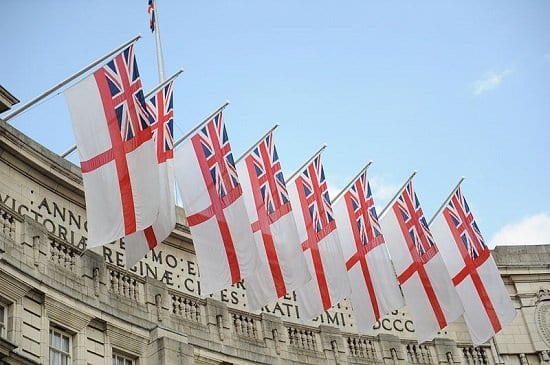
St George’s Day Flags
St George and the dragon
According to popular legend, St George slew a dragon that was terrorizing a small town in what George called “Silene” in Libya. The town’s people were sacrificing their own children to appease the dragon until St George offered to kill it on the condition the whole town converted to Christianity which they later did.
The link between William Shakespeare and St George
William Shakespeare did all he could to keep the legend of St George alive. In Shakespeare’s play “Henry V” written in 1599, King Henry famously says in his pre-battle speech: “Cry God for Harry, England and St. George!”
Shakespeare also paid homage to St George by being born and dying on St Georges Day. William Shakespeare was born on 23rd April 1564 and died on 23rd April 1616.
Gold Sovereigns; the perfect St George’s Day gift
Gold sovereigns are often given as special gifts.
Due to the new sovereign’s design which was updated in 1817 and depicts St George himself slaying the famous dragon, a gold sovereign represents a particularly poignant gift this St George’s Day.
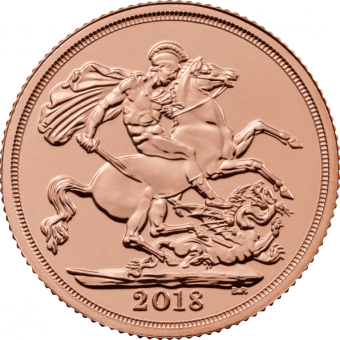
A 2018 gold half sovereign showing the George and Dragon symbol on the coin reverse
Over the years, the sovereign’s design has become a classic. Designed by the Italian gem engraver Benedetto Pistrucci, the coin is particularly favoured among gold coin collectors who appreciate the coins heraldry. The sovereign is also the perfect reflection of English strength and unity. It was once the largest gold coin ever minted in Britain and throughout history, the coin has become synonymous with the might of the English empire.
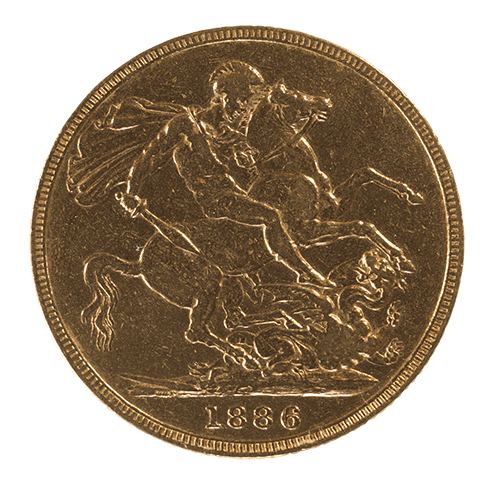
An 1886 Victorian Sovereign Young head coin reverse showing the George and Dragon symbol
Gold Britannia’s
Although they have only been minted since 1987, there are few coins that reflect English patriotism better than the Gold Britannia. If you’re looking for the perfect example of an English gold coin at its finest, then you might be interested in Britannia gold coins. These incredible coins are the largest denomination of all British gold coins and are VAT free if you purchase them through Physical Gold.
Give the gift of patriotic gold this St George’s Day
Here at Physical Gold, we stock a huge range of tax free gold coins as well as the latest issue Gold Britannia coins. For more information, please get in touch on 020 7060 9992.
Image Sources: Wikipedia

Gold and silver are often referred to as the ‘go-to’ precious metals for any investor. The yellow metal is revered around the world for its value and has many different uses. Gold has historically been one of the precious metals of choice for minting coins. Of course, it has numerous other industrial uses. Have you ever wondered why gold is used widely? Gold has certain properties that ensure its usefulness across industries. In this article, we will briefly overview some of these properties, and also focus on gold density.
Useful properties of gold
Gold is a highly malleable and ductile metal. The yellow metal is so malleable that 1 ounce can be pressed and spread over an area of 300 square feet. As a ductile metal, it can also be pulled out into wires. Gold has another property that makes it ideal for several industrial uses. It is a very good conductor of heat, as well, as electricity. This combination of ductility and conductivity make it invaluable in the electronics industry. Another great property of gold is that it does not corrode easily. Gold remains unaffected when exposed to air, or most other reagents.
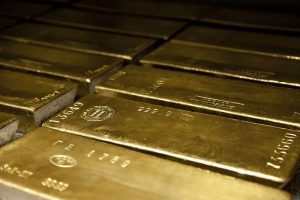
Gold is one of the densest metals on Earth
The density of gold
Although gold is a malleable metal, the density is fairly high. Gold density is 19.3 g/cm³. When we refer to a metal density chart, we realise that the density of gold is much higher than most base metals. For example, lead has a density of only 11.3 g/cm³. Similarly, this number stands at 7.87 for iron, 8.90 for nickel and 7.7 for bronze. When compared to other precious metals, the density of gold is still higher than metals like rhodium or ruthenium, which are 12.4 and 12.1, respectively. However, platinum is higher than gold density and stands at 21.5. Similarly, the density of iridium is also higher than the density of gold at 22.5. Silver, on the other hand, is nearly half the density of gold at only 10.5.
So, we can see from the above comparisons that gold density is generally higher than most other metals. Despite this, it enjoys the properties of malleability and ductility, which is unique.
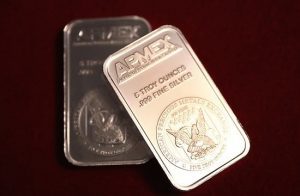
The density of silver is approximately half that of gold
How can we calculate the density of gold?
Well, the classical definition of the density of an object. Is the ratio of its mass to its volume. This is the reason why density is represented by grams per cubic centimetre – unit mass per unit volume. Now, mass is pretty much the same concept as weight. So, all we have to do is to weigh a bar of gold and divide this number by its volume. Therefore, one cubic centimetre of gold will weigh 19.3 g. Similarly, a cubic centimetre of silver will weigh 10.5 g
If the density of gold is higher than other metals, why is it softer?
The softness of a metal is its ability to easily change shape when pressure or stress is applied. The key to our answer lies deep in physics, where we analyse the structure of gold. Like all other metals, gold has a crystalline structure. This structure is essentially an arrangement of different planes of crystals. Metals which have a higher density like gold are more likely to have defects within these planes. These are called slip planes, and they allow the metal to bend easily. Gold and silver have more of these planes, making them extremely malleable. On the other hand, base metals like iron are more rigid and cannot be bent easily.
Find out more about gold from our experts at Physical Gold
When you call Physical Gold, your queries need not necessarily be about investments. We pride ourselves on being recognised as one of the most reputed precious metal dealers in the country. Our experts are extremely knowledgeable about gold and can answer all your questions related to the yellow metal. Call us on (020) 7060 9992. You can also visit our website and get in touch with us online and a member of our team will revert to you at the earliest regarding your queries.
Image credits: Wikimedia Commons and Wikimedia Commons


Is gold magnetic?
For several centuries, gold has been considered the definitive precious metal in the world. It acts as a great repository of value even today and has been used in jewellery making, coinage, investments, and several industrial applications. Its industrial users are many, owing to certain great properties that the yellow metal has.
Gold is well-known for its malleability, making it a versatile metal to use for industrial applications. At the same time, gold is also well-known for its tensile strength. This property coupled with its conductivity allows it to be used in industry for specialist wiring applications. However, the question we want to address today is “Is gold magnetic?”

A large electromagnet like this can create a very strong magnetic field
Gold and the property of magnetism
Gold does not automatically fall into the category of magnetic metals. For example, if we have a large electromagnet that emits a strong magnetic field, gold is unlikely to be drawn by it. Other metals like iron will be immediately attracted by the magnetic field and will attach itself to the magnet. However, gold does not behave in this manner.
The magnetic attraction of gold jewellery
Often people are surprised when certain types of gold jewellery may suddenly behave magnetically. A dealer may have sold a large ring to you, claiming that its pure gold. However, if it is attracted by a magnet, you may be wondering is gold magnetic? No, it is a certainty that the gold is not pure. There could be iron or nickel mixed into the metal, which causes this phenomenon.
This is one of the ways in which people try to detect the purity of the gold they possess. However, we must bear in mind that even if the item of jewellery is not attracted by a magnet, it doesn’t automatically imply that there are no base metals mixed into it. Base metals such as aluminium, copper, and lead, which are frequently mixed with gold do not have any magnetic properties.
Often metals like copper and nickel are mixed into gold to create colours, which are popular amongst buyers. Also, precious metals like platinum, silver and rhodium are frequently being used by the industry to make the surface of the gold harder and scratchproof. These metals do not have any magnetic attraction properties.

Tohoku University
Recent scientific developments
Although gold had always been considered a non-magnetic metal, a recent scientific discovery has put forth the possibility that gold can be magnetised through heating. But is gold magnetic? Researchers at Tohoku University in Japan discovered that by spinning the electrons and inducing heats at the same time, a small degree of magnetisation can be achieved in gold. In the experiment, a thin film of gold was used, and a magnetic field was applied in parallel with the flow of heat. Researchers believe that such discoveries can reveal the unknown properties of matter that may have useful industrial applications. It could be useful for innovative and new areas of science such as thermoelectric uses and energy harvesting.
Talk to the gold experts at Physical Gold
Our gold experts can assist you in identifying and assessing the purity of the gold you possess. Besides, they can help you identify the right opportunities to purchase gold for your investment portfolio. We conduct regular research on the international gold markets and can advise you on the purchase of your gold at the right time and price.
As one of the nation’s most reputed online dealers, we are also able to offer you great deals on a variety of gold products. We stock bars of different sizes and our numismatic experts can also help you with the purchase of excellent gold coins. Call us on (020) 7060 9992 or simply drop us an email and one of our investment experts will be happy to get in touch with you.
Image credits: Wikimedia Commons and Wikimedia Commons


Most valuable precious metals
Investors are always keen to build a portfolio of precious metals. Throughout history, this is typically meant the acquisition of gold and silver. Traditionally accepted as precious metals all over the world, these metals enjoy great liquidity – irrespective of whether they are available in bars or coins.
Gold and silver also enjoy vibrant global markets, due to the internationally regulated exchanges that they are traded in. This creates transparency and dependability for investors, making these precious metals a popular choice for commodity investments.
Of course, gold and silver are also used in the making of jewellery and are greatly valued as ornaments across different cultures. Many countries in Asia have the tradition of gifting gold at the time of a child’s christening ceremony or marriage. In many countries around the world, the purchase of gold is also considered to be auspicious and gold is often bought during times of religious events in the year. However, are we restricted to only gold and silver when it comes to precious metals investing? Which is the most expensive metal? How do we know which is the most valuable metal?
Thinking of buying gold or silver? Find out the most important buying factors here.
We ask and answer the question – “What are 8 of the World’s Most Expensive Metals?”
Rhodium produces white polished rings
1) Platinum
Close on the heels of gold and silver comes Platinum, a popular precious metal, partially due to its durability and versatility. Platinum enjoys demand from consumers and several companies manufacture jewellery and ornaments using the precious metal. Platinum is unique in the fact that its weight is close to double that of a gold carat.
This means that in terms of its density and weight, it is the heaviest in the list of precious metals. Apart from the jewellery industry, Platinum is in great demand in many other industrial fields such as aeronautics and dental implements. The metals name is derived from Platino, a word in the Spanish-language, meaning ‘little silver’.
2) Rhodium
Interestingly, Rhodium is as rare as it is expensive. In fact, it is considered to be the most expensive metal in the world. Deposits of rhodium are scarce, adding to its rarity. The metal has a very high melting point and does not corrode easily. This is why it is greatly in demand across several industries. Of late, a popular precious metal is known as white gold. This is an alloy that uses rhodium, the most expensive metal as a plating medium to achieve the white colour and create a non-corrosive, scratch-resistant, reflective surface. Rhodium is scarce in supply however, countries like South Africa, Canada and Russia are well-known for its manufacture.
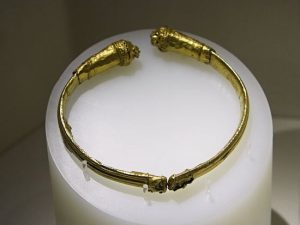
Gold has always been used to make jewellery, even as early as 200 AD
1) Gold
Of course, gold is a time-tested precious metal, well-known as a repository of value. It is considered to be the classic precious metal across all countries in the world. Throughout history, gold has considered to be the most expensive metal. It is commonly used for a variety of uses, of which the most popular ones that we know of are jewellery making, coinage and investment. However, gold is also considered the most valuable metal across several industries as well, due to its unique properties of malleability and conductivity. For example, the audio industry uses gold frequently in the manufacture of cables and audio contact terminals.
2) Ruthenium
The precious metal enjoys high demand from the industry, particularly in the manufacture of electronic goods. This is primarily due to its property of extreme hardness and it is often used to reinforce other metals. It is well-known across the world as one of the most valuable metals within the Platinum category. It is possible to use the metal for the manufacture of jewellery, however, the incidence of this use is rare.
3) Silver
The white metal has always been a close runner-up to gold. However, like gold, silver is also in great demand across the world for a variety of uses. Historically, it has been used for coinage, manufacture of utensils and jewellery. Due to its high industrial demand, silver is much sought after today. Therefore, silver investments have risen substantially, and investors often invest in silver bars and coins.
4) Iridium
It is a rare metal to find, which makes it feature on the list of most expensive metals. Like Rhodium, it also has an extremely high melting point and does not corrode easily. Its use is primarily industrial, ranging from the electronics industry to its use in the automobile industry, particularly electric cars. Iridium has also been used widely as one of the most valuable metals for the manufacture of watches and South Africa remains the largest producer of this metal.
5) Osmium
It is a bluish, silver metal that also has a super high melting point. However, it does not enjoy the other properties, found in most precious metals. Unlike gold and silver, which are extremely malleable, Osmium is hard and brittle. It is primarily used in the industry for the manufacture of electrical components and electric bulb filaments.
6) Palladium
This precious metal is greyish white and also enjoys the properties of malleability and stability. It is rare, one of the most valuable metals, and has the unique property of being able to absorb large amounts of hydrogen, even at room temperature. The jewellery industry also uses this metal to create their alloys of white gold, while it is popular in the automobile industry as an emission reduction agent. Recently, there has been a fall in both supply and demand for this precious metal.
Call us for advice on your precious metal purchases
Physical Gold is one of the country’s most reputable precious metal dealers. Our team can advise you on the purchase of the most valuable metal products. Call us today on (020) 7060 9992 or get in touch with us by email.
Image credits: Wikimedia Commons and Wikimedia Commons


Now the nights are drawing in and the chill of autumn is in the air, thoughts turn to this year’s Diwali celebrations, which this year falls on Saturday 14th November. With the promise of plenty of delicious food, family time and fun, the buying of gold will as always be a prominent theme in the festivities.
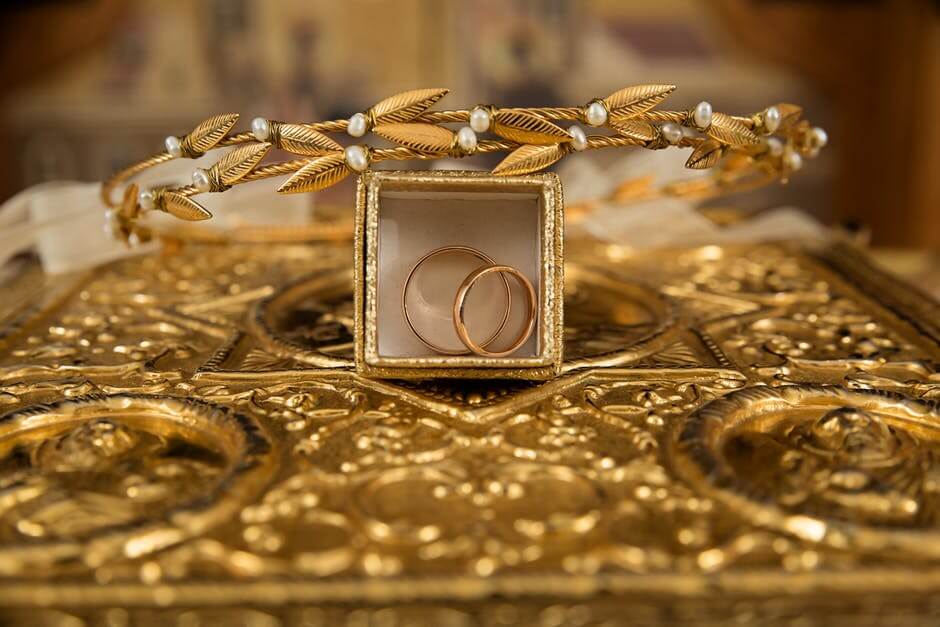
Gold rings and jewellery
The importance of gold at Diwali
Diwali is known as the Festival of Light. It came about over the centuries thanks to the legend in Hindu culture that the son of King Hima was supposed to be killed by a bite from a venomous snake on the 4th day of his marriage. Legend has it that the only way he survived a slow and painful death was because his wife heaped up all the family gold she could find outside the door. According to the story, the snake became so dazzled by the gold that he couldn’t get to the prince to administer the bite and therefore slithered away.
This is why gold holds such importance at Diwali, symbolising wealth, hope and luck. Golden jewellery and other gifts of gold are exchanged between loved ones in remembrance of the son of King Hima and the gold barrier his wife made to save his life.
Download our FREE Insiders Guide to Gold Investment here
The five days of Diwali
The Diwali festival is over five days, with Diwali itself being on day 3. So, the days and dates in 2020 are:
- Day One (Thursday, November 12th) – Dhanteras (Day of fortune)
- Day Two (Friday, November 13th) – Naraka Chaturdasi (Day of knowledge)
- Day Three (Saturday, November 14th) – Diwali (Day of light)
- Day Four (Sunday, November 15th) – Annakut (New Year)
- Day Five (Monday, November 16th) – Bhai Duj (Day of love between siblings)
Investing in gold at Diwali
During recent years, gold has been the investment of choice for many families all year round, not just at Diwali time. High-value investment items such as gold coins and bullion have increased in popularity and it’s not hard to see why. Although there is a massive cultural attachment to gold within the Hindu religion, there are shrewd financial gains too.
This is undoubtedly because gold retains its value very well in an ever-changing national currency market. By default, gold is seen as less of a wealthy luxury for the https://www.cialispascherfr24.com/prix-de-cialis-en-pharmacie/ elite but instead as an essential financial security for everyone.
Investment and protection…
When global economies and currencies are more and more unpredictable in a world that seems to lurch from one financial crash to the next, the international price of gold has steadily increased. As the value of Indian currency has reduced in recent years, along with a massive rise in inflation, the purchase of gold bars and coins has increasingly become the prudent and financially reliable way to save for the future. Diwali celebrations offer the ideal time to research the options out there for gold investment and to put some well thought through plans in place.
Buying gold at the best time
Around the time of Diwali, world gold demand rises and therefore its value reaches a peak. This is a very typical trend which happens year after year – infact in 2016, the price jumped massively by 3.9 percent.
With this in mind, if you’ve decided to purchase gold for Diwali this year, either as a present for a loved one or as a sound financial investment, it’s highly worth keeping an eye on the market and not leaving it too late to make your move – i.e get in there early before the prices go up.
Invest with Physical Gold today
If you’re interested in buying gold coins or bullion the good news is you’ve come to the right place. Please feel free to browse our commemorative gold coins selection, in particular, these would make ideal gifts for loved ones at Diwali.
At Physical Gold we are experts in all there is to know about gold and silver and can help with any aspects of your investment. Speak to us on 020 7060 9992 or drop us an email so we can help.
Image Credits: Pixabay
Rumours of significant Capital Gains Tax increases have spooked the investment market. But gold could be the answer to shield you from imminent tax rises.
UK’s rising debt
Getting the UK’s burgeoning debt under control has been a primary focus for recent Conservative Governments. Austerity measures have aimed to reduce UK PLC’s growing debt problem, despite its impact on large swathes of the population. UK Public sector debt (excluding public sector banks) has now exceeded £2 trillion for the first time. July’s level of £2,004 billion was a staggering £227.6 billion more than at the same point the previous year.
Furlough scheme extended to March and beyond
Chancellor Rishi Sunak has been praised for his speedy and decisive response to Covid-19’s impact on individuals and companies to work. A wide-reaching Furlough scheme has targeted those unable to work due to Covid-imposed restrictions. The scheme has evolved both in breadth, to cover more sectors like the self-employed, and in duration. Initial timeframes have been extended as we’ve entered the inevitable second wave of the virus and another national lockdown.
Need to tackle growing Government debt
But for a Government so focussed on balancing the books, this vast sum of debt has put a massive spanner in the works. Debt as a percentage of GDP has now reached parity after levelling off at around 80% from 2015 to 2019. With the virus still raging and furloughing in full swing, the chancellor has already turned his attention to ways of reducing this mind-boggling national debt from next year onwards.
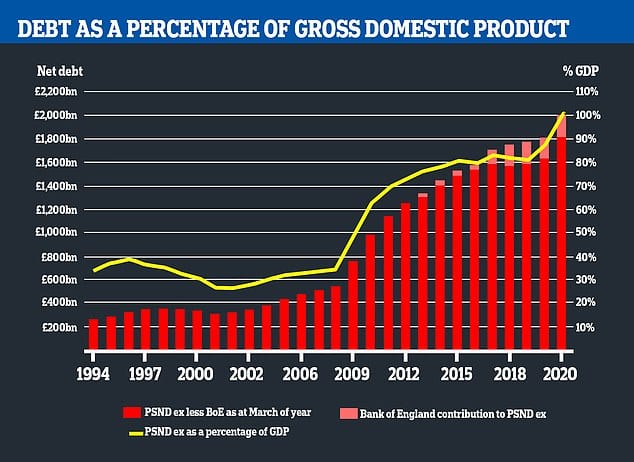
(Daily Mail) UK Debt now at 100% of GDP
Experts suggest Capital Gains Tax could be key to reducing debt
The Institute for Public Policy Research has recommended raiding middle-class investors and entrepreneurs to help plug the leaky public finances.
Reducing or abolishing the Capital Gains Tax (CGT) tax-free allowance would increase the number of people paying the tax by up to 300%, plus the amount paid by those already affected by CGT.
The Treasury calculates that CGT could raise a whopping extra £90 billion over 5 years if aligned with income tax brackets. The tax is levied on gains made on sale of shares, second homes and the sale of businesses. But an annual tax free threshold of £12,300 means that many people escape the tax altogether due to modest profits, while shrewd investors can split sales across tax years to minimise impact.
Part of the planned changes would see this threshold reduced or even scrapped. Estimates are that reducing the allowance to £5k would double the number of people paying the tax and reducing to £1k would triple the amount.
Owning physical gold coins can reduce your tax bill to zero
As an investor or business owner, it’s important to take pro-active action to prepare for possible tax increases next year.
Whether you’re buying as an individual or from company profits, gold’s popularity as an investment has hit new heights in 2020. Primarily enticed by healthy returns in the gold price, investors are now also recognising the tax free benefits of certain gold coins.

Owning certain gold coins can keep away the tax man
Which gold coins are tax free and why?
While all investment grade gold is VAT exempt, only certain gold qualifies as CGT free.
As a UK investor, selling gold bars or non-UK gold coins at a profit, could incur CGT if you make more than your allowance. But sticking to UK legal tender gold coins will mean any profits are completely free from CGT.
That’s because HMRC cannot tax individuals for gains made from selling its own legal currency. Coins issued by Royal Mint with a face value qualify as legal tender.
The two main choices are Gold Britannias and Gold Sovereigns. But The Royal Mint also produces more limited issue legal tender series such as Lunar coins and Queens Beasts.
These are the Royal Mint’s highest face value coin and weigh 1oz in weight. Gold purity is 999.9 / 1,000 parts gold and the most popular UK tax free coin for larger investors due to their low premiums. The 2021 version features high-tech laser produced security features, making it one of the most impressive bullion coins on the market.
Pre-owned Britannias are occasionally available and offer investors the chance of reducing premiums further. Britannias are also CGT free if bought in it’s fractional versions (half, quarter and tenth), or the silver version.
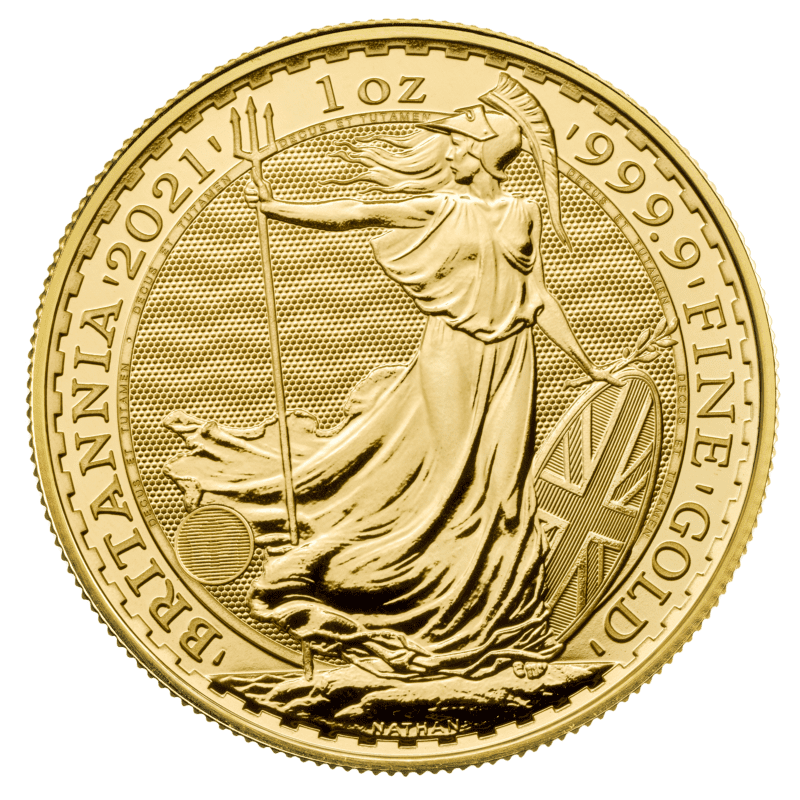
The Britannia is our best selling investment coin
One of the world’s best known gold coins, the humble Sovereign also qualifies as tax free.
At around a quarter of the size of the Britannia, the Sovereign offers a more affordable route to gold for modest investors or more divisibility for those seeking flexible portfolios. The modern Sovereign has existed for more than 200 years, so it offers huge variety for investors and collectors alike. Best value Sovereigns offer the cheapest option, while historical editions from the Victorian era are more scarce, but expensive.
Half Sovereigns are slightly more costly per gram but appeal to those after smaller coins.
One of the most popular limited issue Royal Mint series is the Queens Beasts range of coins.
These are primarily 1oz 24 carat coins, although quarter ounce coins are also available. Limited to a series of 10, the coins’ stunning design is a major pull, but their limited issue quantity has also led to many of them increasing in value at a far quicker pace than other UK coins.
The White Greyhound of Richmond is the most recent and final issuance in the set. It currently trades at modest premiums, so could be a good bet if its value follows earlier coins upwards.
With the same £100 face value as Britannias, these coins also provide a tax free shelter.
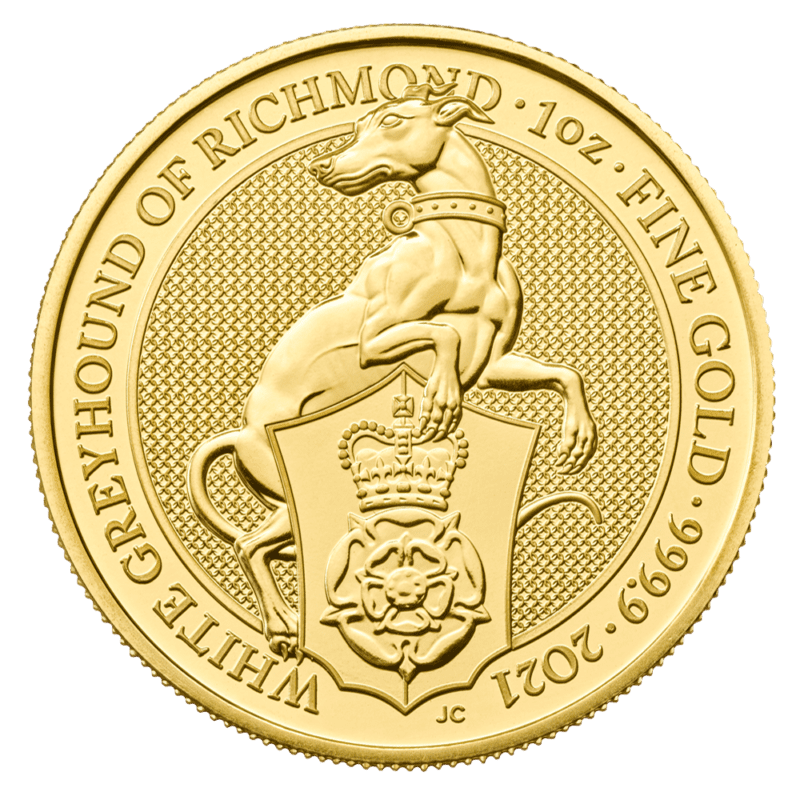
Queen’s beasts are a stunning coin collection, with enhanced upside potential
Gold likely to offer high returns as a safe haven asset
With a lethal cocktail of high Government debt, increased taxes, high unemployment, recession, falling stock and property markets, weak currency and rock bottom confidence, 2021 and beyond looks like an economic nightmare.
But gold tends to benefit in these times, attracting investment from those seeking a safe haven. Indeed, gold has risen around 25% so far in 2020 as of mid-November. The previous gold bull run saw double digit rises every year from 2005 to 2011.
So gold isn’t just a way of shielding from capital gains tax, but also growing your savings.
Types of gold
Gold has and will remain one of the most popular investment vehicles of all-time. It provides balance, insurance and safety for most investors. Investors have always moved their money to gold during an economic crisis. It is interesting to note that the current economic debacle that was precipitated due to the COVID 19 global pandemic has pushed up the spot price of gold to more than $1800 an ounce. The historic all-time high still stands at over $1900 per ounce in August 2011. As an investor interested in gold skyrockets, it’s time to take a look at the different types of gold investments.
Gold can come in many physical forms ranging from gold dust and nuggets in their raw state, through to coins and bars for investment, and finally jewellery and ornaments at the highly refined and designed end. The purity and colour of gold can also vary greatly depending on its alloy mix. The most common gold colour types are yellow (when gold is at its 24 carat purest), white gold, when mixed heavily with silver, nickel and zinc to toughen its resilience and red gold when a higher element of copper is present. It’s also possible to create green, black and purple gold with various alloy mixes.
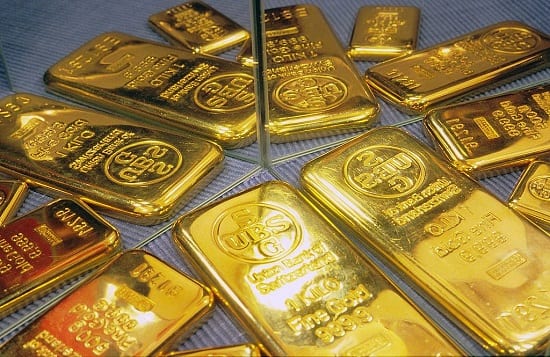
Gold bars are highly attractive to investors
Paper investments in gold
There are also gold ETFs and gold company shares that provides investors with access to the gold market. However, it’s important to know that these investment vehicles carry counterparty risks. Gold mining shares are subject to the inherent risks of the global capital markets. There are also gold funds which invest specifically in gold mining companies. These coins spread the risk of owning gold company shares by investing in a variety of companies in the market. But, they too are subject to capital market risks, and also charge on-going management fees
2 kinds of Investment Gold: Gold coins and bars
Perhaps the safest and most satisfactory form of investment in gold remains the purchase of gold bars and coins. There is a wide variety of gold coins and bars available in the market. These investments are free from counterparty risks and offer investors complete control over the assets, as they are physically held. Of course, the storage of gold and its safety during transport needs to be ensured. When you buy your gold assets from a reputed gold dealer, always insisted that they are delivered to your door via an insured courier. Many well-known dealers can also make arrangements to segregate and store your gold in a commercial vault.
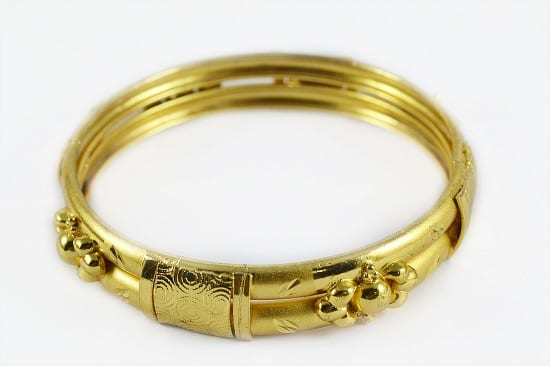
The design and production costs of gold jewellery cannot be recovered
Investing in gold ornaments
When you buy bars or coins, you acquire investment-grade gold, which has 99.9% purity. Since gold is a malleable metal, ornaments cannot be manufactured without reducing the purity by adding base metals. So, most gold ornaments will be made out of 18-carat gold or a lower level of purity. Also, the manufacturing and designing charges cannot be recovered when selling. So, it isn’t a great investment. While red, black, purple and green gold is aesthetically attractive, one must remember that the percentage of gold is less.
Best kinds of gold for tax efficiency
All investment-grade gold in the UK is VAT free. This is a major advantage when putting your money in gold, as it reduces the purchase price by 20%. UK gold coins offer an even better avenue for investors, as the profits collected from its sales can be enjoyed without paying Capital Gains Tax. However, it’s important to know that the CGT exemption threshold is £12,000 of profits in a single tax year.
The investment team at physical gold can offer you great advice
At Physical Gold, our team of experts can help you plan your gold investments and advise you on the right bars and coins to buy. Call us today on (020) 7060 9992 or get in touch with us online via our website. We pride ourselves on good customer service and would love to speak to you.
Image credit: Wikimedia Commons and Nuzree

In the summer of 2020 traditional avenues of investments have been depleted with the unfolding of yet another economic crisis, on the back of the COVID 19 pandemic. The demand for gold is soaring and already, the spot price of gold has touched $1800 per ounce.
In the immediate post-pandemic world, things are likely to remain the same. Time after time, investors have always turned to gold during times of global economic crisis. If we revisit the historical gold charts for 2011, we can see that the peak of the last worldwide economic crisis brought about the highest price of gold in August 2011, when the spot price went above $1900 per ounce. We are slowly getting there. Like many other investors, if you are considering gold investments, it is important to understand where to purchase your gold.
Download the Insider’s Guide to buying tax free gold here
If you’re looking to buy gold coins and bars, the best places to buy are from specialist gold merchants. A list of approved gold dealers can be found on the British Numismatic Trade Association website. They will be trustworthy to charge fair prices and ensure all products are authentic and of high quality. If you’d prefer to buy in person, then certain area specialises in selling gold. In London, Hatton Garden features many stores in the same street, so prices can be easily compared. In the Midlands, the Jewellery Quarter also possesses several options. Just be aware that choice may be limited when compared to specialist online gold brokers.
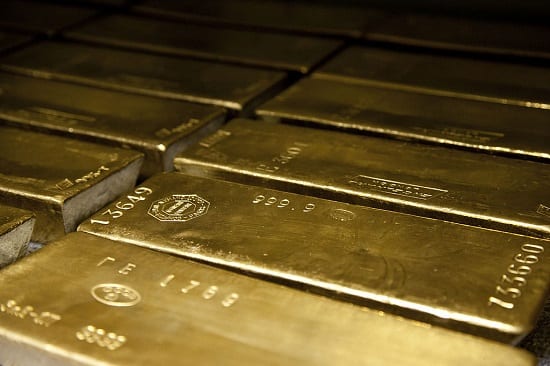
It is safest to buy gold bullion bars from a reputed dealer
Buying gold without counterparty risks
Physical gold investments are safer since you possess the tangible assets you purchase. There are other forms of gold investments like gold company stocks or gold ETFs. These carry counterparty risks, which implies that the non-performance or the bankruptcy of the company that issued you the paper investment certificate can result in your investments being eroded. Physical gold investments mean buying gold bars and coins.
Buying gold from eBay
Large online retailers like eBay are great at giving you amazing deals on books, music, electronics, and many other product categories. However, buying precious metals from eBay can prove to be extremely risky. Most of the auctions on these online sites are re-sales and being able to ascertain the authenticity of the gold you’re buying can be difficult. Verification of the quality of gold requires sophisticated testing equipment. In the absence of these, you could be exposing yourself to fraud. In addition to these concerns, PayPal fees are high on sites like eBay and once these costs have been built into the buying price, it’s not a great deal any more.
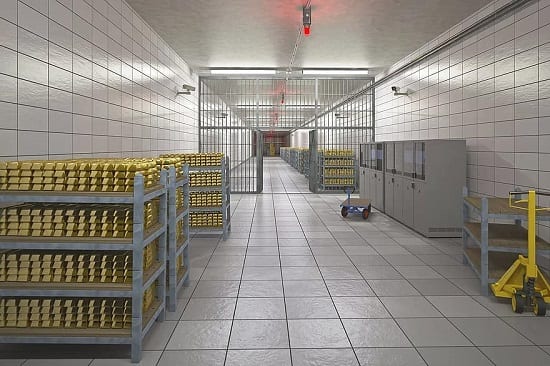
A reputed gold dealer can arrange to have your gold stored in a secure facility
The best places to buy gold in the UK
The answer is simple. To acquire high-quality gold bullion, which has been verified and comes with an authenticity certificate at the best prices, you need to find a reputed UK gold dealer. The British Numismatic Trade Association (BNTA) maintains a registered of trusted gold dealers in the UK. An additional advantage of identifying a UK dealership from this source is adherence to an industry code of conduct. If there is any dispute regarding the quality of the dealer’s goods and services, a complaint process is available to you.
How can you identify a reputed gold dealer?
Once you have collated your list of contacts from the BNTA, check the reputation of dealerships over the internet. A reputed business should have a proven track record going back some years and you can view customer ratings about their trustworthiness, quality of products and services. After you have prepared a shortlist, it’s a good idea to pick up the phone and call the dealerships. Good dealers will always be ready to answer any questions you may have and will offer certificates of authenticity and a buyback scheme for the gold they’re selling. Many of them can also arrange secure storage for your gold and offer you insured delivery for your products. Once you’ve checked out all these points, you would have if you reputed online dealers. These are the best places for you to buy your gold in the UK.
We can help you identify a reputed gold dealer
If you need to buy gold, and you’re looking for a specialist gold dealer, give us a call. The team of investment experts at Physical Gold can help you identify a reliable gold dealer. Call us on (020) 7060 9992, or contact the team online through our website.
Image credit: Wikimedia Commons and Pkist