








Why buy physical gold rather than gold funds?
Investing in physical gold coins and bars is one of the most popular ways of buying gold. There are other options, ranging from gold funds and gold ETFs, to buying individual gold mining stocks or electronic fractional ownership of pooled gold.
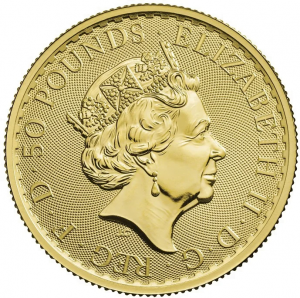
It’s important to understand that the right choice when buying gold will depend on your objectives and circumstances. Generally speaking, if you want the most secure and trustworthy of owning gold, then buying physical gold coins and bars is the only method to achieve that. If you’re seeking to buy and sell gold often and trade the market, then electronic versions can be more cost efficient, albeit more risky.
Here we break down the considerations when considering why to buy physical gold.
1. Security and Integrity
While ETFs have provided an accessible way for investors to gain exposure to the gold market there are many fears circulating about their security and integrity. For starters, the fact it is a structured paper asset that not everyone fully understands tends to defeat the object of owning a simple tangible asset like gold. So many investors have been stung over the past 5 years investing into asset-backed securities that were rated AAA by the credit rating agencies, only to see them downgraded to junk status overnight when everyone realised that the subprime mortgages they were linked to would not payout. It transpired that many very sophisticated investors never really knew which assets the bond was linked to or understood their lack of protection against such defaults. So are you more comfortable understanding the risks of holding gold coins or gold funds or ETFs?
Press reports are speculating that only 10% of the traded ETF value is backed by actual gold. With a distinct lack of auditing, its difficult to know for sure what the exact figure is.
Jefferey Christian of the CPM Group confirmed that gold is leveraged around 100:1 at a Commodities Futures Trade Commission (CFTC) Hearing on March 26, 2010. This means that there are around 100 claims for each ounce of gold in existence and so not enough gold to be delivered to everyone who has been promised paper gold.
So the question remains would you be able to access the value of your ETF if half or more of the investors decided to withdraw at the same time?
Want your gold questions answered? Download our FREE Ultimate Guide to gold investment here
2. Counterparty Risk
The term counterparty risk has become far more used and relevant over the past few
 years. This term didn’t seem relevant to bank deposits a decade ago it went without saying that leaving savings in a high street bank was safe. But things have changed dramatically. Now we’ve seen our major high street banks on the brink of collapse. Who would have believed me 15 years ago if I’d have predicted that RBS, Nat West and Lloyds would be mostly Government owned?
The 2008 credit crunch saw bankruptcies to seriously major corporations from General Motors to Lehman Brothers. I saw many friends who had built up shares in Lehmans over many years of work and anticipated those stocks providing their retirement. No-one could have predicted that they would lose value so quickly and Lehman would go under.
We then saw the next phase of counterparty risk with Sovereign debt. Investors who thought they were taking on very little risk by investing in Government bonds faced the very real prospect of not being paid out in full. Countries such as Ireland, Greece, Portugal and Spain need help from the EU and IMF to repay their debts. There is every chance that bondholders will not receive all the capital back.
And now, in the new Covid world, Government debt is at record highs and corporations are struggling to adapt and survive under the new world parameters.
With physical gold, there is NO counterparty risk. It doesn’t matter if a Government fails to repay bonds, a corporation goes bankrupt or even if the gold dealer you bought the gold from ceases trading. You will always have the physical asset to do with as you like.
By investing in gold mining stock, ETF or Gold funds each poses some sort of counterparty exposure and a threat to the value of your asset. Remember paper gold is a promise to pay, not the real thing!
3. Risk Profile
If you’re considering a choice between mining stocks and physical gold, its crucial to realise that these are different asset classes with entirely different risk profiles. Firstly, investing in mining stocks means your investment is linked to the performance of one company. As a paper asset, if that company underperforms, or even worse goes bankrupt, there is a chance that your investment becomes worthless. The value of gold coins and bars can never fall to zero or anywhere near because of the intrinsic gold content. During times of global economic turmoil mining stocks and bullion perform quite differently. Terror threats, currency depreciations, huge unemployment, record deficits and banking crises don’t provide conducive conditions for equity markets, which is why we’ve seen more and more people fleeing to the safety of gold bars and coins. Generally, while mining stocks have the potential for impressive returns they tend not to outperform physical gold during times of crisis such as the recent credit crunch. During sharp market declines such as the 1987 stock market crash, mining stocks become correlated to the broad equity markets rather than the price of bullion.
4. Comprehensive Insurance
If the reason you want to invest in gold is for portfolio insurance then make sure you have a Comprehensive policy! Everyone knows that gold provides security against economic and political unrest, making it the perfect safe haven asset in the current world in which we live. In that case, you want this wealth protection to be thorough. By investing in paper gold its like buying an insurance policy with get-out clauses. In other words, it doesn’t provide full coverage. There are still risks attached such as counterparty risk. By investing into physical gold, its like having the most comprehensive insurance available, putting your mind at rest that no matter what the next financial headline is, your physical gold holding will provide the necessary balance.

5. Tax Efficiency
In the UK, there is the opportunity to own physical gold coins which are completely tax-free. All investment grade gold is VAT exempt. You pay no income tax while holding the gold and UK coins such as the Britannia and Sovereign are Capital Gains Tax-free due to their status as legal tender. Compare this to paper gold such as a mining stock or gold funds where you’ll have to pay income tax on any dividends and capital gains tax if you sell the shares at a profit. With CGT now up to 28% for higher rate taxpayers, that’s nearly a third of your profits!
6. Accessibility
Accessibility in times of crisis is crucial. After all, gold should act as your crisis hedge. Over the past month, we’ve read about the attempted ink-cartridge bombers and MI5 revealing renewed threats to the UK, France and Germany. The Eiffel Tower has been evacuated twice in recent months. If one of these attempts gets through and the financial system collapses for a week or so how easy is it to access funds through your gold ETF, mining shares or Gold funds? By holding the physical metal itself, especially in the form of globally recognised coins, you hold the ultimate liquidity.
With the invasion of Ukraine by Vladimir Putin and the crackdown on tech companies in China, there are 87 fewer billionaires in this year’s Forbe’s billionaire list, with 2,688 billionaires making the 36th-annual ranking in total.
Delving into the billionaire list, our research shows not many reports focus on the achievements of millennial billionaires in particular. According to Beresford Research, millennials in 2022 are aged 26-41, where 122 millennial billionaires made the Forbes billionaire list this year.
To understand how millennials have made their fortunes despite being so young in age, we have analysed the latest data from Forbes to assess which industry has the most millennial billionaires.
The industry with the most millennial billionaires
Our research shows technology is the industry with the most millennial billionaires, with 43 in total. The combined net worth of millennial technology billionaires reaches $239.1 billion.
| Industry | No. of Millennial Billionaires | Collective Net Worth of Millennial Billionaires (USD$ billion) |
| Technology | 43 | $239.1 |
| Finance and Investments | 21 | $106.5 |
| Media and Entertainment | 11 | $85.1 |
| Fashion and Retail | 10 | $38.1 |
| Real Estate | 7 | $30.3 |
| Healthcare | 6 | $7.6 |
| Automotive | 4 | $10.0 |
| Food and Beverage | 4 | $18.4 |
| Manufacturing | 4 | $11.6 |
| Metals and Mining | 4 | $7.1 |
| Construction and Engineering | 1 | $1.2 |
| Energy | 1 | $6.6 |
The finance and investments industry has the second highest number of millennial billionaires, with 21 in total. This is followed by media and entertainment where the billionaires have a collective net worth of $85.1 billion.
Construction and engineering, and energy each have just one millennial billionaire. Interestingly, these are the two industries with the eldest millionaire billionaires.
The industries with the youngest millennial billionaires
The healthcare, and metals and mining industries have the youngest average age of millennial billionaires, at 34 years old. The millennials in these industries combined have a net worth $14.7 billion.
| Industry | Average age | No. of Millennial Billionaires | Collective Net Worth of Millennial Billionaires (USD$ billion) |
| Healthcare | 34 | 6 | $7.6 |
| Metals and Mining | 34 | 4 | $7.1 |
| Finance and Investments | 36 | 21 | $106.5 |
| Fashion and Retail | 36 | 10 | $38.1 |
| Automotive | 36 | 4 | $10.0 |
| Manufacturing | 36 | 4 | $11.6 |
| Technology | 37 | 43 | $239.1 |
| Food and Beverage | 37 | 4 | $18.4 |
| Real Estate | 38 | 7 | $30.3 |
| Media and Entertainment | 39 | 11 | $85.1 |
| Energy | 39 | 1 | $6.6 |
| Construction and Engineering | 41 | 1 | $1.2 |
There are two 26 year old millennial billionaires in the Forbes 2022 billionaire list. One is Henrique Dubugras, a billionaire from Brazil who operates in the finance and investment sector, and the second is Katharina Andresen who is located in Norway.
The 10 richest millennial billionaires in the world
The richest millennial billionaire in the world is Mark Zuckerberg, with a net worth of $67.3 billion. Second to Mark is Zhang Yiming who operates in the media and entertainment industry.
| Name | Age | Industry | finalWorth | Country of Citizenship |
| Mark Zuckerberg | 37 | Technology | 67300 | United States |
| Zhang Yiming | 38 | Media & Entertainment | 50000 | China |
| Sam Bankman-Fried | 30 | Finance & Investments | 24000 | United States |
| Guillaume Pousaz | 40 | Finance & Investments | 23000 | Switzerland |
| Yang Huiyan & family | 40 | Real Estate | 18700 | China |
| Lukas Walton | 35 | Fashion & Retail | 16500 | United States |
| Pavel Durov | 37 | Technology | 15100 | Russia |
| Dustin Moskovitz | 37 | Technology | 11500 | United States |
| Brian Chesky | 40 | Technology | 11500 | United States |
| Eduardo Saverin | 40 | Technology | 10600 | Brazil |
Daniel Fisher, CEO at Physical Gold commented:
“Our research shows there has been a drop in billionaires making the Forbes billionaire list this year, but an increase in the number of millennial billionaires.”
New entrants to the list include Rihanna, who is credited as a ‘self-made’ billionaire, at 34 years old. Rihanna has a net worth of $1.7 billion. Her success is attributed to her cosmetics line Fenty Beauty, her lingerie company Savage x Fenty, and her career as a chart-topping musician and actress.
Mr Fisher continues; “Rihanna is an example of the importance of diversifying your portfolio. This is particularly key against a volatile market since it can reduce losses incurred. For example, investing in commodities which are in high demand during periods of economic turmoil can help investors weather the storm.
“We have seen external factors impact billionaires this year, where the number of Russian billionaires has dropped due to the war. There have also been drops in the number of billionaires from China where there has been a crackdown on technology companies. Despite this, technology remains the industry with the highest number of millionaire billionaires, with 43 making the list this year.”
Methodology for research
The millennial billionaire research was undertaken by Physical Gold through an analysis of the Forbes World’s Billionaire list, to see how many billionaires there were aged 26-41.
The results were tallied for each included industry and were thus ranked by the industries that currently have the most to least number of millennial billionaires.
For millennial billionaires who accumulated their fortune from more than one sector, they were excluded from the research so it could be a fair and definitive assessment for each included industry in the research.
“This time of year we see more and more people looking to the precious metals market not only as a safe haven investment but also for savvy Christmas gifts.” Daniel Fisher, CEO, Physical Gold.
Buying gold for Christmas
The precious metals market is braced for sales to rise dramatically over the next few weeks, as an increasing number of new investors look to give the gift of gold this Christmas.
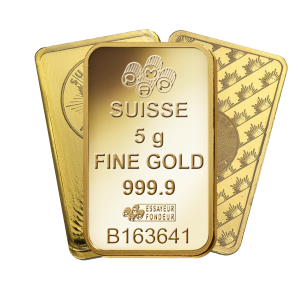
Last Christmas, Physical Gold – the UK’s leading provider of gold and silver coins and bars – saw a 53% increase in customers buying Sovereign coins and 5g gold bars, which are designed as gifts to help people save for their future.
In 2020, The Royal Mint saw a 510% surge in gold sales in November and December, compared with the year before. Daniel Fisher, CEO, Physical Gold, said: “This time of year we really do see more people looking at the precious metals market, not only as a safe haven investment but also for savvy Christmas gifts.

Gold Sovereigns are a top choice as Christmas gifts
Gold preferred to gift cards
“Once a high street gift card might have done the trick, but today there may not be a more savvier Christmas present to buy than physical gold; to invest in your future, a family member’s future or to boost your own investment portfolio.”
Recently there has been a huge uptick in the sale of precious metals, noticeably among young adults, and that has been evident in Physical Gold’s recent sales. According to the Royal Mint, the number of customers purchasing gold aged between 22 and 37 increased by 32% in 2020, as the coronavirus pandemic put precious metals under the spotlight.
Daniel Fisher continued: “At Physical Gold we are hearing from plenty of millennials stuck for Christmas presents, coming to us with a genuine interest in purchasing precious metals; be that for friends, family or partners.
“Lately, too, there has been an increase in older generations purchasing physical gold. A number of our customers have hinted at these investments being put aside for their children’s and grandchildren’s future.”
Gold price spikes with demand
Customers are being warned not to leave their Christmas gold shopping until the last minute as gold prices are expected to rise in December. In 2020, the gold price dropped significantly in November, losing almost 10% of its value. Prices then rose around 3% again leading up to Christmas day and the New Year period. The pattern was similar in 2019, with 3% depreciation in November, followed by 2.5% recovery in December.
Daniel Fisher, says: “Our historic prices would seem to suggest that the best time to buy Christmas gold is around the end of November and early December.
“Whether you are an experienced gold investor, or looking for a unique Christmas gift, Physical Gold offers its customers a simple, transparent and cost-effective route to holding top-grade investment gold in your hand.”
As a present, gold or silver has the advantage of being a tangible gift that someone can open at Christmas. One of the big advantages of precious metals is that there are numerous products you can invest in, depending on what you feel comfortable with. The most obvious is simply to buy physical gold, either in the form of gold bars or coins.
Physical Gold has an extensive portfolio of gold and silver bars and coins in a variety of forms and denominations in the UK. Whatever your reasons for buying precious metals, Physical Gold Limited offers a safe and secure way to buy gold and silver online.
Holding gold in your portfolio might be one way to invest and protect your purchasing power, but there is now an alternative asset that has soared in popularity within recent years: cryptocurrency.
Daniel Fisher, Managing Director, Physical Gold, believes we may now be living in a world where investment in both gold and cryptocurrencies can form a stable and speculative portfolio for investors.
Crypto & Gold’s relationship
Quite often I am asked the question: ‘Should I invest in an emerging asset like Bitcoin or a traditional safe haven like gold?’ As the UK’s leading provider of gold and silver coins and bars, it should be in my best interests to say ‘gold, of course!’ but, driven by changing markets and unsettled Covid-19 economies, I’m becoming increasingly aware of the pull for investors in cryptocurrency – which in turn, is being invested into the precious metal market.
For hundreds of years, gold has dominated the safe-haven asset arena. Some investors like to think of gold as insurance for their money. If there is a concern about a nation’s currency, or if there’s an economic collapse, people usually turn to gold because it benefits in times of crisis. During recessions and times of global turbulence, gold can commonly return more than 30% in a year.
But for those seeking the possibility of mega gains, crypto is tempting many new investors.
While Bitcoin was launched just over a decade ago, cryptocurrencies are beginning to achieve widespread recognition. Historically, those who did not want to ride stock market swings to their full extent invested in gold. However, the exponential growth and increasing popularity of cryptocurrencies over the past year has sparked the interest of many investors.

Bitcoin is becoming a mainstream asset
Why gold
John Carter, founder of Simpler Trading, says “gold has over 5,000 years of history on its side and isn’t going anywhere, which means it is super safe.” He’s right; gold is valuable as a material for consumer goods and it is scarce. Regardless of demand, gold supply remains low. It cannot be manufactured like a company issues new shares, or a federal bank prints money. Measured against highly volatile cryptocurrencies, gold certainly offers more stability.
Cryptocurrencies fluctuate violently – the rarity and lack of a central authority contribute to this as well as popular culture. Both political and social trends influence cryptocurrency to a higher degree than gold, making precious metals a far safer option. And, while gold prices have experienced volatility similar to stocks in the short term, over time, the precious metal’s value remains stable.
The reports of gold’s demise have been greatly exaggerated. Cryptocurrencies are certainly a legitimate asset and have the potential to be a true “store of value” – joining a select group of assets, commodities and currencies that can be saved, retrieved and exchanged without deteriorating in value. However, gold has at least a 5,000 year head start as a widely-accepted, global medium of exchange and value, and the gold market enjoys great depth and liquidity. The total amount of physical gold held by investors and central banks is an estimated $3.7 trillion.

Gold has an unparalleled track record
A match made in heaven
Although some cryptocurrencies have experienced meteoric rises fueled by speculators, having exposure to both gold and cryptos makes sense as our idea of money moves into the 21st century.
Undeniably, there has been clear evidence of a shift in the market. As this new crypto-sector evolves, Physical Gold has seen incredible growth in the “pair trade” between gold and cryptos – investors who swap their digital coins for physical gold and silver, and sometimes back again.
We know that diversifying a portfolio can help mitigate risk and potential loss. Today, most investors embed this tactic into their investment strategy, with many arguing that cryptocurrencies and gold are actually the perfect match for your portfolio.
Although Bitcoin doesn’t have age on its side, its soaring popularity reflects genuine investor interest. The crypto revolution has led to an explosion in both the number and value of other digital currencies. Cryptocurrency promises potentially high returns and diversification, but at the cost of security and investors still view precious metals as the stable value store during turbulent times.
If you’re looking for a safe-haven asset that is negatively correlated to other assets, gold has an important role in the stability of your portfolio as a “buy and hold” investment. It also acts as a diversifier, inflation hedge and capital preserver. All of these benefits can result in positive returns over time.
The case for Bitcoin is speculative given that it doesn’t have much utility yet. It is, perhaps, a gambler’s playing field – which for many investors is an intriguing and exciting prospect, but, by also investing in gold they can sleep easy knowing they have their gold in their pockets, while also taking a venture in the cryptocurrencies market. While many crypto projects will fall to zero, physical gold bars and coins will always have an intrinsic value.
Both cryptocurrencies and precious metals can be islands of security in an ocean of financial turbulence. Both will play vital roles as repositories of value, especially in a world plagued by economic and political uncertainty. Whatever you do, it’s important to watch your risk level when buying gold with cryptos.
The best way to minimise that risk is to use a trusted dealer. Physical Gold offers a convenient and efficient way to buy silver and gold, online with confidence that your purchase is protected by a 3D secure authentication payment system.
In the coming years, we can expect cryptocurrencies to remain subject to more booms and busts, but gold will always be on hand to offer a way of protecting your wealth in a post-Covid-19 world.
Whether you believe cryptocurrencies are best suited as a store of value or medium of exchange is somewhat irrelevant. Likewise, if you feel gold is a safe haven uncorrelated with global currencies, or a more trusted alternative to bitcoin, for example, makes little difference. Provided you see value in both, there’s undeniably benefits to acquiring both.
Personally, it makes sense to buy both. An investor’s appetite for risk will determine how their money is split between the two asset classes. Diversification is key no matter which route you take. Adding cryptocurrencies to physical bullion can offer security and speculation to your portfolio. So maybe, as we move into our new-normal, now is the time to stock up on both and join the many investors who are privy to this dual investment.
If you’re looking to make the switch from crypto to precious metals, Physical Gold has a variety of gold bullion bars and coins that you can invest in, ensuring your portfolio is safe and stable amidst an ever-changing and volatile market.
Image Sources: Antana and Digital Money World
*Updated Nov 2021
More than a decade on from observing a gradual move towards gold as a savings vehicle, we’re seeing the theme become more mainstream.
Interest rates have remained at record lows, meaning bank savings for UK savers yields near to zero.
With supply chains deeply impacted by Covid and Brexit, supply-push inflation is increasing rapidly. Combined with the catalyst of global Quantitative Easing, inflation is mounting a charge upwards.
In reality, this means that leaving money in the bank in 2021 and 2022, returns far less in interest than the current inflation rate.
Add in the very real fear of a global banking crash, and many more people are looking to diversify their savings into precious metals, in order to protect the buying power of their money. We expect to see this theme continue as the world suffers the economic consequences of the pandemic.
Bank savers switching to gold
London, October 14 – Physical Gold Limited, a gold bullion dealer based in the City of London, today reported a massive rise in the number of investors switching out of bank deposits and into solid gold.
With UK interest rates at an all time low, returns on deposit accounts and cash savings are significantly below the rates achieved in the past. In fact many bank savers report interest rates below 1%, even before savings tax is applied.
Traditionally a safe haven to park cash during economic or political turmoil, deposit accounts are now deemed to offer less preservation and protection to savers’ money. The credit crunch has seen banks widening the gap between where they are willing to lend money and pay bank savers. For the latter group, this has meant record low returns.
These poor returns are further threatened by the looming possibility of high inflation. With the framework of record low interest rates, relentless public spending, and the unprecedented move by the Bank of England to print £175bn of new money with Quantitative Easing, the eventual emergence from recession could see the onset of inflation. This would further erode the value of savings, whereby people could see their money able to buy less and less as time goes on.
Download our Ultimate Insider’s Guide to gold investment here
In an interview today, Dan Fisher, CEO of Physical Gold Limited said:

“There is a growing concern about a currency crash, both in Dollars and Sterling. Gold has protected against the scourge of inflation throughout history and has proved to be the ultimate safe haven asset.”
A new, but very real risk associated with bank savings is that of Counterparty Risk. With many of the High Street banks everyone has grown up with now being bailed out by the UK Government, and examples of overstretching such as Northern Rock, it now means savers have to worry if their money is safe at all. With only £50,000 protected in the UK, any money above this is exposed to the underlying bank’s Counterparty Risk.
Switching money into physical gold coins and bars eradicates any such exposure altogether. The precious metal is independent of any corporate or Government policy, and by its very nature as a physical asset, its value cannot fall to zero. In fact the underlying $ gold price has soared over 200% in the past 5 years alone.
Unlike with bank savings, investment into certain gold coins is totally free from tax, so any gains made on the investment can be kept rather than shared with The Treasury.
Physical Gold Limited has seen many everyday people switching some of their savings into gold and reaping the benefits of the comfort and returns it can provide. Many savers are even contributing regularly as a savings scheme, to gradually build up a golden nest egg.
**Updated Nov 2021
Inflation is now rising rapidly as a consequence of;
- Massive global Quantitative Easing as a reaction to the Covid pandemic, devaluing fiat currencies around the world
- Supply squeeze inflation, caused by a combination of Brexit and Covid-related supply chain issues. With panic buying rearing it’s head, the UK has experienced shortages of petrol, food and toilet rolls.
In 2021 and beyond, gold is becoming a mainstream way of moving money out of the banks to achieve protection from the erosive power of inflation.
With Bank of England policy maker Adam Posen stating the case to print more money, it reinforces the case for owning physical gold.
The Bank of England have already printed £200b of Quantitative Easing (QE) in a desperate attempt to support the UK’s floundering economy. There is now talk within the central bank to extend this by another £50b and potentially open the doors for a further £200b of ‘funny money’.
Inflationary environment
But what does all this mean to you and me? Well, the last country to use QE in this way was Zimbabwe and they now have over 1million % inflation rates. That means its people literally cannot carry enough money to buy a loaf of bread! Now I’m not suggesting for a moment that we will see similar levels here in the UK. However, this untested act of desperation combined with the record low interest rates can provide the perfect cocktail for an inflationary environment. I can definitely see inflation hitting double digits in the UK in the next few years as the economy eventually heats up.
For the average person that means that their hard earned cash will lose its buying power. If wages don’t increase by 10% or more, then we will all be worse off. Our savings in the bank which receive 1% or less interest now will be losing value day after day.
 Deflation
That’s why I feel it is the proactive and prudent saver who looks to shift a proportion of their savings sideways into physcial gold. Why expose yourself entirely to Sterling, its probable weakness and inflation? Surely its wise to spread your eggs into various baskets and the gold basket is the safe haven asset which protects against both inflation and deflation.
It is policies such as QE which reminds us all that its always worth having a little gold in your portfolio as we never know what the world will look like tomorrow. Certainly we can never safely predict where the central banks will decide to stop.
Collecting gold coins
If you’re a coin collector, numismatic scholar or just a hobbyist with an interest in gold coins, it’s likely that you already have a great deal of knowledge of the UK gold coin market. Turning that knowledge into a profitable investment for your future is a very realistic endeavour, especially given the positive state of today’s gold coin market.
As you may already be aware, there’s a sweet spot in the UK market at the moment for semi-numismatic coins. In particular, Victorian, Edwardian and Georgian sovereigns are trading at higher prices than brand new sovereigns. These higher prices are due to the scarcity of these coins compared to their newer compatriots. This presents a prospective opportunity for collectors, who may wish to retain their collection for now, in anticipation of a potential value rise as the coins age. The alternative is to cash in on an existing opportunity to trade the coins, at a price currently above their intrinsic gold weight.

If you’re new to collecting gold coins, it is important for you not to make mistakes when buying gold coins. One of these is purchasing from a TV infomercial. There are many TV commercials which promise collectors on the best deals on the rarest of rare coins. The problem with buying off these shows is that it will never be the best deal, no matter what they say.
10 steps to maximizing your profits with gold coins. Download the FREE PDF now
Simple logic should tell us that there are exorbitant marketing and advertising costs involved in selling coins in this manner, including the costs of producing the infomercial. These costs will be added on to the price of the coins, making them a lot dearer. Another point to consider is the rarity of the coin. If a coin is being mass marketed through advertising, it means there is a huge supply of the coins in order to meet the demand. This also means that they cannot be very rare, and often these commercials talk about the rarity of the coin in a bid to lure you into purchasing. A quick online search of the same coin will prove that it is available from other reputable sources online and offline dealers often at far more reasonable prices.

Gold Coins Investment
Gold investment research sources
It is also important to research a coin properly before purchasing it or speak to a gold investment expert. A good starting point is the Numismatic Guaranty Corporation (NGC) or the PCGS. Both of these are reputed coin certification companies and their websites contain a wealth of information about rare coins and their values. Another great source of information about which rare coins to buy are the mints around the world, like the Royal Mint. When buying a rare gold coin, one must ensure it is certified and graded by a professional grading service. If the coin is in a slab, it should have been encapsulated by the NGC or PGCS, otherwise, it may not be in a condition that the seller claims it is in. Likewise, one should never remove a coin from a certified slab as it would affect the value.
This is crucial….
Another point to note is that a rare coin should never be cleaned. Cleaning it with solutions will simply damage the coin and erode its value. Touching a coin with bare hands is yet another complete no-no. Coins should only be handled when wearing gloves. Last but not least, when a coin is sold as a low mintage, it does not mean that it is rare. The intrinsic value of a rare coin is directly proportional to its demand, not to the numbers that were minted.
Numismatic gold coins
The above scenarios are two examples of opportunities available to utilise your knowledge of coins for your benefit. The value of gold coins is based on their gold content, coupled with a further premium reflecting their historical worth and scarcity. Because numismatic coins are valued this way – both on gold weight and historical value – it’s possible to achieve greater gains than you may otherwise be able to achieve, if you were solely investing in modern coins. This can be particularly true if you begin to save now, for the longer term, or have amassed a collection already which you’re willing to start liquidating
What should I be aware of…
However, if you’re just starting out in your coin collecting and investing, it’s wise to take care when interacting with numismatic or semi-numismatic coins. As some trade significantly above their intrinsic value, it’s feasible that you’ll pay a much higher premium. And whilst you may be able to recoup this premium upon sale, you may find yourself in a situation where it’s difficult to find a specialist buyer willing to match your valuation.
Specialist collectors may also wish to add to their holding with modern gold coins. Agility is required to capitalise on semi-numismatic coins, as they need to be purchased when premiums are low and sold at times when premiums rise. However, new sovereigns can be used to add flexibility to your collection and ensure you enjoy the benefits of owning gold coins over a longer period.

Help from Physical Gold
Whether you’re a new or experienced collector of coins, Physical Gold can help with information on your collection, whatever your financial requirements. To learn more about how we help collectors and private individuals just like you, contact us here, call 020 7060 9992 or download our Guide to Investing in Gold and Silver.
Image Credit: Prawny