






The many reasons to buy gold have been very well documented over the past few years. Most people are aware that the price has increased dramatically, they understand that gold offers great portfolio balance, protection against inflation and security against economic and political uncertainty.
Whats less obvious is which forms and types of gold to invest in. Like any tangible asset you buy, it is the price you ease you can sell it for which will determine your profit. If you buy a piece of gold that no one wants then it doesnt matter how much the gold spot price has risen.
Gold Sovereigns
Sovereign gold coins offer a number of compelling reasons to invest.
First of all, theyve been around for hundreds of years so enjoy a very well established reputation and deep developed the secondary trading market. This means theyre easy to sell anywhere globally. The very fact that there are a huge number in circulation throughout the years also means a buyer has a great choice when buying. This contrasts with another UK coin, the Britannia, which has only been around for 20 or so years. So buyers generally only have the choice of brand new coins.
As a relatively small coin, they offer the chance of owning a larger number and variety than
 1oz coins. Variety and diversity are always good benefits when youre seeking a balanced gold portfolio. Because you get roughly 4 Sovereigns to an ounce it is easy to liquidate the portfolio in smaller fractions. This increased divisibility offers the investor a high degree of flexibility with their gold coins. It is also easier to find buyers of coins worth £200 or so than £900.
A major selling point of Gold Sovereigns is their tax free status. As a 22 carat coin Sovereigns are classified as investment gold and so are VAT exempt. This contrasts to some other forms of gold such as jewellery and gold nuggets, and indeed other precious metals such as Silver and Platinum which all attract VAT of 20%.
Tax Free Gold
The real bonus with Gold Sovereigns is that theyre also Capital Gains Tax free for UK residents. As legal tender in the UK, the Government dont tax the movement of legal currency. This means that unlike some great foreign coins like the Krugerrand and Maple Leaf, investors get to keep 100% of their profits upon disposal rather than pay up to 28% to the tax man!
So the case for buying Sovereigns is strong, but you still need to ensure youre getting the best value for money. Almost always avoid buying proof Sovereigns if youre an investor. You can pay 15-30% premium over bullion coins and will likely receive a fraction of this benefit when you come to sell. You should only consider proof coins if youre paying close to the bullion price or if youre a collector.
If youre considering choosing between full Sovereigns and half or quarter Sovereigns, then always go for a full Sovereign if you can afford it. Youll likely pay a higher premium for the smaller fractional coins equating to less gold for your money. I also think there is less demand for the half and quarter Sovereigns as they really are very small coins. Conversely, I think the £2 double Sovereign and £5 quintuple Sovereign represent good options.

Finally, you need to ensure you buy the right age of Sovereign. This rule is relatively simple. Right now brand new Sovereigns remain expensive in my opinion. While they are beautifully finished you can pay 5% or more on top of second-hand prices. Like buying a car, that coin will not be the latest mint year within a year, so will represent bad value. I dont see a huge difference in the various years of issue in second-hand Sovereigns. Infact, I see value in holding a nice mix of coins, whether they be Elizabethan, Edwardian, Georgian or Victorian. As long as the condition is decent, it can be beneficial and enjoyable to hold coins from a number of eras. Some dealers may pay a little more for Edward VII Sovereigns purely because of his short stay on the throne but the difference is marginal.
When buying gold sovereign coins watch our YouTube video – “6 Hacks to buying the best value gold sovereign coins”
All our semi-numismatic Gold Sovereigns are of at least selected quality which means we handpick our coins for a large number, rejecting those that may be showing their age more than others.
Happy investing!
Are you looking for a unique and special gift to give a loved one this Easter? Easter is now the second biggest holiday of the year for gifting presents, after Christmas. It is no longer enough to simply buy someone chocolate. Gift giving at Easter is becoming increasingly popular. Here at Physical Gold, we specialise in a wide range of one-off gold investments including bullion coins and gold bars, the perfect gifts this Easter.
Easter 2023 Dates
The dates for Easter 2023 are:
- Good Friday – April 7th, 2023
- Easter Sunday – April 9th, 2023
- Easter Bank Holiday Monday – April 10th, 2023
Gold’s association with Easter
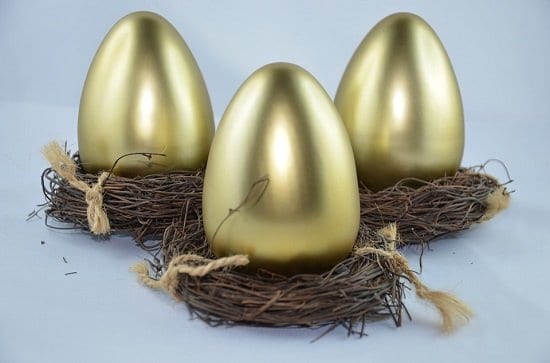
There are many traditions that are typically associated with the Easter holidays. Bunny’s, cards, chocolate eggs, and hot cross buns to name but a few. Gold’s association with Easter, however, goes a long way back and it has often been a common practice to paint an egg gold or decorate it in gold leaf at Easter.
This practice was partly influenced by King Edward 1 who once ordered 450 eggs to be gold leaved and coloured to give as gifts to the royal household. Gold is widely recognised as one of the official colours of Easter, along with purple (colour of lent), white (colour of Easter Sunday) and red (the blood of Jesus).
Before this though, graves in Egypt have found ostrich eggs decorated in gold and silver which were dated to five thousand years ago, so the link between gold and eggs actually far pre-dates Easter.
Read the FREE Gold Insider’s Guide PDF to ensure you buy the best gold
Golden Easter Eggs
In 2009 Selfridges made headlines when they advertised a gold themed Easter egg for the incredible sum of £1000. The Easter egg contained a particularly rare one-ounce gold Britannia coin no longer produced by the Royal Mint and was advertised as the ultimate luxury gift.
Why gold coins are the perfect gift this Easter
During the 13th century, the British royal family gave gifts of food, clothes and coins to the poor on the Thursday before Easter. By the time Charles II came to the throne in 1630, special coins known as Maundy money were produced specifically for the occasion. In the US, one of their long-standing Easter traditions is to fill Easter eggs with chocolate coins or sometimes even real coins can be used.
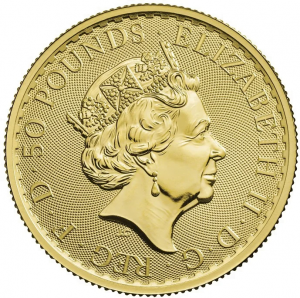
Gold coins such as Sovereigns and Britannias make very special and unique Easter gifts. Gold is seen as an excellent store of wealth and has continually held its value over long periods. The gift of gold is one that will last a lifetime as opposed to just the 15 minutes it takes to eat an Easter egg. Gold coins that are classed as British legal tender also benefit from being Vat and Capital gains tax-free in the UK providing, they are over 22 karats.
Here are three specific gold investments you may want to make this Easter, which suit a variety of budgets:
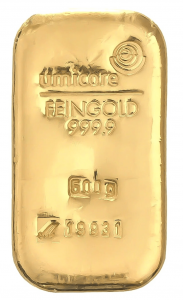
- Best value 100g gold bars – around £5,000 each
- 2023 King Charles 1oz Gold Britannia – around £1,680 each and
- 2022 Gold Memorial Sovereign Coin – 7.988 grams – around £410 each
Gift the gift of gold this Easter
Gold represents the perfect gift for either a loved one or special family member this Easter. Not only is it something they can cherish and look after, with a view to possibly handing it down to future generations, it also introduces them to the world of investing.
Physical Gold has one of the largest selections of gold available in the UK. Whether you’re looking to purchase gold sovereigns or gold bars, we have the ideal gift for you this Easter. For more information on any of our product or services, please give us a call on 020 7060 9992.
Image Sources: Postapo

(Click image above to expand infographic)
Gold Storage or Delivery
Is gold storage something you’re thinking about? Are you interested in purchasing physical Gold or silver, but concerned about where you’ll store it? Our infographic highlights the various options available; to help put your mind at rest.
The main advantage of owning physical gold is that it’s the real thing! There’s no counterparty risk, as there’s no electronic trading or paper involved. It’s as real and solid as can be and something that you have the pleasure of holding in your hand.
But how do you keep a precious metal safe and secure?
Insured delivery direct to your door
Delivered to you fully insured, our delivery is discreet, so the whole neighbourhood won’t know what you’re taking delivery of. It’s packaged in plain, padded envelopes, safely and securely. We also track every package that we post, which allows us to follow up on any queries and provide reassurance on when you should expect your delivery. If your gold or silver is in stock, and you place your order before 2pm, then we should be able to get it to you by the next working day. Before 1pm to be precise. Should your order be out of stock then we’ll aim to deliver it within 2 – 3 days – depending on the stock availability. From 2018 all gold orders benefit from free UK delivery.
Thinking of buying gold? Download the FREE 7 step cheat sheet first
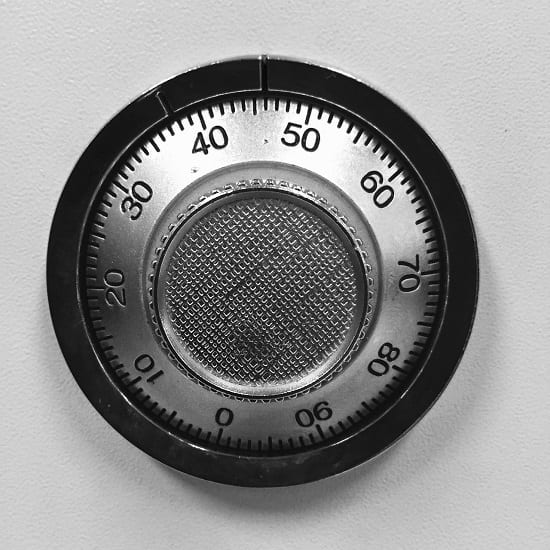
Home safes often have a digital locking device
Gold Storage Options
Once you’ve received your package and signed for it, there are several options for you to consider regarding storage:
Home storage
Many people choose to keep their gold stored safely at home and there are many options available for home storage. A steel safe is the most obvious choice for safety and security – preferable bolted down to the floor. But if bolting the safe isn’t an option, then try to keep them safe somewhere out of sight, like in a cupboard, hidden by other items.
You can also use everyday household cupboard items, like tins, packets of cereal, boxes of tea bags etc. to hide and conceal your gold, but it’s important that you remember where you’ve stored it so it doesn’t accidentally get thrown away. There are many different steel safes available for home use. These include fireproof and waterproof ones. There are even models that can be unlocked by using your fingerprints. They can also be installed inside the flooring, underneath the carpet.
There are a number of ingenious secret storage items that you can purchase from www.physicalgold.com, such as clocks or wall sockets, to help you conceal & store your precious metals.
Hiding things under the mattress is also more common than you might think, but whichever home storage option you choose, you must ensure your home insurance covers the total value of the gold. The advantage of keeping your gold at home is that you know exactly where it is, you can keep it close and touch it, as often as you wish.
Bank Deposit Box
Safety deposit boxes at banks are considered to be extremely safe and secure, so it’s worth visiting your bank to ask about the availability of one if this is of interest to you. Many banks have been withdrawing these facilities over the past few years though, so there may be a waiting list or a box may be quite difficult to acquire.
Safety Deposit Facility
A third-party safety deposit facility offers boxes for you to rent to keep your small, personal household items safe. These facilities are usually open 9 – 5pm for you to visit and generally cost between £100 – £1000 per year to rent.
Since tariffs are expensive, it could work well as a short-term arrangement. The benefits of using a safety deposit facility are that your valuable assets are stored away from your home.
Additionally, these boxes are available in various sizes and you can choose one according to your requirements. Of course, one of the disadvantages of this arrangement is that you cannot access the box at any time of your choice. You can only do so when the facility is open. Also, there could be a natural disaster like a flood that could damage your belongings stored inside the box. In many cases, the operator may refuse to re-compensate you for your damages when this happens, simply because their insurance may not cover it
Professional Vault Storage
The most common (and safest) gold storage option is to arrange for the secure storage of your gold with your chosen dealer, as they have access to secure vaults. These professional vaults offer 24hr safety and security, giving you reassurance and peace of mind. The vaults are highly secure and generally don’t allow public visits, but rest assured your gold will be personally allocated and stored separately in a fully segregated account, within your own little section in the vault.
At www.physicalgold.com, pension gold, silver coins and gold coins are stored at Loomis International, UK – one of the UK’s most secure gold storage facilities. Silver Bars are stored at Network Securities in the Channel Islands – a specialist vault facility that has dual controlled security systems and a direct connection to the local police station.
So if you choose to store your precious metals with us, we can reassure you that all of our stored gold and silver is fully insured, segregated and completely ring-fenced and you can request home delivery of your gold at any time. However, given the high levels of security involved, it’s often not possible for the public to request to view their gold, but we can assure you that it is there – safe and secure.
Gold or Silver Investment – which do I choose?
As investors increasingly turn to precious metals to protect their wealth, a common dilemma faced by many is whether to invest in gold or silver. The two metals behave quite differently, so it’s important to understand the dynamics of investing in either, before deciding to add them to your portfolio. Striking the right balance is essential to extricate value from your investments. Far too many people invest money into these asset classes without understanding what they’re getting into. Unfortunately, this can result in undesirable exposure to risk, further up the road. So, let’s take a close look at the right approach to combining your investments in both precious metals.
Historical analysis
Gold has historically been the precious metal of choice for most investors. During upheaval in the market, gold can provide safety and security for your investment portfolio. If we look back at every financial crisis, it is glaringly obvious that gold has risen to new heights during these times of uncertainty.
During the 2008 market crisis, gold reached its highest point in 2011. Similarly, at the height of the economic crisis created by the global pandemic last year, gold once again touched historical highs in August 2020. Even during a normal period in the market, gold performs steadily. Although the yellow metal may rise or fall in the course of market transactions, it does not suffer from extreme volatility. This makes it a fairly safe bet for most investors.

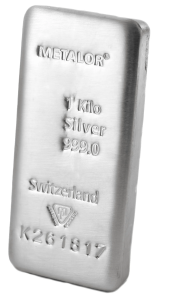
Silver bullion bars can be a great investment as the price is predicted to rise
Investment horizon
Investment planning is perhaps the most important step when investing money into any asset class. Gold and silver exhibit different behaviours across different time horizons. Gold has historically been seen as a safe and steady investment that generates returns and unlocks value over time. Silver, on the other hand, is often seen as a volatile precious metal.
Currently, there is a lot of interest in silver investments as pundits have predicted the mercurial rise of silver in the years to come. Gold is usually a better option for those investing with a shorter time horizon. Silver investors will require a much longer time horizon to unlock value from their investments. However, if the white metal behaves as predicted, there is an incredible opportunity to get in at lower price points and reap great returns in the future.
The gold-silver ratio
Another factor that governs investments in gold or silver is their price ratio. This has widened considerably over the years. It used to be 47:1 but now stands at 85:1. So, silver presents an incredible opportunity for investors to access the precious metals market as it is 85 times cheaper than gold. That is simply an incredible gap, and many investors want to get in and make hay while the sun shines.
But does it make sense to invest in silver? The white metal is a lot cheaper than gold and provides investors with affordable and easy access to the precious metals markets. Due to the widening gold-silver ratio, an entry-level investor may find it more attractive to buy silver.
Daniel Fisher, CEO of Physical Gold believes that the gap could widen further in the near future. According to his prediction, there is a possibility that it could soon be 100:1. Now, more than ever, it is imperative to strike the right balance between these two precious metals, when deciding to add both to your portfolio.
The silver Britannia is an excellent coin for investment
The demand for silver surges
Additionally, silver has suffered from production shortages in the last few years, while demand has risen substantially. As a metal, silver has certain sterling properties. It is one of the most conductive metals and also very ductile. Due to this, it is in demand across several industries like solar, electronics, electric vehicles, etc. Silver investors believe that the price of the white metal may escalate significantly in the years to come, and it may be prudent to lock in investments at low prices now. This may create a wonderful opportunity to reap profits when prices start to rise.
Precious metals portfolio – the right balance
Silver investments can be more volatile when compared to gold. Silver enjoys huge industrial demand and prices are expected to rise as supplies are thinning out. Historical price charts show us that silver tracks gold in terms of growth. Over the long-term, the gold-silver price ratio could reduce to 25:1. The production price is another factor that also needs to be taken into consideration.
In the case of gold, the production margins fade in comparison to its value. However, silver’s current spot price of around £11 does not allow the flexibility to absorb these margins. To strike a healthy balance, a prudent approach could be to maintain a holding of 8% in gold, followed by 20% in silver.
So, if you are focused on building a strong portfolio and hedging risks, gold may be a natural choice. However, if long-term profits attract you, silver investments may fulfil this objective. Gold offers better returns in the short-term and silver can provide you with an opportunity to capitalise over the longer term.
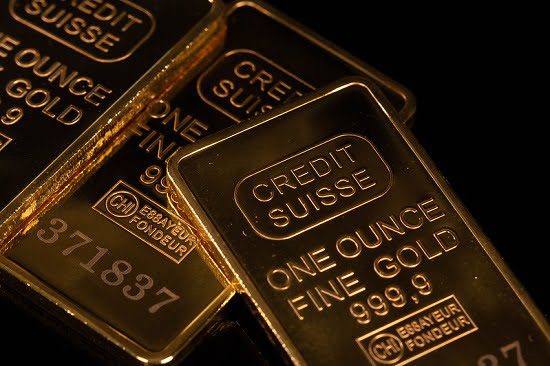
Physical gold investments can generate better returns in the short term
Combining the two metals
It’s actually most prudent to own a mix of both gold and silver. Gold is a more established safe-haven asset, so tends to gain more from market downturns and volatility. Silver can also perform well in these circumstances but also benefits when industrial demand for silver increases as it’s used so widely in electronics. While silver certainly has more opportunity for huge growth, gold is the steadier of the two.
Of course, there are certain tax advantages and disadvantages of buying silver. Silver coins that are legal tender in the UK can qualify for Capital Gains Tax (CGT) exemption. However, other silver investments may not.
The investment experts at Physical Gold can discuss your gold and silver investments
Our investment team is well-placed to offer expert advice to investors like you about investments in either precious metal. Get in touch with us by dialling (020) 7060 9992 or simply send us an email. We can assist you in making the right decision to balance your portfolio by adding both gold and silver.
Image Credit: tookapic
Silver investing now and in the coming years
In this video, we’ll take a look at silver’s prospects for 2020 and beyond. Over the past 5 years, interest in silver has grown exponentially to the point where we now get almost as many silver enquiries as gold.
So is silver a worthwhile investment in 2022 and beyond, and what can we expect from it, we examine silver investing in 2022?
I’d like to start by looking at downside risk. The silver price fell from around £13 an ounce at the start of 2017, to £12.50/oz the following year, and nearer to £12 an ounce in 2019. Clearly, the prospect of owning a depreciating asset is unappealing.
Downside risk
However, unlike gold, silver’s demand consists predominantly from industrial use. As the world’s most conductive material, silver is used in most electronic components, solar panels, photography and medicines. The digital age is only going to develop over the coming years, creating new electronic demands on silver. The search for alternative energy will lead to increasing silver demand with electric cars and electric solar energy. So with industrial demand rising, downside risk to silver is minimal.
Gold-Silver ratio
It’s also fair to say that the silver price has suffered far worse in recent years than the gold price, with clear suggestions that it’s been oversold. The ratio between the two metals’ prices has widened from a long term average of 47:1 to 70:1 a few years ago, and now an incredible 95:1.
This theme may scare inexperienced investors, but this would suggest a buying opportunity in 2022 for silver. If you can lock in prices when the silver price is so low, your upside becomes magnified. The silver market is far smaller than that of gold, so prices can be more volatile. It also means that the price can move up in percentage terms far quicker and far greater.
Global economy
The silver price could well receive a double boost over the coming years.

As well as the rising industrial demand, there’s plenty of uncertainty in the global economy to boost silver as a safe haven. 2019 and beyond marked a turn in the economic cycle. The middle of 2018 saw property prices begin to fall and global stock markets start to decline from their 9-year bull run. After nearly a decade of rising stock and property prices, the global economy is set for a big correction, especially with interest rates now on the rise. Throw in Brexit and a growing car leasing credit bubble, and safe havens could well become the flavour of the month once again. Gold will likely rise first, with silver following behind. But once silver starts its upward trend, the pace of increase will outstrip that of gold.
Diversify
A lot of investors ask me whether they should buy gold or silver. After all the two metals are quite different. For me, there’s a strong case to own both. Diversification is key in today’s digital globalised economy, so investing in silver and gold is a great way to hedge your hedge!
Now tax free
By sticking to Silver Britannia coins, any profit you make is also free from Capital Gains Tax!
Silver investing in 2020 with Physical Gold Ltd
So there you have it. 2020 and beyond are set to be exciting years for silver investing. Courage may be needed to enter a market which has fallen in value, but history will tell you, that’s the exact time to stack your claim.
If you feel silver could play a role in your investment portfolio, or you simply want to buy some silver coins or bars, then don’t hesitate to call our team of experts on 020 7060 9992 for any guidance you need.
I hope you’ve enjoyed today’s video. If so, please check out all 20 videos in the gold & silver investment guide series.
Different gold alloys
The chemistry of gold makes it a unique element in the world, such that there is none like it that can be found. Many of us learnt during high school chemistry lessons that the chemical symbol of gold is Au. Gold has an atomic number of 79, which simply means that each atom of the precious metal contains 79 protons within its nucleus. The unique colour of gold, however, is not dependent on the atoms, as the colour of a metal is dependent on how electrons behave between energy bands. In the case of gold, its unique colour is based on these transitions which give the metal an unmistakable, alluring, warm lustre that humans have found irresistible for centuries.
The unique properties of gold
The purity of gold is indicated by the karat number the metal possesses. When gold is fused into an alloy with other metals, its purity decreases, as does its karat number. So, 14 karat gold has a far greater proportion of base metals than 24 karat gold, which has a purity of 999.9. Now, that leads us to an interesting question. Why is gold formed into an alloy with other metals? In reality, this has a lot to do with its usage. Gold is commonly used in making jewellery. In order to use gold to carefully craft the intricate designs of jewels, the metal needs to undergo certain changes that make the substance easier to work with.

Gold is often melted and fused with other metals to form alloys with unique properties
For example, we know that pure gold is extremely soft and malleable. This means that if we manufacture jewellery using 24 karats pure gold, the products would never retain their shapes. On the other hand, pure gold is also ductile. Believe it or not, one ounce of gold can be pulled into 80 km of gold wire with a thickness of 5 microns. So, in order to make it more usable and durable, certain base metals need to be added to gold to harden it. So, as a savvy gold investor, you need to know and understand the different types of gold. Understanding its composition gives us greater insight into its characteristics and industrial usage.
The different faces of gold
The creation of gold alloys greatly affects the properties of the precious metal, which is why it’s a useful technique that has been around for years. Important properties like the colour, melting point, ductility or malleability of gold can be altered by simply adding other metals into the mix. When we add base metals like zinc, cadmium or tin, the melting point of gold is reduced substantially.
Gold has a melting point of 1063 degrees Celsius. Due to the reduction of the melting point, savings in energy costs are achieved. On the other hand, adding platinum or nickel increases the hardness of the alloy. This is essential for jewellery manufacturers, as pure gold is too soft to work with. By hardening the surface, the jewellery also becomes scratch-resistant, which is an added advantage.
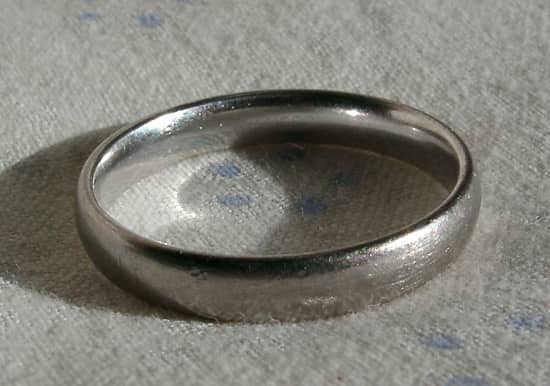
White gold is plated with rhodium in order to make it attractive
Changes in colour
Gold jewellery now comes in a range of fantastic colours. These colour effects are created by adding copper, palladium, silver or nickel in accurate proportions. Since these metals each have their own properties, they are able to create different hues when fused with gold. Popular gold shades like green, grey or white gold are created in this manner. An interesting example is white gold. This is created by adding rhodium. The combination not only creates a white lustre, it also makes the surface much harder, making it scratch proof. The gold-titanium alloy is another example of an innovative alloy used to make wedding rings. In this alloy, only 1% of titanium is introduced, which is enough to make it really strong and creates a lovely shimmer, along with a grey tone.
Download our FREE 7 Step cheat sheet to buying the best type of gold for investment here
Call our gold experts to find out about different types of gold
At Physical Gold, our gold experts are able to guide customers on every type of gold there is in the market. We advise customers just like you on making investments in precious metals every day. We are a reputed online gold and silver broker and all our products are sold with a certificate that guarantees its genuineness as well as a buyback promise. Call our team now on 020 7060 9992 or drop us an email and a member of our team will get in touch right away.
Image credits: Pixabay and Wikimedia Commons
