Silver Price Predictions for 2026
21/01/2026Daniel Fisher

Accumulate gold coins on a regular basis for home delivery or storage.
Let our experts hand-pick a gold investment portfolio for you.
Free & fully insured UK Delivery. Learn more

Secure & flexible payments. Learn more

Buyback Guarantee Learn more

A cost-effective way to buy silver bullion with off-shore storage
Let our experts hand-pick a silver investment portfolio for you.
Free & fully insured UK Delivery. Learn more
Secure & flexible payments. Learn more
Buyback Guarantee Learn more
Free & fully insured UK Delivery. Learn more
Secure & flexible payments. Learn more
Buyback Guarantee Learn more


Accumulate gold coins on a regular basis for home delivery or storage.
Let our experts hand-pick a gold investment portfolio for you.
A cost-effective way to buy silver bullion with off-shore storage
Let our experts hand-pick a silver investment portfolio for you.
Free & fully insured UK Delivery. Learn more
Secure & flexible payments. Learn more
Buyback Guarantee Learn more
Free & fully insured UK Delivery. Learn more
Secure & flexible payments. Learn more
Buyback Guarantee Learn more
2026 Silver Price Summary
Will Silver's Momentum Continue?
Silver has entered 2026 with remarkable momentum. After smashing through its long-standing resistance at $50 (£37.50) and setting a new all-time high in late 2025, the metal is now at the centre of one of the strongest structural commodity stories in the market. With 2026 year-to-date gains already above 30%, investors are asking the same question they asked of gold: can this momentum continue throughout 2026?
Forecasting silver can be more challenging than gold because it behaves both as a monetary metal and industrial metal. In other words, it can experience high demand as a hedge against marco-economic pressures and if the economy thrives. The current alignment of macro pressures, structural supply deficits, industrial demand from green and AI technologies, and a historic technical breakout creates one of the most compelling outlooks for silver in more than a decade.
Readers who want background on silver-market mechanics can explore What is the silver spot price?
Analyst expectations for 2026 vary more widely than they do for gold, but the direction is unmistakable.
Readers seeking longer-term trends can view historical movements on our Silver Price Charts page.

One of the most significant friction points for buying silver is the additional cost of VAT. Anyone wishing to take possession of silver coin or bars will be charged 20% VAT which is unrecoverable. With the silver price moving so quickly, many investors feel this is a short-lived hurdle to overcome. But for those wishing to obtain silver without paying VAT, our Offshore Silver Product enables customers to buy silver coins completely free from tax.
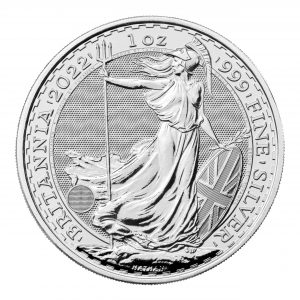
With silver Britannias stored in a specialist bonded warehouse in Zurich, our customers can take legal ownership of physical silver coins, without incurring VAT. Not only that, but any gains made on the silver are also free from Capital Gains Tax (CGT) for UK investors. Find out more here.
Across institutions and high-profile commentators, the consensus for 2026 is that silver remains in a structurally bullish but highly volatile regime. Tight physical supply, persistent industrial demand from the energy transition and technology sectors, and growing retail participation underpin expectations for elevated prices well above historic norms.
While banks such as Citigroup and Bank of America acknowledge the possibility of triple-digit silver prices under sustained retail and supply-driven pressure, they also caution that prices have moved faster than fundamentals justify, increasing the risk of sharp corrections. UBS reinforces this view, expecting strength to persist but with pronounced two-way volatility rather than a smooth upward trend.
In short, 2026 is widely seen as a year of high prices, extreme swings and rising strategic importance for silver, where pullbacks may be as defining as rallies – and where upside scenarios remain credible, but far from one-way.

For new buyers, the message from analysts is clear – silver’s long-term fundamentals remain strong, but timing matters more than ever. Bank of America and Citigroup both highlight tight physical supply, accelerating industrial demand and growing retail participation as powerful tailwinds, with credible scenarios pointing to triple-digit prices.
However, prices have already moved well beyond traditional valuation anchors, increasing the likelihood of sharp pullbacks. For prospective buyers, this favours a measured, staged approach, using volatility and corrections as entry points rather than chasing momentum during spikes
For existing holders, the consensus supports staying invested, but with realistic expectations around volatility. Analysts broadly agree that silver has entered a structurally higher price regime, underpinned by deficits between industrial demand and mine supply, particularly from energy transition technologies.
At the same time, UBS warns that silver’s small, thinly traded market can amplify both rallies and reversals. In this environment, holders may benefit from viewing silver as a strategic asset rather than a short-term trade, while remaining mentally prepared for sharp swings that do not necessarily undermine the long-term thesis.

For those considering selling, the forecasts suggest 2026 is unlikely to be a simple ‘top-and-out’ year. While prices may look stretched versus fundamentals in the near term, most analysts do not see the bullish drivers fading quickly. Supply constraints, retail demand and silver’s renewed role as a hedge against monetary and systemic risk remain intact.
Even highly bullish commentators such as Robert Kiyosaki caution against emotional, FOMO-driven decisions. Rather than an all-or-nothing exit, the outlook points towards selective profit-taking into strength, balanced against the risk of missing further upside in a market where extreme moves are increasingly plausible.
Silver’s 2026 outlook benefits from the same macro tailwinds supporting gold, but with two additional factors: structural deficits and explosive industrial demand. This could present a huge buying opportunity, especially with silver being so much cheaper than gold? Below is a breakdown of the major forces shaping the market.
The US dollar index fell more than 8% in 2025 due to:
• President Trump’s tariff-led trade volatility
• Global de-dollarisation
• Expectations of a more dovish Federal Reserve and rate cuts
• US fiscal uncertainty
This trajectory is expected to continue into 2026.
Impact on 2026:
➡️ Bullish. A weaker dollar raises silver’s purchasing power internationally and tends to coincide with strong precious-metal rallies.

Silver’s unique properties, especially as a conductor of electricity, ensure it plays a significant industrial role. Unlike gold, over 50% of silver demand comes from manufacturing.
Key drivers going into 2026:
• Solar PV continues to exceed 200+ million ounces of annual consumption
• AI data centres require high-efficiency silver-coated semiconductors
• EVs continue to increase per-vehicle silver loadings
• 5G and electrification infrastructure require silver-intensive components
Attempts to substitute silver have consistently failed due to lower conductivity.
Impact on 2026:
➡️ Strongly bullish. Industrial demand curves are steepening year after year.

Supply continues to fall short of demand. Key factors include:
• Declining grades in major mines
• Limited new projects coming online before 2027–2028
• Chinese inventories at decade lows
• Silver lease rates elevated across major hubs
• London and Shanghai experiencing persistent shortages
This is not a temporary silver supply squeeze – it reflects a deep, multi-year structural imbalance.
Impact on 2026:
➡️ Strongly bullish. Supply constraints reinforce upward pressure and limit the size of pullbacks.
ETF demand has surged:
• November 2025 saw the largest inflows since July
• 9 of the last 11 months showed net additions
• Call-option premiums and bullish skew reached their highest since 2022
Futures structure:
• Silver has broken out of its two-year ascending channel
• Managed-money participation remains below past peaks – meaning the rally is not overstretched
• A shift into backwardation would confirm severe physical tightness
Impact on 2026:
➡️ Bullish. Investor positioning supports continued rallies, especially during rate cuts.
Three factors currently add a geopolitical premium to silver:
• Inclusion on the US critical minerals list
• Fears of export restrictions or tariffs
• Rising concerns about supply-chain security
Impact on 2026:
➡️ Moderately bullish. These risks amplify the supply deficit and tighten global availability.
Silver’s move to $95/oz confirms one of the most significant technical breakouts in decades, decisively clearing the long-standing $50–$54 resistance zone that capped prices for over 13 years.
Key levels:
This is the first sustained, multi-timeframe breakout since 2011, now reinforced by strong momentum and follow-through rather than a single spike.
Impact on 2026:
➡️ Decisively bullish. The technical structure supports higher highs and elevated volatility, with pullbacks more likely to be corrective pauses than trend reversals.


The gold–silver ratio has now fallen to around 52, placing it firmly within the long-term average range of 40–60 and marking a decisive shift from the elevated levels seen earlier in the cycle.
At these levels, silver is no longer deeply undervalued relative to gold, but history shows that bull markets in silver rarely stop at the average. In previous precious-metal upcycles, the GSR has often overshot below 50, and in extreme phases has compressed towards 40 or lower, reflecting sustained silver outperformance.
Impact on 2026:
➡️ Constructively bullish. The GSR confirms that silver has entered an outperformance phase versus gold. While relative value support is less extreme than earlier in the rally, further compression remains plausible if momentum, industrial demand and retail participation persist.
Free ultimate guide for keen precious metals investor
UK buyers must consider the pound–dollar exchange rate as this has a huge impact on the price of silver for UK investors.
A stronger pound → moderates silver prices in GBP
A weaker pound → amplifies USD silver increases
Example:
At $60/oz and GBP/USD 1.30 → £46.15
At $60/oz and GBP/USD 1.20 → £50.00
Effect for 2026:
If sterling strengthens, UK price rises may be calmer. But global risk aversion or further dollar weakness could drive steep GBP-denominated gains.
Track the silver price in various currencies on our interactive chart, which enables you to set price alerts at key levels.
Silver Price Charts
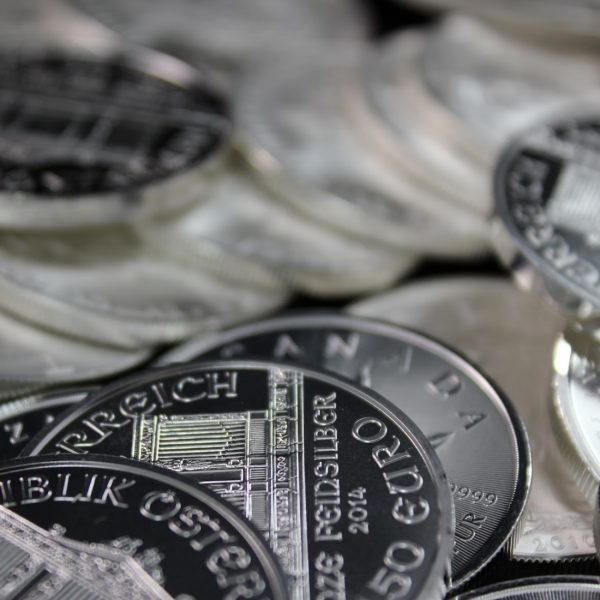
Analysts broadly expect silver to trade between $90 and $120 per ounce in 2026, with upside scenarios extending to $150–$170 if supply deficits and retail demand persist. Prices are expected to remain high but volatile, supported by strong industrial demand and tight physical supply.
Yes. Analysts widely expect silver to continue rising due to structural supply deficits, surging industrial demand, a weaker US dollar, and strong ETF inflows.
Solar PV, EVs, semiconductors, medical technology and AI data centres all require silver for its unmatched conductivity. These sectors are expanding faster than mine supply.
Rate cuts weaken real yields and usually support silver. Lower yields reduce the opportunity cost of holding non-yielding assets and often increase ETF demand.
A weaker pound increases silver prices for UK buyers, while a stronger pound moderates or offsets rises in USD silver.

Live Gold Spot Price in Sterling. Gold is one of the densest of all metals. It is a good conductor of heat and electricity. It is also soft and the most malleable and ductile of the elements; an ounce (31.1 grams; gold is weighed in troy ounces) can be beaten out to 187 square feet (about 17 square metres) in extremely thin sheets called gold leaf.
Live Silver Spot Price in Sterling. Silver (Ag), chemical element, a white lustrous metal valued for its decorative beauty and electrical conductivity. Silver is located in Group 11 (Ib) and Period 5 of the periodic table, between copper (Period 4) and gold (Period 6), and its physical and chemical properties are intermediate between those two metals.


