Silver Coins FAQs (Frequently Asked Questions)
09/09/2026Daniel Fisher

Accumulate gold coins on a regular basis for home delivery or storage.
Let our experts hand-pick a gold investment portfolio for you.
Free & fully insured UK Delivery. Learn more

Secure & flexible payments. Learn more

Buyback Guarantee Learn more

A cost-effective way to buy silver bullion with off-shore storage
Let our experts hand-pick a silver investment portfolio for you.
Free & fully insured UK Delivery. Learn more
Secure & flexible payments. Learn more
Buyback Guarantee Learn more
Free & fully insured UK Delivery. Learn more
Secure & flexible payments. Learn more
Buyback Guarantee Learn more


Accumulate gold coins on a regular basis for home delivery or storage.
Let our experts hand-pick a gold investment portfolio for you.
A cost-effective way to buy silver bullion with off-shore storage
Let our experts hand-pick a silver investment portfolio for you.
Free & fully insured UK Delivery. Learn more
Secure & flexible payments. Learn more
Buyback Guarantee Learn more
Free & fully insured UK Delivery. Learn more
Secure & flexible payments. Learn more
Buyback Guarantee Learn more
We speak to investors about silver coins every day, and many of the same questions come up time and again.
Are silver coins better than bars? Should you buy Britannias? Does it matter if a coin tarnishes? How do you know whether it’s genuine? And perhaps most importantly, how do you eventually sell it?
So rather than give you 40 one-line answers, we’ve brought the most useful silver coin questions together in one place.
These are the answers we’d give a client who called us and asked.
Silver coins can be a useful way to add physical precious metals to an investment portfolio, particularly for investors who want greater divisibility than a large silver bar provides.
For UK investors, certain coins have another major advantage. UK legal tender coins such as Silver Britannias are exempt from Capital Gains Tax (CGT), making them particularly attractive for larger holdings.
Silver is generally more volatile than gold, however, and physical silver carries relatively high dealing spreads. We therefore view silver coins as a medium to long-term investment rather than something to trade frequently.
Read our full guide: Are silver coins a good investment?
Silver coins can be a useful way to add physical precious metals to an investment portfolio, particularly for investors who want greater divisibility than a large silver bar provides.
For UK investors, certain coins have another major advantage. UK legal tender coins such as Silver Britannias are exempt from Capital Gains Tax (CGT), making them particularly attractive for larger holdings.
Silver is generally more volatile than gold, however, and physical silver carries relatively high dealing spreads. We therefore view silver coins as a medium to long-term investment rather than something to trade frequently.
Read our full guide: Are silver coins a good investment?
Silver coins combine the characteristics of physical silver with the convenience of owning the metal in small, recognisable units.
Investors may choose them because:
Silver isn’t suitable for everybody, and its price can fluctuate considerably. But for investors who specifically want physical silver, coins are one of the most flexible ways of owning it.
For more detail, see why invest in silver coins.
They certainly can be, but we’d focus on the right bullion coins.
For UK investors, we generally favour established, recognisable coins with strong secondary-market demand. Silver Britannias are the obvious example because they’re widely traded and CGT-exempt for UK investors.
Avoid assuming that a more unusual or expensive coin is automatically a better investment. Paying a large collectable premium can make it harder to achieve a return.
For straightforward investment, boring can sometimes be beautiful.
Nobody can guarantee that.
A bullion coin’s value is heavily influenced by the underlying silver price, so its value can rise or fall with the metal.
Silver demand comes from both investors and industry, including electronics, solar technology and other manufacturing applications. That gives the metal an interesting long-term investment case, but doesn’t guarantee future returns.
Limited or collectable coins may also gain value independently of the underlying silver price, although they carry their own risks.
Read our detailed analysis of whether silver coins could rise in value.
Trying to identify the absolute bottom of the silver market is virtually impossible.
We’d pay more attention to whether the current price fits your long-term investment case than trying to pick the perfect day.
If you’re worried about timing, consider spreading a larger investment across several purchases. Buying periodically can average your entry price and reduce the risk of committing everything immediately before a short-term fall.
Remember that physical silver has meaningful buying and selling spreads, so it’s generally better suited to longer-term ownership.
There isn’t a universal answer.
You might sell because silver has reached your target price, you need to rebalance your portfolio, you need access to cash or your original investment thesis has changed.
We’d encourage investors to think about their exit strategy when they buy, not only when they eventually want to sell.
And don’t assume that the dealer offering the lowest purchase price will necessarily offer the strongest buyback price. Both sides of the transaction matter.
For a UK investor primarily interested in investment rather than collecting, we’d usually start with Silver Britannias.
They’re mass-produced bullion coins, so premiums can be competitive, and their recognition makes them straightforward to value and sell.
Other international bullion coins can also be excellent products, but they don’t offer UK investors the same CGT advantage as qualifying UK legal tender coins.
Limited-edition coins can be added if you specifically want some numismatic potential, but we’d normally build the core of an investment portfolio with straightforward bullion.
International bullion coins such as American Silver Eagles are also popular, but UK investors should consider the tax advantages offered by qualifying UK legal tender coins. See our Silver Britannia vs American Silver Eagle comparison for a detailed comparison.
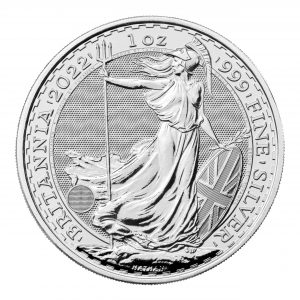
Silver Britannias are official UK bullion coins produced by The Royal Mint. First introduced in 1997, they feature Britannia on the reverse and have become one of the UK’s best-known silver investment coins.
Modern 1oz Silver Britannias contain one troy ounce of fine silver and have a face value of £2. For UK investors, one of their biggest attractions is their status as UK legal tender, which means any gains are exempt from Capital Gains Tax.
Their combination of recognisability, divisibility, liquidity and tax efficiency is why we generally regard Britannias as an excellent foundation for a UK silver coin portfolio.
Read our complete guide to Silver Britannia coins.
The value of a standard Silver Britannia is primarily determined by the amount of silver it contains and the current silver price.
But don’t simply multiply the spot silver price by one ounce and assume that’s what your coin is worth.
When buying, you’ll usually pay a premium above the underlying silver value. When selling, the price a dealer is prepared to pay will depend on the current silver price, market demand, the type and condition of the coin and prevailing dealer buyback rates.
Certain older, scarce or collectable Britannias may command an additional premium, but most standard bullion Britannias should be viewed primarily as an investment in silver.
Read more about how much Silver Britannia coins are worth.
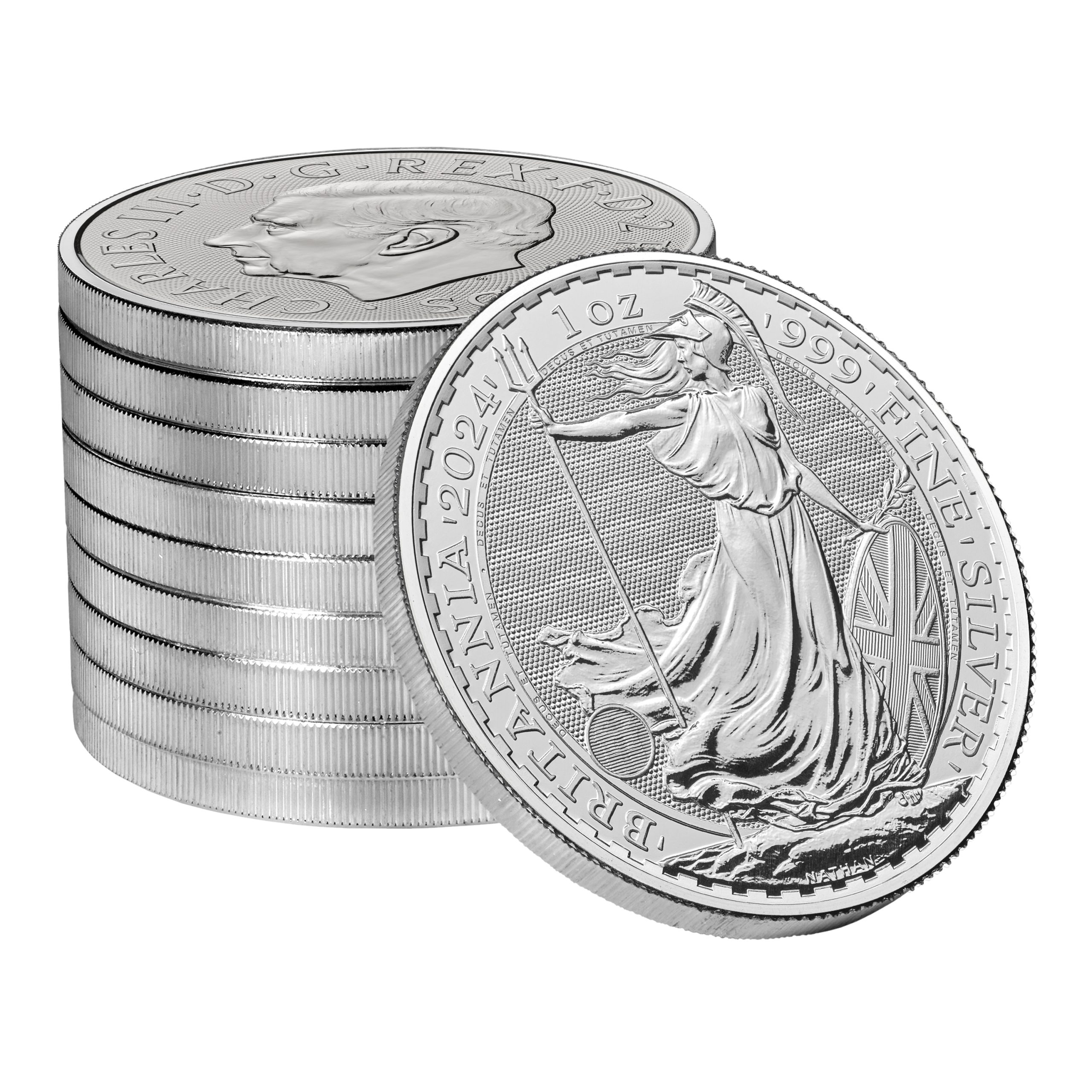
For UK investors seeking physical silver, Silver Britannias are usually one of our preferred choices.
They’re widely recognised, contain investment-grade silver, have an active secondary market and, crucially, are UK legal tender. This means gains made by UK investors are exempt from CGT.
Their standard 1oz format also makes them considerably more divisible than large silver bars.
Not every Silver Britannia has a fixed maximum mintage.
Standard bullion Britannias are generally produced to meet investment demand, while particular special editions, proofs or collectable versions may have specified limited mintages.
This distinction matters when you’re buying. A limited mintage can contribute to collectable value, but scarcity alone doesn’t guarantee that a coin will become more valuable.
If your primary objective is silver investment, we’d focus first on the price you’re paying for the silver, liquidity and tax efficiency rather than chasing a low mintage.
See our detailed guide to Silver Britannia mintage limits.
Silver Britannias are among the easier silver bullion coins to sell in the UK because dealers recognise them immediately and there is an established secondary market.
For most investors, we’d recommend selling to an established precious-metals dealer. You should be able to obtain an indicative price, agree how the price will be fixed, securely deliver or transfer the coins and receive payment once they’ve been verified.
It’s another reason we suggest thinking about resale before you buy. A dealer with a competitive buyback service can be worth far more in the long run than saving a small amount on your original purchase.
Private sales may occasionally achieve a higher price, particularly for collectable coins, but they also introduce additional security, payment and authenticity risks.
For a broader explanation of the selling process, read our guide to selling silver coins.
Neither is universally better.
Silver bars can offer a lower premium per ounce, particularly in larger sizes, so they’re useful when your priority is obtaining as much silver as possible for your money.
Coins provide much greater divisibility. Certain UK coins also have the significant advantage of being exempt from CGT.
So we’d generally look at your investment size, tax position, storage requirements and eventual exit strategy before choosing.
Read our complete comparison of silver coins vs silver bars.
A silver coin is issued by an official minting authority and usually has a denomination or face value.
A silver round may look similar but is typically produced privately and isn’t legal tender.
Rounds can sometimes offer relatively low premiums, but recognised bullion coins tend to have a stronger secondary market. UK legal tender coins can also provide UK investors with CGT advantages that privately produced rounds don’t have.
Think about four things:
Premium. How much are you paying above the underlying metal value?
Liquidity. How easy will the coin be to sell?
Tax. Does the coin qualify for CGT exemption?
Recognition. Will dealers immediately know what they’re buying when you eventually sell?
For UK investors, that combination frequently points back towards Britannias and other suitable Royal Mint bullion coins.
That’s a slightly different question.
An investor is primarily interested in the metal, tax treatment, liquidity and eventual return. A collector may happily pay more for scarcity, condition, history or a particular design.
Neither approach is wrong – just don’t accidentally pay collector prices when your objective is investment.
We’ve explored this distinction further in what silver coins should I collect?
Usually not our first choice for somebody whose primary objective is silver investment.
Proof coins are specially produced to a higher finish and are generally aimed at collectors. You’re therefore paying a substantial premium for presentation, finish and potentially scarcity rather than simply buying silver.
That premium can be rewarded if collector demand subsequently increases, but there’s no guarantee.
For straightforward precious-metals exposure, standard bullion coins usually provide more silver for your money.
Read more: Are silver proof coins a good investment?
If you’re investing primarily for silver exposure, we’d generally favour bullion or uncirculated coins with lower premiums.
If you’re collecting and value exceptional finish, presentation and scarcity, proof coins may appeal more.
The important thing is understanding what you’re paying extra for.
They do different jobs.
Gold is considerably more compact for its value, generally has tighter dealing spreads and is traditionally regarded as the more established safe-haven asset.
Silver costs much less per ounce and benefits from extensive industrial as well as investment demand. That can give it greater upside during strong markets, but it can also make silver more volatile.
Silver also becomes bulky surprisingly quickly.
Many precious-metals investors therefore own both rather than treating it as an either/or decision.
Free ultimate guide for keen precious metals investor
If they genuinely contain silver, yes.
Their value can come from three main sources:
For ordinary bullion coins, the silver price will generally be the biggest influence.
For genuinely rare coins, the metal itself can become a relatively small part of their total value.
The most valuable aren’t necessarily the coins containing the most silver.
Rare dates, low mintages, unusual errors, exceptional condition and strong collector demand can push particular coins far above their intrinsic metal value.
That’s numismatics rather than straightforward bullion investment.
Read our guide to the most valuable silver coins.
They’re two completely different things.
A Silver Britannia, for example, carries a nominal face value. Its actual bullion value is determined primarily by the silver it contains and the market price of that silver.
Nobody sensible is buying a bullion Britannia because of the amount stamped on the coin.
Its legal tender status is nevertheless extremely valuable to UK investors because qualifying UK coins are exempt from CGT.
Read more about silver coins and face value.
Some are.
Legal tender status depends on the issuing country and the particular coin.
Silver Britannias and various other Royal Mint bullion coins have UK legal tender status. You can read more about whether Britannia coins are legal tender. Their nominal face value is substantially below their bullion value, so spending them at face value would make little economic sense.
For investors, the more important consequence is that qualifying UK legal tender coins are exempt from CGT.
It depends on the coin.
Qualifying UK legal tender coins, including Silver Britannias, are exempt from CGT for UK investors. Foreign silver coins, privately produced rounds and silver bars don’t automatically benefit from the same exemption. For a broader explanation of how UK tax applies to precious metals, see our guide to the tax implications of gold and silver for investors.
For somebody building a sizeable silver holding, that distinction can become very important.
Physical silver supplied in the UK is generally subject to VAT, unlike qualifying investment gold, which is VAT-exempt.
This is one of the reasons investors need to think carefully about the buying premium, VAT and eventual selling spread before investing in physical silver.
Pure silver isn’t magnetic.
If a supposed pure silver bullion coin sticks strongly to an ordinary magnet, that’s an obvious warning sign.
But the reverse isn’t true: a coin passing a magnet test doesn’t prove it’s silver. Counterfeiters can use other non-magnetic metals.
Think of magnetism as one useful warning test, not a certificate of authenticity.
There are several checks you can make, including:
Some people also use conductivity or specialist precious-metal testing equipment.
For valuable coins, we’d favour professional verification over relying on a single DIY test.
Silver has exceptionally high thermal conductivity, so ice placed on silver can melt surprisingly quickly.
It’s an interesting demonstration, but we wouldn’t use an ice cube to authenticate an expensive bullion purchase.
A counterfeit made from another conductive material could potentially produce a similar effect. Weight, dimensions, design features and professional testing provide much stronger evidence when used together.
It depends on the coin and when it was produced.
Modern investment bullion coins are generally made from very high-purity silver. Historic circulating coins can contain substantially less because silver was traditionally alloyed with other metals to improve durability.
Britannias themselves have also changed specification during their history.
For more detail, read are silver coins pure silver?
Don’t assume that a silver-coloured coin actually contains silver.
Modern UK circulating coins such as 5p and 10p pieces use base-metal alloys rather than precious silver.
Older British coinage is a completely different story. Many historic coins contain genuine silver, with purity depending on the denomination and date.
If you’ve discovered a collection of older British coins, identify them before treating them as ordinary change.
Insider's cheat sheet to precious metals investment
Silver reacts with sulphur-containing compounds in the environment, which can create a darker layer on the surface.
This is commonly known as tarnishing or, in the coin world, toning.
It doesn’t mean the coin has stopped being silver, and normal toning on a bullion coin doesn’t necessarily destroy its investment value.
Usually, no – particularly if the coin may have collectable or numismatic value.
Cleaning can scratch a coin or alter its original surface and potentially reduce its value significantly.
For ordinary bullion coins, minor marks or toning are generally less important because much of the value comes from the silver itself.
If you’re unsure whether a coin has collectable value, we’d strongly recommend identifying it before attempting to clean it.
It can react with tarnish, but that doesn’t mean we’d recommend it.
Acidic cleaning methods can affect a coin’s surface, and cleaning a valuable numismatic coin can reduce its desirability to collectors.
If you’ve inherited or discovered an old silver coin, don’t reach for the vinegar bottle until you know what you’ve got.
As little as necessary.
Where possible, hold coins by their edges and leave bullion in its original capsule, tube or packaging.
Bullion coins don’t need to look as though they’ve never encountered the atmosphere to retain their silver value, but unnecessary fingerprints, scratches and handling certainly don’t improve them.
For most investors, we’d recommend an established specialist bullion dealer.
Look for transparent pricing, genuine customer reviews, secure delivery, clear terms and – importantly – an established buyback service.
The last point is often overlooked.
When choosing where to buy your silver, ask yourself: would I also trust this business to buy £20,000 of silver back from me?
If the answer is no, saving a few pounds on the initial purchase may not be worthwhile.
Read our guide to where to buy silver coins.
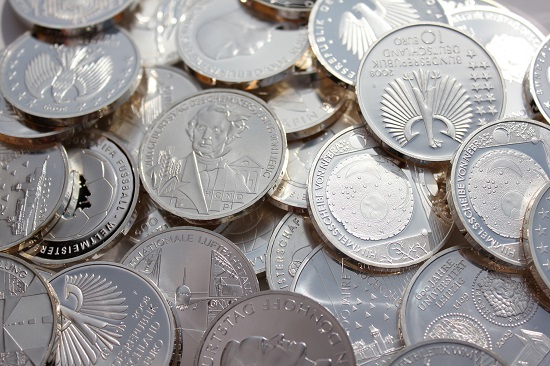
Specialist UK bullion dealers are generally the most straightforward route.
Private marketplaces may occasionally appear cheaper, but you’re accepting additional risks around authenticity, condition, payment and the identity of the seller.
For collectable coins, auctions and specialist marketplaces have their place. For a sizeable bullion investment, we’d generally rather know exactly who we’re dealing with.
UK high-street banks generally aren’t a practical source of physical silver bullion.
Precious-metal dealers specialise in sourcing, pricing, authenticating, storing and buying back bullion. Banks generally don’t.
Even where a financial institution elsewhere offers physical precious metals, compare its prices and buyback arrangements with those of specialist dealers.
The US Mint sells certain numismatic and collector products directly, but standard American Eagle bullion coins are distributed through its authorised purchaser network rather than sold directly to ordinary investors in the same way.
For a UK buyer, importing US coins also introduces considerations around shipping, tax and eventual resale.
Unless you specifically want American coins, UK investors will often find domestic bullion products simpler and more tax-efficient.
First identify exactly what you own.
Separate ordinary bullion from anything that could have numismatic value, then obtain a price from a reputable precious-metals dealer.
For larger holdings, ask how the dealer calculates the price, whether it is fixed before you send the coins and how payment works.
We’ve covered the process in detail in how to sell silver coins.

It depends on the coin.
For standard investment bullion, a specialist precious-metals dealer will usually provide the simplest route and an immediate market-based valuation.
Rare or particularly collectable coins may benefit from specialist numismatic assessment or auction.
Private selling can occasionally achieve more, but involves substantially more time and risk.
Your normal UK high-street bank isn’t the place we’d take investment silver to sell.
A bullion dealer has an active market for the coins and understands their metal and potential secondary-market value.
More importantly, never confuse a coin’s nominal face value with what the underlying silver is actually worth.
Both approaches have advantages.
Home storage gives you direct access and avoids ongoing vaulting fees. Professional storage provides specialist security, insurance and can simplify selling larger holdings because the metal may not need to be transported again.
As holdings become larger, we’d increasingly consider professional storage.
The right answer depends on the size of your investment, your home security, insurance and how important immediate physical access is to you.
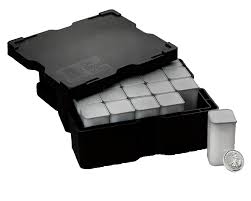
Keep bullion coins in their original capsules or tubes wherever possible and minimise unnecessary handling.
For a home holding, security is just as important as preservation. Consider a suitable safe and make sure your insurance arrangements properly reflect the value you hold.
And remember that silver occupies far more space than gold for the same monetary value. A few tubes are easy to accommodate. A serious silver portfolio can become heavy and bulky surprisingly quickly.
Yes. Silver is an exceptional conductor of electricity, which is one reason it has such extensive industrial applications.
That industrial demand differentiates silver from gold and is an important part of the investment case for the metal.
It doesn’t, however, mean we’d recommend connecting your Britannias to the mains.
Silver has recognised antimicrobial properties and has historically been used in various preservation and water-treatment applications.
But dropping a silver coin into unsafe water does not make it safe to drink.
Modern water purification requires appropriate treatment. Your bullion portfolio should remain an investment rather than an emergency water filter.
Silver’s antimicrobial properties have contributed to historical claims about using silver vessels or objects to slow spoilage.
We wouldn’t recommend relying on a silver bullion coin for food preservation.
Use refrigeration and normal food-safety guidance – and keep the Britannia in its tube.
We’ve tried to cover the questions we’re asked most often, but every investor’s circumstances are different.
If you’re deciding which silver coins to buy, comparing coins with bars, considering storage or looking to sell an existing holding, speak to our team.
Call Physical Gold on 020 7060 9992 or contact us online.

Share this post on:


Latest Posts:
Live Gold Spot Price in Sterling. Gold is one of the densest of all metals. It is a good conductor of heat and electricity. It is also soft and the most malleable and ductile of the elements; an ounce (31.1 grams; gold is weighed in troy ounces) can be beaten out to 187 square feet (about 17 square metres) in extremely thin sheets called gold leaf.
Live Silver Spot Price in Sterling. Silver (Ag), chemical element, a white lustrous metal valued for its decorative beauty and electrical conductivity. Silver is located in Group 11 (Ib) and Period 5 of the periodic table, between copper (Period 4) and gold (Period 6), and its physical and chemical properties are intermediate between those two metals.