
Gold Bars FAQs (Frequently Asked Questions)
17/08/2026alanhorton

Accumulate gold coins on a regular basis for home delivery or storage.
Let our experts hand-pick a gold investment portfolio for you.
Free & fully insured UK Delivery. Learn more

Secure & flexible payments. Learn more

Buyback Guarantee Learn more

A cost-effective way to buy silver bullion with off-shore storage
Let our experts hand-pick a silver investment portfolio for you.
Free & fully insured UK Delivery. Learn more
Secure & flexible payments. Learn more
Buyback Guarantee Learn more
Free & fully insured UK Delivery. Learn more
Secure & flexible payments. Learn more
Buyback Guarantee Learn more


Accumulate gold coins on a regular basis for home delivery or storage.
Let our experts hand-pick a gold investment portfolio for you.
A cost-effective way to buy silver bullion with off-shore storage
Let our experts hand-pick a silver investment portfolio for you.
Free & fully insured UK Delivery. Learn more
Secure & flexible payments. Learn more
Buyback Guarantee Learn more
Free & fully insured UK Delivery. Learn more
Secure & flexible payments. Learn more
Buyback Guarantee Learn more
We receive a lot of questions about buying gold bars. For convenience, we have answered some of the most common questions we receive about gold bars, covering investment, tax, purity, buying, selling and storage.
Gold bars provide direct ownership of physical gold and can be used as part of a diversified portfolio. Their value moves with the gold price and can rise or fall. Larger bars will often have lower premiums per gram than smaller bars, while smaller bars can offer greater flexibility when selling. Unlike qualifying UK legal-tender gold coins, gold bars are not exempt from Capital Gains Tax.
Owning bars of gold is completely legal. The question arises due to a period in US history just after the great depression in 1933 when the US Government issued a decree making it illegal to hold gold in the form of gold bullion without a unique warrant. Any gold owned privately could be confiscated in an attempt to stabilise the floundering economy. This lasted until 1974, and all restrictions have been rescinded since 1 Jan 1975.
There is no public register of private gold bar ownership in the UK. However, gold dealers are required to keep appropriate transaction and customer records and may be required to carry out identity and anti-money laundering checks. Individual bars may also carry serial numbers that help identify and authenticate them.
Investment gold bars are typically produced to a high level of purity, commonly 999.9 fine gold. However, buyers should always check the stated fineness rather than assuming that every gold bar is 24 carat. To qualify for the UK’s investment-gold VAT exemption, a gold bar or wafer must generally have a purity of at least 995 thousandths.
Qualifying investment gold is exempt from VAT in the UK. Gold bars are not, however, automatically exempt from Capital Gains Tax. If a bar is sold at a gain, CGT may apply depending on the individual’s circumstances and available annual exempt amount. This differs from qualifying UK legal-tender gold coins, such as Sovereigns and Britannias, which are exempt from CGT.
The production of bars of gold is registered with the relevant assayer, and a serial number recorded. However, there does not need to be a register of private buyers. Gold dealers will need to invoice buyers and keep records, but these are not publicly available.
They are hard to the touch. But due to their high purity (24 carats), they are relatively soft in metal terms. Pure gold is malleable, so have a major possibility of scratching due to this. This is the reason why Sovereigns coins are produced in 22 carat format, which is deemed a more robust alloy.
Qualifying investment gold is VAT-exempt in the UK, but this does not mean gold bars are completely tax-free. Capital Gains Tax may apply when gold bars are sold at a gain, depending on the individual’s circumstances. UK legal-tender gold coins can have different CGT treatment.
Whether gold bars are suitable will depend on the buyer’s objectives and circumstances. They provide direct ownership of physical gold and are available in a wide range of sizes, but their value can rise or fall with the gold price and costs such as premiums, storage and insurance should also be considered.
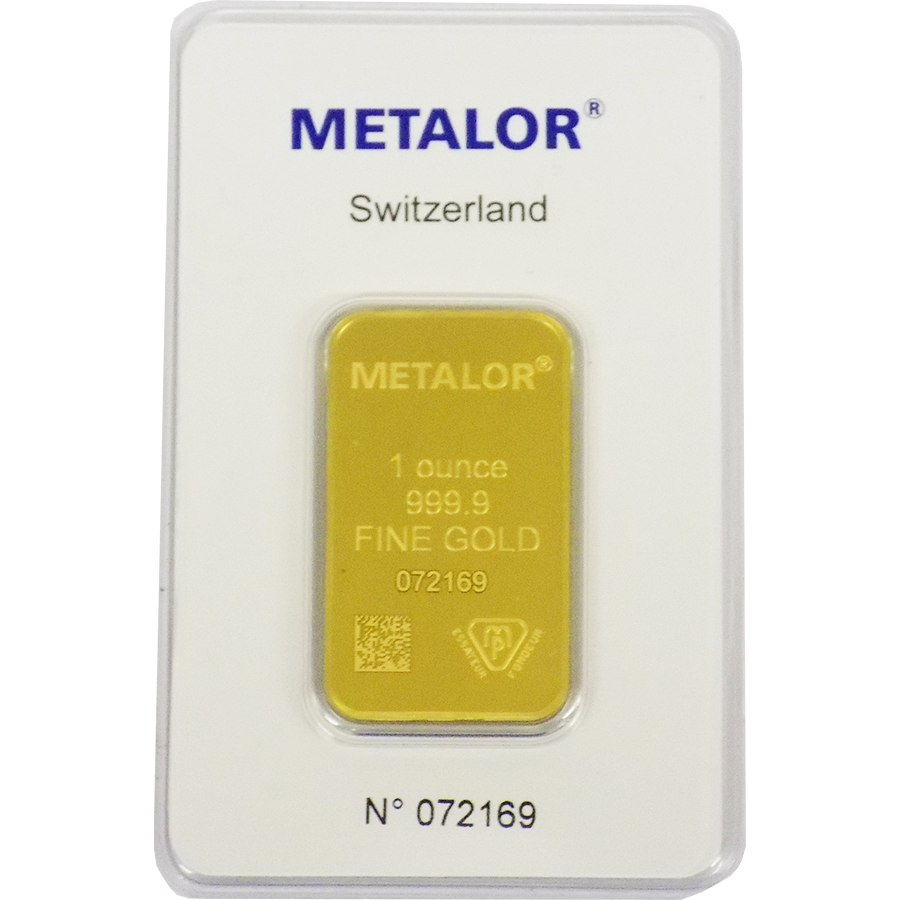
Most bars are 24 carat gold which is the highest carat possible. Some bars on the African continent are a lower purity of 22 carats. The 24 carat bars are referred to as pure gold, but technically they are not 100% pure. Purity can be anywhere from 995 parts per 1,000 upwards, but most reputable bar producers make bars of 999.9 purity.
The terms gold bullion and bars are somewhat interchangeable. Both generally refer to 24 carat gold in the form of a rectangular bar. However, bullion is also a term used to describe the ‘investment finish’ of certain coins. Bullion coins are minted for value purposes as opposed to proof finish coins which are more expensive collector’s items.
Counterfeit gold products exist, so it is important to buy from a reputable precious-metals dealer and check the provenance, markings and specifications of the bar. Established refiners commonly mark bars with details such as weight and purity, and many bars also carry serial numbers or assay packaging.
This all depends on the size of the gold bar. Due to its high value, most people are surprised by quite how small and light a bar £1,000 will buy you. However, as a dense metal, the larger buys can be very heavy. For instance, the largest is 400 ounces or 12.5kg but are smaller than a standard brick which weighs a mere 3.5kg.
Gold coins and bars have different advantages. Larger bars can offer lower premiums per gram, while coins and smaller products provide greater divisibility. For UK investors, qualifying UK legal-tender coins such as Sovereigns and Britannias also have the advantage of being exempt from Capital Gains Tax. The appropriate choice will depend on factors including purchase size, premiums, flexibility and tax considerations.
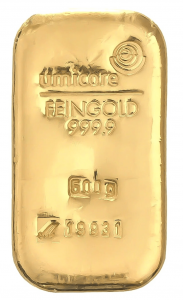
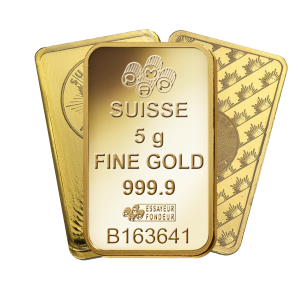
They can be made in 2 distinct ways. Generally smaller bars tend to be minted, whereby a sheet of gold is stamped and cut into the required size, shape, and weights. These minted bars tend to be exceptionally clean looking with a smooth precise finish. For larger bars, a second method is used to create what is known as cast bars. Molten gold is poured into set size moulds to produce ingots. The finish of these tends to be more natural and rougher.
Buying through an established precious-metals dealer provides access to live pricing, different gold bar sizes and information about the products available. Compare the total price, premium, delivery or storage costs and the dealer’s buyback arrangements before purchasing.
Gold bars can be sold through established precious-metals dealers. Compare the price offered, any fees and the dealer’s terms before selling. Retaining original packaging, certificates and purchase documentation where available can also help with authentication.
Physical gold bars provide direct ownership of the underlying metal, whereas a gold ETF provides exposure through a financial product. The two approaches differ in areas such as ownership structure, liquidity, dealing costs, storage and fees. Investors should understand the structure and risks of the particular ETF or physical-gold arrangement they are considering.
The value of a gold bar is primarily influenced by its weight, purity and the current gold price. Dealer buying and selling prices will usually differ from the underlying spot value because of factors including premiums, margins and market conditions.
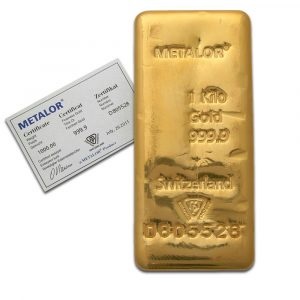
Certificates or assay packaging can provide useful information about a bar’s origin, purity and authenticity, but requirements vary between products and refiners. When buying a bar without original packaging or documentation, provenance and authentication become particularly important. Buying through a reputable dealer can reduce this risk.
There is no reliable way to identify the lowest point in the gold price in advance. Buyers may therefore consider factors including the current gold price, premiums, their investment horizon and their own objectives rather than attempting to predict short-term price movements.
There is no single best time to sell gold bars. The price you receive will depend on the gold price at the time, dealer spreads and market conditions. Your own reasons for selling and financial circumstances will also be relevant
Bars of gold can be cheaper per gram to buy than Krugerrands if bought in a large size like 1kg. However, Krugerrands are a good value coin, so the gain is minimal. An advantage of Krugerrands is that you can sell one coin or a handful whenever you need to. Owning one large gold bar does not allow this. Buying lots of smaller bars is expensive.
When comparing investment gold bars, consider factors including purity, refiner, size, premium, provenance and the price a dealer is prepared to pay when you eventually sell. Larger bars often have lower premiums per gram, while smaller bars provide greater flexibility.
Very few banks sell gold these days as they have many other revenue streams and gold is deemed to be a specialist area. To purchase bars, it would probably be best to go to a reputable gold dealer to benefit from a wider choice of products and information about pricing, premiums, delivery and storage.
Many investment gold bars carry an individual serial number, particularly larger bars and products from established refiners. Markings and serialisation practices vary by manufacturer and product.
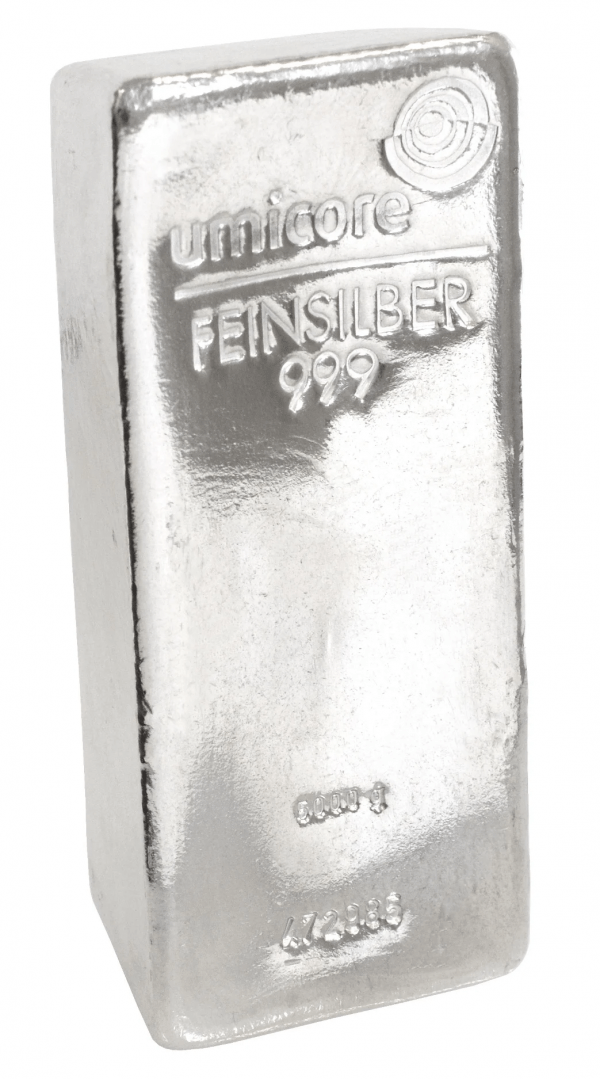
Silver has a much lower price per ounce than gold, so the same monetary investment will generally result in a significantly larger and heavier physical holding. Silver purchased for UK delivery is also generally subject to VAT, whereas qualifying investment gold is VAT-exempt. Storage, premiums, liquidity and tax treatment should therefore all be considered when comparing gold and silver bars.
If you have any further questions we are only a phone call away when you call us on 020 7060 9992. We can also be contacted via webform, so please contact us and we will do our best to help with all your gold bar-related enquiries.
Share this post on:


Latest Posts:
Live Gold Spot Price in Sterling. Gold is one of the densest of all metals. It is a good conductor of heat and electricity. It is also soft and the most malleable and ductile of the elements; an ounce (31.1 grams; gold is weighed in troy ounces) can be beaten out to 187 square feet (about 17 square metres) in extremely thin sheets called gold leaf.
Live Silver Spot Price in Sterling. Silver (Ag), chemical element, a white lustrous metal valued for its decorative beauty and electrical conductivity. Silver is located in Group 11 (Ib) and Period 5 of the periodic table, between copper (Period 4) and gold (Period 6), and its physical and chemical properties are intermediate between those two metals.