Is a Krugerrand coin a good investment?
04/09/2026Daniel Fisher

Accumulate gold coins on a regular basis for home delivery or storage.
Let our experts hand-pick a gold investment portfolio for you.
Free & fully insured UK Delivery. Learn more

Secure & flexible payments. Learn more

Buyback Guarantee Learn more

A cost-effective way to buy silver bullion with off-shore storage
Let our experts hand-pick a silver investment portfolio for you.
Free & fully insured UK Delivery. Learn more
Secure & flexible payments. Learn more
Buyback Guarantee Learn more
Free & fully insured UK Delivery. Learn more
Secure & flexible payments. Learn more
Buyback Guarantee Learn more


Accumulate gold coins on a regular basis for home delivery or storage.
Let our experts hand-pick a gold investment portfolio for you.
A cost-effective way to buy silver bullion with off-shore storage
Let our experts hand-pick a silver investment portfolio for you.
Free & fully insured UK Delivery. Learn more
Secure & flexible payments. Learn more
Buyback Guarantee Learn more
Free & fully insured UK Delivery. Learn more
Secure & flexible payments. Learn more
Buyback Guarantee Learn more
Gold has long appealed to investors looking to diversify their wealth away from traditional financial assets. Periods of inflation, geopolitical tension and economic uncertainty can all increase interest in physical gold.
But deciding to buy gold is only the first decision. The next question is: which gold coin should you buy?
The Krugerrand is one of those coins which most people – even my grandmother – have heard of. And there’s good reason for that.
First minted by South Africa in 1967, the Krugerrand was created to encourage private ownership of South African gold and make it easier for investors around the world to own physical bullion.
It was the first modern bullion coin to contain exactly one troy ounce of pure gold, providing investors with a straightforward way of buying a known quantity of gold. By comparison, a full Gold Sovereign contains 0.2354 troy ounces of pure gold.
Nearly 60 years later, the Krugerrand remains one of the world’s best-known bullion coins. But does that make it a good investment?
For many investors, yes. Its combination of global recognition, liquidity, durability and relatively competitive premiums makes the 1oz bullion Krugerrand a compelling way to own physical gold. For UK investors, however, there is an important tax disadvantage to consider.
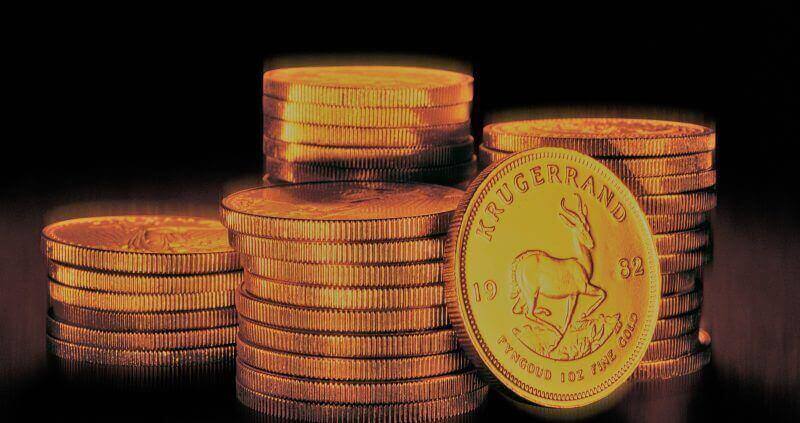
Unlike many bullion coins, the Krugerrand has no face value printed on it. It is nevertheless legal tender in South Africa, with its value linked to the market price of its gold content.
A 1oz Gold Krugerrand contains exactly one troy ounce of pure gold. However, the coin itself weighs more than one ounce because it is made from 22-carat gold – 91.67% pure – alloyed with copper.
That copper gives the Krugerrand its distinctive reddish colour and makes the coin harder and more resistant to knocks and scratches than a 24-carat bullion coin.
This is one of its major selling points. We regularly see Krugerrands that are 30 or 40 years old and remain in excellent condition.
One of the biggest advantages of the Krugerrand is its established international market.
Millions have been produced since the coin was introduced in 1967, and Krugerrands are recognised and traded by bullion dealers around the world.
For an investment in a physical asset, that matters.
Think about buying and selling a house. It isn’t only the price you pay that determines whether you’ve made a good investment – the price and ease with which you can eventually sell it matter too.
Buy a house for a great price but put it on a busy main road with a very limited pool of potential buyers, and achieving the price you want when you sell may be difficult.
The same principle applies to gold.
A widely recognised bullion coin such as a Krugerrand should generally be easier to sell than an obscure gold coin that a prospective buyer needs to identify and value first.
That established secondary market is one of the strongest arguments for investing in Krugerrands.
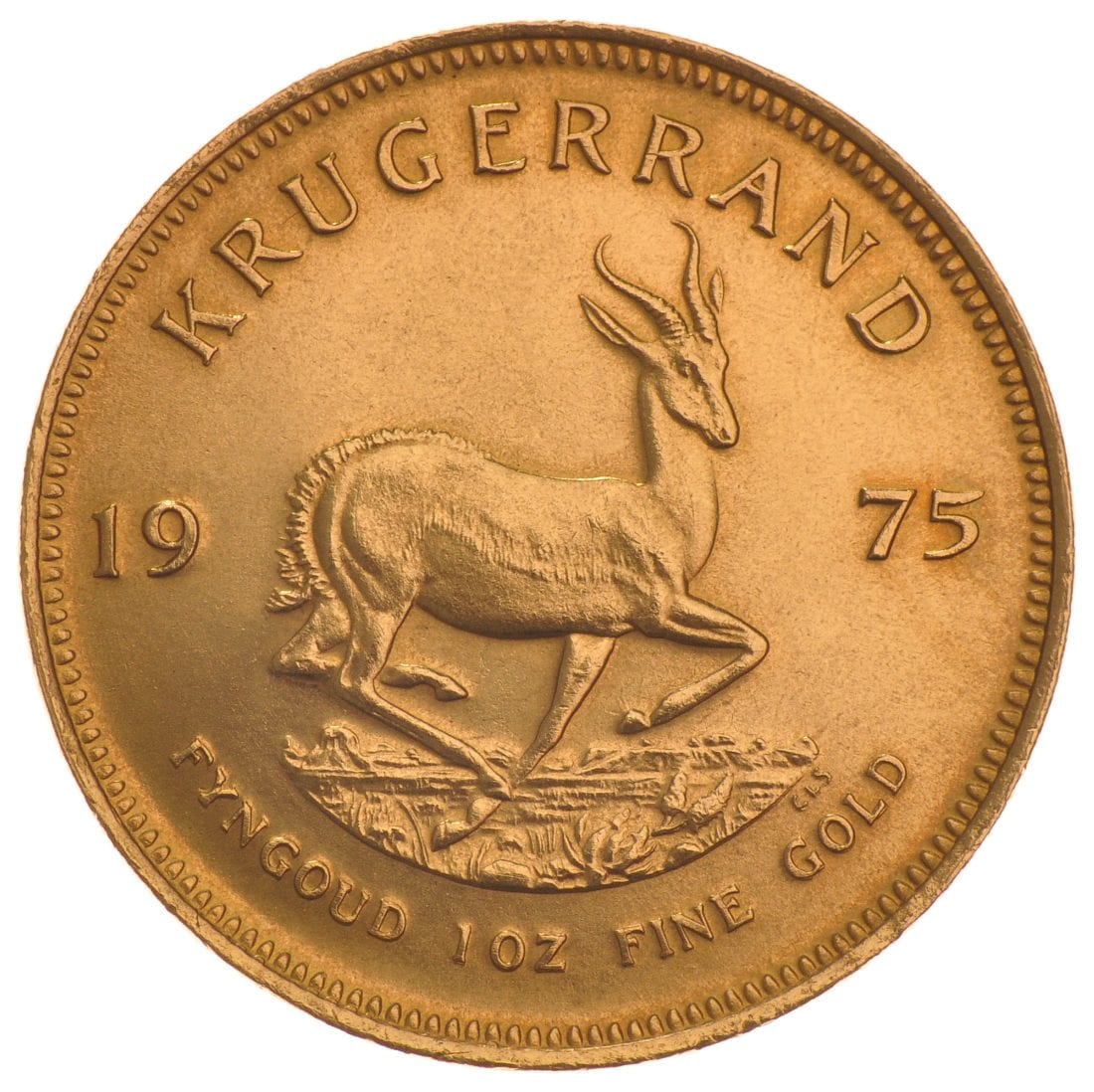
From what we see at Physical Gold, pre-owned Krugerrands can offer excellent value compared with many other recognised 1oz bullion coins.
Remember, you’re primarily buying the gold rather than the date stamped on the coin. A Krugerrand from 1980 and one produced much more recently both contain one troy ounce of pure gold.
That’s why I’d generally favour a good-quality pre-owned bullion Krugerrand over paying an additional premium simply to own the latest year’s coin.
Think of it a little like buying a car. If your priority is value rather than having the newest registration on the driveway, the nearly-new option can make considerably more sense.
The same logic can apply to bullion coins.
Krugerrands are available in different sizes and finishes, but that doesn’t necessarily mean they’re all equally attractive from an investment perspective.
If your primary objective is exposure to physical gold, the standard 1oz bullion Krugerrand will generally provide better value per gram than smaller fractional versions.
That’s because gold coin premiums tend to increase as the coin size decreases.
Proof Krugerrands are different again. They’re produced to a higher finish and are generally aimed more towards collectors. They can be beautiful coins, but you’ll usually pay an additional premium for that finish.
If your objective is straightforward gold investment rather than collecting, I’d stick with the standard bullion version.
The Krugerrand’s 22-carat composition sometimes causes confusion.
A 1oz Krugerrand still contains exactly one troy ounce of pure gold. The additional copper simply increases the coin’s overall weight.
This makes Krugerrands particularly durable and is one reason why older coins can remain in very good condition after decades of ownership.
For investors buying pre-owned bullion coins, that’s useful. Cosmetic condition is less likely to be an issue than it might be with a softer 24-carat coin, although all bullion coins should still be stored and handled appropriately.
Discover how to buy physical gold wisely, minimise costs and build a more tax-efficient portfolio.
So far, the Krugerrand sounds difficult to fault. It’s globally recognised, durable, liquid and can be relatively inexpensive to buy.
But there is one significant drawback for UK investors – Capital Gains Tax.
Krugerrands do not benefit from the Capital Gains Tax exemption available to certain UK legal tender gold coins.
If you sell Krugerrands at a profit, that gain may therefore contribute towards your Capital Gains Tax liability, subject to your circumstances and the prevailing annual exemption and CGT rules.
By contrast, UK legal tender coins such as Gold Sovereigns and Gold Britannias are exempt from CGT for UK residents.
This doesn’t automatically make a Krugerrand a poor investment.
For someone investing a relatively modest amount, or who is unlikely to realise gains above the relevant CGT allowance, the tax difference may have little practical impact.
For investors building a substantial physical gold portfolio, however, the potential tax treatment becomes far more important.
Our guide to the tax implications of investing in gold and silver explains the differences in more detail.
For UK investors, this is probably the most important comparison.
Both coins contain one troy ounce of pure gold, have deep secondary markets and are widely recognised. A pre-owned Krugerrand can also be extremely competitive on price.
But the Gold Britannia has a significant UK tax advantage because it is legal tender and therefore exempt from CGT for UK residents.
That means there isn’t necessarily one winner for every investor.
If you’re focused on obtaining recognised physical gold at a competitive premium, a pre-owned Krugerrand can be an excellent choice.
If you’re building a larger portfolio and expect to make substantial gains over time, the CGT exemption of Britannias and Sovereigns may become increasingly valuable.
Some investors therefore choose to hold a mixture rather than putting everything into one type of coin.

For many investors, yes – particularly if you’re buying the standard 1oz bullion coin at a competitive premium.
The Krugerrand has been around since 1967 for good reason. It’s globally recognised, easy to understand, durable and supported by a large secondary market.
I’d generally favour pre-owned 1oz bullion Krugerrands for investment rather than paying higher premiums for brand-new, fractional or proof versions.
For UK investors, though, don’t overlook Capital Gains Tax. If you’re investing larger sums, CGT-exempt British coins such as Sovereigns and Britannias may be more tax efficient.
Ultimately, the best coin depends on what matters most to you – purchase price, divisibility, tax efficiency or a combination of all three.
Physical Gold offers a range of Gold Krugerrands, including best-value pre-owned coins for investors looking to keep their purchase premiums down.
If you’re unsure whether Krugerrands, Britannias or Sovereigns are the better fit for your portfolio, call us on 020 7060 9992 or contact our gold experts to discuss your options.

Share this post on:


Latest Posts:
Live Gold Spot Price in Sterling. Gold is one of the densest of all metals. It is a good conductor of heat and electricity. It is also soft and the most malleable and ductile of the elements; an ounce (31.1 grams; gold is weighed in troy ounces) can be beaten out to 187 square feet (about 17 square metres) in extremely thin sheets called gold leaf.
Live Silver Spot Price in Sterling. Silver (Ag), chemical element, a white lustrous metal valued for its decorative beauty and electrical conductivity. Silver is located in Group 11 (Ib) and Period 5 of the periodic table, between copper (Period 4) and gold (Period 6), and its physical and chemical properties are intermediate between those two metals.