
6 Ways to Invest in Silver: Which Is Best?
08/09/2026Daniel Fisher

Accumulate gold coins on a regular basis for home delivery or storage.
Let our experts hand-pick a gold investment portfolio for you.
Free & fully insured UK Delivery. Learn more

Secure & flexible payments. Learn more

Buyback Guarantee Learn more

A cost-effective way to buy silver bullion with off-shore storage
Let our experts hand-pick a silver investment portfolio for you.
Free & fully insured UK Delivery. Learn more
Secure & flexible payments. Learn more
Buyback Guarantee Learn more
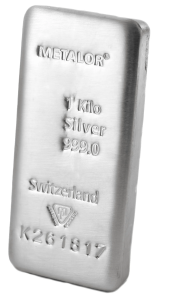
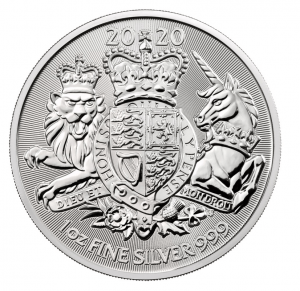
Free & fully insured UK Delivery. Learn more
Secure & flexible payments. Learn more
Buyback Guarantee Learn more


Accumulate gold coins on a regular basis for home delivery or storage.
Let our experts hand-pick a gold investment portfolio for you.
A cost-effective way to buy silver bullion with off-shore storage
Let our experts hand-pick a silver investment portfolio for you.
Free & fully insured UK Delivery. Learn more
Secure & flexible payments. Learn more
Buyback Guarantee Learn more
Free & fully insured UK Delivery. Learn more
Secure & flexible payments. Learn more
Buyback Guarantee Learn more
There are more ways to invest in silver than simply buying coins or bars.
Investors can own physical silver at home, store bullion professionally, buy silver-backed exchange-traded products, invest in mining companies or even trade contracts based on movements in the silver price.
But these aren’t interchangeable investments.
Buying a silver coin means owning a tangible asset. Buying shares in a silver mining company means owning part of a business. Trading silver futures means taking a position on the future price of silver. Each can provide exposure to the silver market, but the costs, risks, tax treatment and reasons for investing can be very different.
So, what are the main types of silver investment and which might suit you?
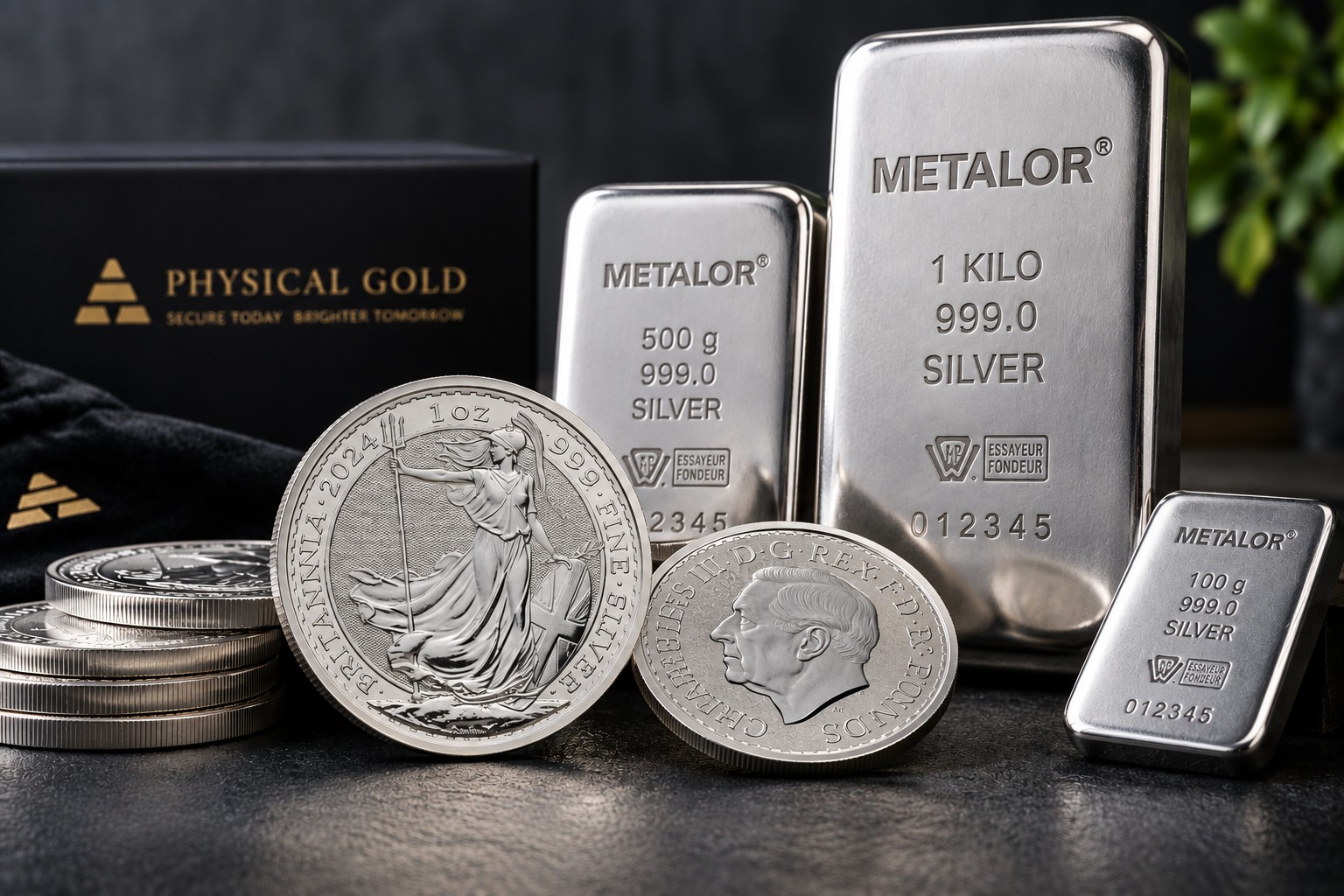
Most ways of investing in silver fall into two broad groups:
Physical silver – you own identifiable silver bullion, either in your possession or stored on your behalf.
Non-physical or paper silver – you own a financial asset whose value may be linked directly or indirectly to silver.
For investors buying precious metals as a tangible store of wealth or as diversification away from conventional financial assets, that distinction can be particularly important.
Here are six of the principal options.
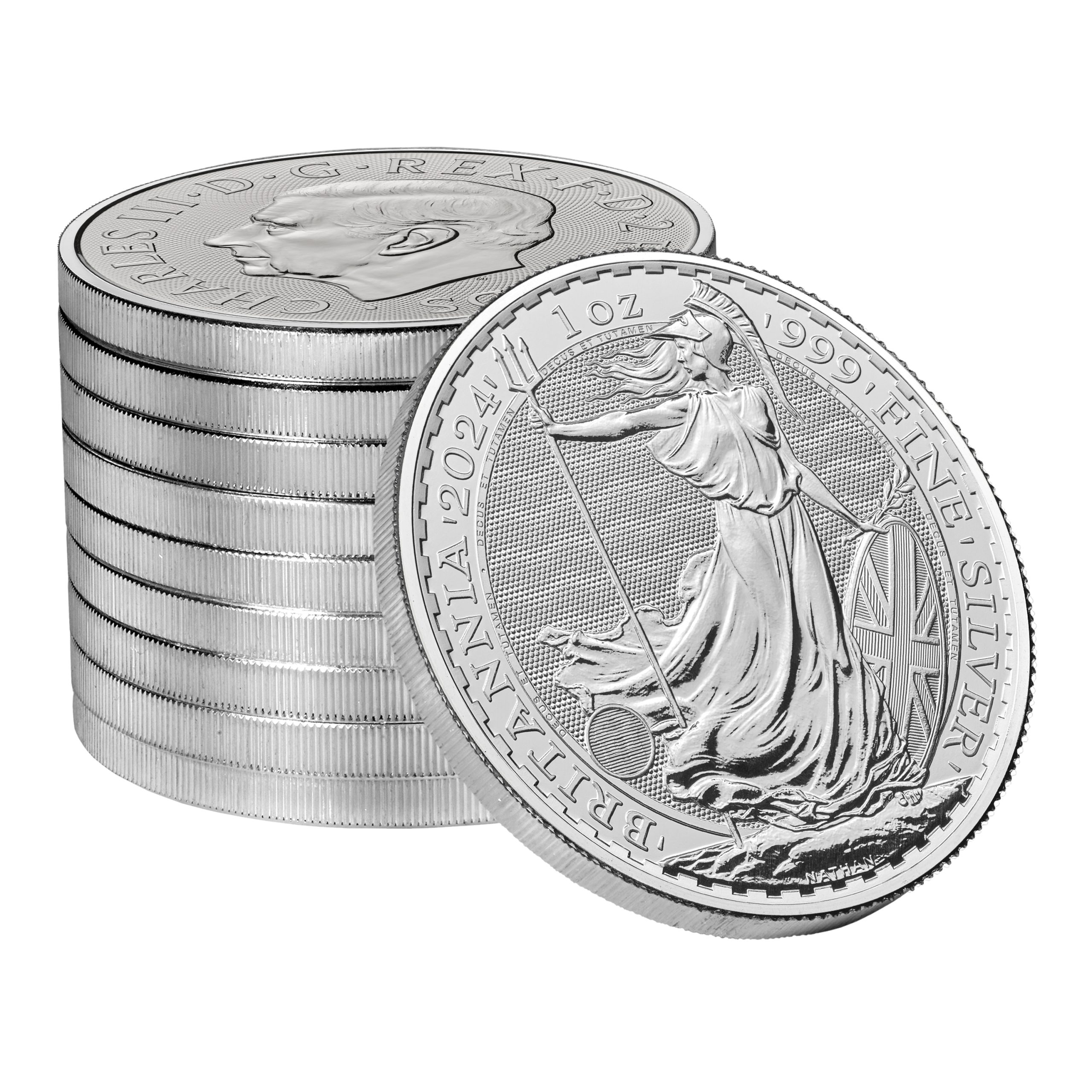
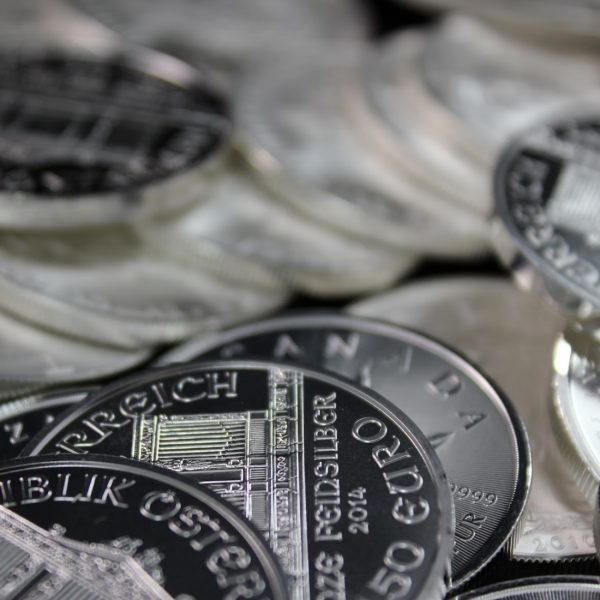
For many private UK investors, silver bullion coins are one of the most straightforward ways to own physical silver.
Bullion coins are produced to recognised specifications, with their weight and purity established by the issuing mint. Popular examples include Silver Britannia coins.
Silver coins offer several benefits:
That final point can become increasingly relevant as a portfolio grows.
Qualifying British legal-tender coins are treated as sterling currency and are therefore exempt from UK Capital Gains Tax. This makes coins such as Silver Britannias particularly attractive to UK investors concerned about potential gains over the long term.
The main drawback is cost.
Manufacturing thousands of individual 1oz coins is more expensive than producing the equivalent quantity of silver as large bars. Coins will therefore usually command a higher premium per ounce than larger silver bars.
Physical silver purchased for delivery in the UK will also normally be subject to VAT, unlike qualifying investment gold.
Investors therefore need to weigh the flexibility and potential tax advantages of coins against their higher initial cost.

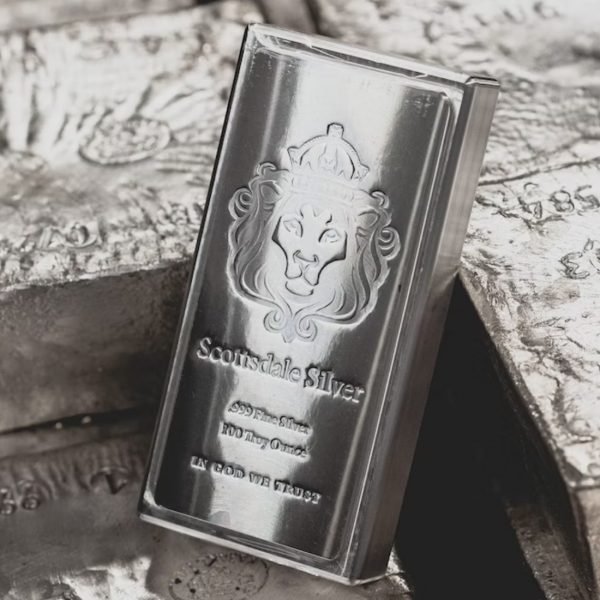
For investors seeking to maximise the quantity of physical silver they receive for their money, silver bars can be an attractive alternative.
Bars are available in numerous weights, ranging from small denominations to 1kg and larger bars.
Because larger bars require less manufacturing, packaging and handling per gram of silver, their premiums will generally be lower than equivalent holdings made up entirely of small coins.
Their main advantages are:
For larger silver investments, these cost efficiencies can be significant.
The biggest bar isn’t automatically the best choice.
A very large bar may minimise the premium per gram, but it also reduces flexibility. If you subsequently want to sell only part of your silver portfolio, you can’t divide a single bar.
For that reason, many investors seek a compromise between cost efficiency and divisibility.
A portfolio might, for example, combine larger bars for cost efficiency with smaller bars or coins that can be sold individually.
Read our guide to the different types of silver bars for a closer look at the available choices.
Generally, no.
Unlike qualifying British legal-tender coins, conventional silver bullion bars are not sterling currency and don’t benefit from the same blanket CGT exemption.
Whether an individual ultimately has CGT to pay depends on their circumstances, gains and the tax rules applicable at the time of disposal.
This makes the balance between lower purchasing premiums on bars and potential tax advantages of qualifying British coins an important consideration for UK investors.
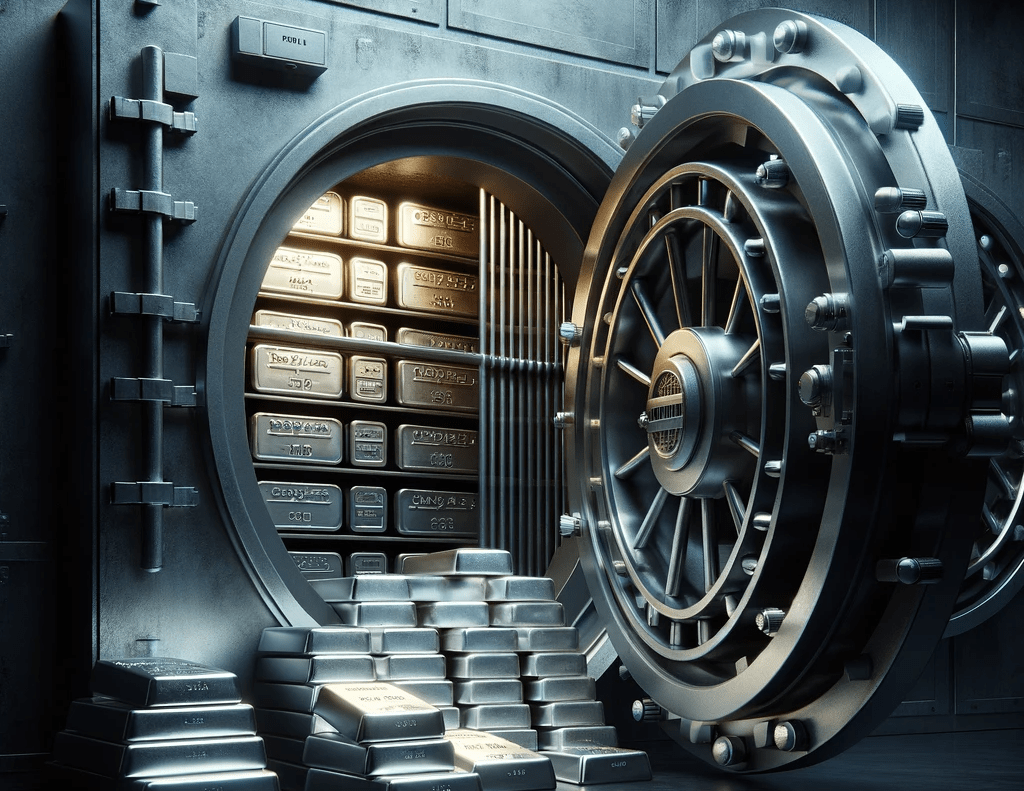
There is another way to own physical silver without necessarily having it delivered immediately to your home.
Silver can be purchased and held within specialist professional storage arrangements.
Depending on how and where the silver is purchased and stored, certain structures can defer the VAT that would ordinarily become payable when physical silver is delivered into the UK.
This can significantly change the economics of silver investment because standard-rated VAT represents a substantial initial hurdle for somebody buying silver purely for investment.
Physical Gold offers VAT-free silver options designed for investors seeking physical silver held within qualifying storage arrangements rather than taking immediate UK delivery.
Potential benefits include:
Not all storage or silver-backed schemes work in the same way.
Before investing, establish:
Understanding these points is essential because one of the principal attractions of physical precious metals is clear ownership of the underlying asset.
A practical guide to buying precious metals wisely and building your portfolio.
Investors who want exposure to movements in the silver price without handling physical bullion can use exchange-traded products.
Depending on the structure, these may be described as exchange-traded funds (ETFs), exchange-traded commodities (ETCs) or similar products.
They can generally be bought and sold through an investment platform in much the same way as shares.
For investors primarily interested in tracking the silver price, exchange-traded products can offer:
However, buying a silver exchange-traded product is not necessarily equivalent to owning bullion personally.
Structures vary significantly. Investors should understand whether a product is physically backed, how the underlying silver is held, what legal claim investors have over the assets and what counterparty or issuer risks exist.
There will also usually be ongoing management or administration charges.
For an investor whose main reason for buying precious metals is to own a tangible asset outside the conventional financial system, an exchange-traded product may therefore not fulfil the same objective as physical bullion.
Another approach is to buy shares in companies involved in producing silver.
Mining shares can sometimes benefit disproportionately from rising silver prices. If the market value of the silver a company produces rises faster than its costs, profits may increase significantly.
But the reverse can also happen.
A mining company’s share price can be influenced by far more than the silver price.
Factors can include:
A silver miner can therefore perform poorly even while silver itself is rising.
Equally, a successful mining business can potentially outperform movements in the underlying metal.
Investors seeking greater diversification within the mining sector can also consider funds holding multiple mining companies rather than relying on the fortunes of a single producer.
This is fundamentally an equity investment rather than ownership of physical silver.
Silver futures are a considerably more sophisticated way to gain exposure to the metal.
A futures contract is an agreement to buy or sell a specified amount of silver at an agreed price at a future date.
These contracts are commonly used by commercial market participants to manage price risk, but traders can also use them to speculate on movements in silver.
Futures can provide leveraged exposure, meaning a trader may control a position worth considerably more than the initial capital committed.
This magnifies potential gains – but it also magnifies potential losses.
Unlike buying a silver Britannia and holding it for the long term, futures positions can require active management and additional margin if markets move against the trader.
Depending on the instrument and strategy, losses can be substantial.
Futures and other leveraged derivatives are therefore very different from simply buying physical silver and are generally better suited to experienced investors who understand leverage, margin and short-term market risk.
There are other ways to own silver, but they don’t necessarily provide the same characteristics as mainstream investment bullion.
“Junk silver” generally refers to older circulated coins whose value is primarily derived from their silver content rather than rarity.
Despite the name, they aren’t necessarily scrap. They can appeal to specialist buyers, particularly in markets such as the US, but varying purity, condition and availability make them less standardised than modern investment bullion.
Read our guide to junk silver if you’d like to understand this market in more detail.
Rounds can look similar to coins but are generally produced by private mints and don’t carry the legal-tender status of government-issued bullion coins.
They may offer competitive premiums, but UK investors don’t receive the potential CGT advantage associated with qualifying sterling legal-tender coins.
Jewellery contains physical silver, but its purchase price also reflects design, manufacture, branding and retail margins.
That makes it difficult to compare directly with bullion bought primarily for investment.
Jewellery can certainly retain or increase in value, but anyone buying purely for exposure to silver will generally find coins or bars more transparent because their value is more closely connected to identifiable metal content.
Silver grain consists of small pieces or granules of silver and is commonly used by jewellers and manufacturers.
Manufacturing premiums can be low, but grain lacks many of the advantages of recognised bullion products, including straightforward identification, standardised investment formats and a broad retail resale market.
For most private investors, recognised coins and bars provide a simpler route to physical silver ownership.
There isn’t a single answer because the two approaches can serve different purposes.
Physical silver may appeal more if you want:
Paper or electronic silver may appeal more if you want:
The distinction becomes especially important when considering why you’re buying silver in the first place.
If your aim is simply to speculate on the silver price, an electronic investment may achieve that efficiently.
If you’re buying silver because you specifically want to own a finite physical asset, replacing it with a share, fund or derivative changes the nature of the investment.
For investors who have decided they want physical silver, the choice usually comes down to cost, flexibility, tax and storage.
Silver coins provide excellent divisibility and qualifying British legal-tender coins can offer CGT advantages.
Silver bars generally provide more silver for your money because manufacturing premiums tend to be lower, particularly for larger bars.
Vaulted silver can make sense for investors who don’t require immediate possession and want to explore more VAT-efficient ways of building a physical silver holding.
Many investors don’t have to choose just one. Combining coins and bars, for example, can provide the flexibility of smaller denominations alongside the lower premiums available from larger bullion products.
Silver has several characteristics that make it interesting as part of a diversified portfolio.
It is a finite physical asset with both investment and industrial demand. But it is also capable of significant price volatility, and its price can fall as well as rise.
Silver shouldn’t therefore be viewed as a guaranteed route to profit.
The more useful question is whether silver fulfils a particular role within your portfolio and, if it does, which form of silver provides the characteristics you actually want.
For a broader look at the case for and against the metal, read our guide on how to invest in silver.

If you’ve decided that physical silver suits your objectives, the next step is deciding how much you want to invest and how you want to hold it.
Consider:
Physical Gold specialises in helping UK investors buy and sell physical precious metals.
You can browse our silver coins, silver bars and VAT-free silver ranges, or speak to our team about the different ways of building a physical silver portfolio.
Call us on 020 7060 9992 or contact Physical Gold to discuss your silver investment options.
The best method depends on your objectives. Investors who want direct ownership may prefer silver coins, bars or professionally vaulted bullion. Investors primarily seeking convenient exposure to the silver price may consider exchange-traded products, while mining shares and derivatives introduce additional company or trading risks.
For UK physical silver investors, tax treatment should also be considered. Qualifying British legal-tender silver coins can be exempt from UK CGT, while silver purchased for UK delivery will normally attract VAT.
Silver bars generally have lower premiums per gram, making them attractive for investors seeking to maximise their physical silver holding. Coins offer greater divisibility and qualifying British legal-tender coins can provide UK CGT advantages.
A combination of both can provide a balance between cost efficiency and flexibility.
Physical silver supplied for delivery in the UK will generally be subject to VAT at the standard rate. This differs from qualifying investment gold, which benefits from a specific VAT exemption.
Certain specialist storage arrangements can allow investors to purchase and hold silver without VAT becoming immediately payable, provided the relevant conditions continue to be met.
It depends on the form of silver.
Qualifying British legal-tender silver coins can be exempt from UK Capital Gains Tax because sterling currency is not a chargeable asset for CGT purposes. Conventional silver bars don’t benefit from the same exemption.
An investor’s wider tax liability depends on their individual circumstances, so professional tax advice may be appropriate.
Physical silver bullion does not receive the same specific UK pension treatment available to qualifying investment-grade gold bullion. Investors considering precious metals within a SIPP should check the current HMRC rules and the assets permitted by their individual pension provider.
Buy recognised bullion from an established dealer and understand exactly what you’re purchasing, including its weight, purity, premium and resale arrangements.
If your silver is being stored by a third party, you should also understand whether it is allocated to you, where it is held, how it is insured and what rights you have to sell or withdraw it.

Share this post on:


Latest Posts:
Live Gold Spot Price in Sterling. Gold is one of the densest of all metals. It is a good conductor of heat and electricity. It is also soft and the most malleable and ductile of the elements; an ounce (31.1 grams; gold is weighed in troy ounces) can be beaten out to 187 square feet (about 17 square metres) in extremely thin sheets called gold leaf.
Live Silver Spot Price in Sterling. Silver (Ag), chemical element, a white lustrous metal valued for its decorative beauty and electrical conductivity. Silver is located in Group 11 (Ib) and Period 5 of the periodic table, between copper (Period 4) and gold (Period 6), and its physical and chemical properties are intermediate between those two metals.