
How to Buy Silver Britannia Coins
09/09/2026Daniel Fisher

Accumulate gold coins on a regular basis for home delivery or storage.
Let our experts hand-pick a gold investment portfolio for you.
Free & fully insured UK Delivery. Learn more

Secure & flexible payments. Learn more

Buyback Guarantee Learn more

A cost-effective way to buy silver bullion with off-shore storage
Let our experts hand-pick a silver investment portfolio for you.
Free & fully insured UK Delivery. Learn more
Secure & flexible payments. Learn more
Buyback Guarantee Learn more
Free & fully insured UK Delivery. Learn more
Secure & flexible payments. Learn more
Buyback Guarantee Learn more


Accumulate gold coins on a regular basis for home delivery or storage.
Let our experts hand-pick a gold investment portfolio for you.
A cost-effective way to buy silver bullion with off-shore storage
Let our experts hand-pick a silver investment portfolio for you.
Free & fully insured UK Delivery. Learn more
Secure & flexible payments. Learn more
Buyback Guarantee Learn more
Free & fully insured UK Delivery. Learn more
Secure & flexible payments. Learn more
Buyback Guarantee Learn more
Silver Britannias are one of the simplest ways for UK investors to own physical silver. They’re recognisable, easy to trade, available in useful 1oz units and, importantly for UK investors, profits on UK legal tender Britannia coins are exempt from Capital Gains Tax.
But buying the right Silver Britannias at the right price is not quite as simple as choosing the cheapest-looking coin online.
The premium you pay, whether you buy new or pre-owned coins, the quantity you purchase, who you buy from and even how you intend to sell can all make a significant difference to your eventual return.
Having bought and sold Silver Britannias for many years, we’ve put together the practical points we think investors should consider before placing an order.
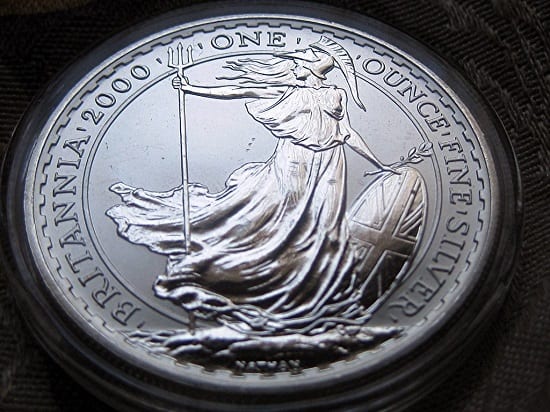
Silver Britannia coins are the UK’s flagship silver bullion coin.
First introduced by The Royal Mint in 1997, today’s standard 1oz Silver Britannia contains one troy ounce of 999 fine silver and has a face value of £2.
For UK investors, their biggest attractions are straightforward:
That combination is why Britannias are generally our first choice of silver coin for UK investors.
They aren’t necessarily the cheapest possible way to obtain silver by weight, but the combination of tax efficiency, liquidity and recognisability is difficult to beat.
Where you buy matters more than many first-time investors realise.
Silver prices move constantly, so comparing dealers isn’t always as straightforward as looking at two prices at different times of the day. Dealer premiums can also vary considerably.
More importantly, the seller you choose affects authenticity, service, delivery and potentially how straightforward it is to sell your silver later.

For most investors, an established silver bullion dealer is the natural starting point.
A good dealer should provide live or clearly explained pricing, insured delivery, transparent terms and a straightforward route for selling your coins back in the future.
Don’t judge a dealer purely on the headline purchase price. Look at:
That final point is easily underestimated. If you’re investing a meaningful sum, access to somebody who understands the market can be far more useful than saving a few pounds on an isolated purchase.
At Physical Gold, for example, we’re members of the British Numismatic Trade Association (BNTA), and we help clients with buying strategy, timing, storage and eventually selling their holdings – rather than simply processing an online order.
Buying directly from The Royal Mint provides certainty over provenance and access to newly issued Britannias.
It can also be useful during particularly strong periods of demand when availability elsewhere becomes tight.
However, investors should compare the total price carefully. Buying directly from the manufacturer doesn’t automatically mean buying at the lowest price. Royal Mint’s long history allows them to charge a premium for coins when compared to many bullion dealers.
The Royal Mint also naturally concentrates on current products. A specialist dealer may be able to offer lower-premium pre-owned Britannias and a more personal service, particularly if you’re building a larger position over time.
You can also find Silver Britannias through online marketplaces, auctions and private sellers.
For collectors hunting for a particular date or unusual version, that can make sense.
For straightforward bullion investment, we’re far less enthusiastic.
You need to consider authenticity, condition, seller reliability and whether an apparently attractive price really represents good value. It can also be difficult to source investment quantities consistently.
If your objective is simply to own silver efficiently, we’d generally rather remove those risks.
For most investors, the easiest way to buy silver is online through an established bullion dealer.
The process itself is straightforward, but there are a few things worth sorting out before you press the buy button.
This is probably not the first buying tip you expected, but it can save considerable frustration.
Check which payment methods your chosen dealer accepts and whether transaction limits apply.
At Physical Gold, credit cards can currently be used for orders up to £10,000, debit cards up to £30,000 and bank transfers for larger amounts.
For a sizeable purchase, we’d also recommend speaking to your bank before placing the order.
Banks can flag precious-metal transactions as unusual activity, particularly when the payment is substantially larger than your normal spending. Warning your bank in advance can reduce the risk of a legitimate transaction being delayed or declined.
The important point is to get the payment route sorted before fixing your bullion order.
There can be several Britannia options available at the same time:
For pure investment, don’t automatically assume the newest or smartest-looking coin is the best buy.
Your aim should usually be to obtain the most useful quantity of recognisable investment silver for your money.
The spot silver price is only part of what you pay.
Your actual cost will also reflect the dealer’s premium and, for silver delivered within the UK, VAT.
When comparing sellers, look at the final amount you will actually pay for the quantity you want. A low advertised premium is not particularly helpful if other charges make the final order more expensive.
Once you’ve selected your coins, decide where they’re going.
Smaller holdings are relatively straightforward to keep at home, while larger silver investments can become surprisingly bulky. Professional storage therefore becomes increasingly attractive as your holding grows.
We’ll look at both options below.
Depending on the transaction and dealer requirements, you may need to complete identification or compliance checks.
Check how the dealer handles your personal information and whether sensitive documents need to be sent by email.
At Physical Gold, our electronic ID process usually takes around two minutes and avoids customers having to email sensitive documents such as passports.
Free ultimate guide for keen precious metals investor
This is where relatively small buying decisions can make a surprisingly large difference.
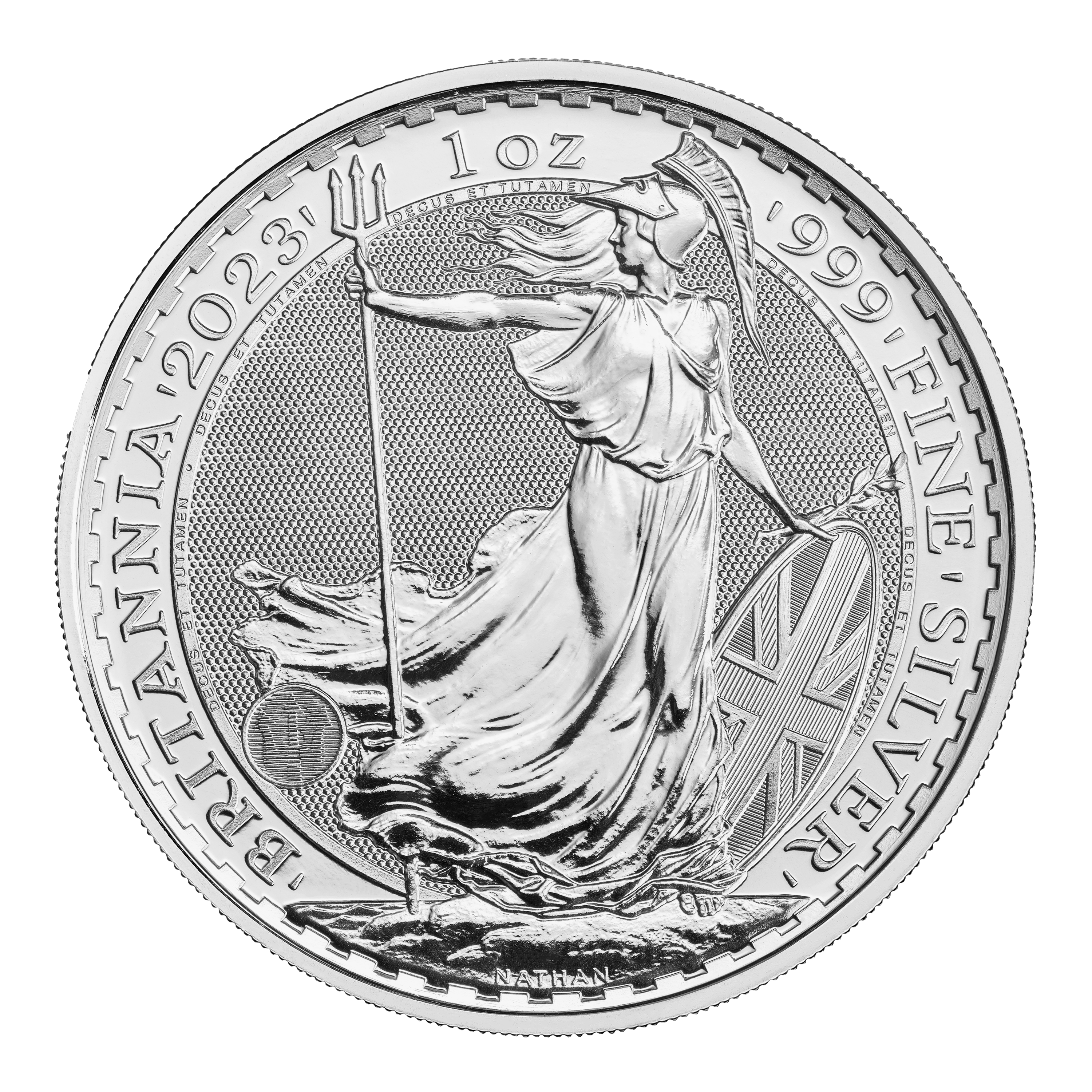
This is probably our favourite Silver Britannia buying tip.
Silver coin premiums are already significant, so paying extra simply because a coin is brand new can increase the amount the silver price needs to rise before your investment moves into profit.
Pre-owned Silver Britannias can therefore offer excellent value.
Don’t confuse ‘pre-owned’ with poor condition. Britannias bought back by professional bullion dealers may have spent their entire lives inside their original Royal Mint tubes.
At Physical Gold, our Best Value Silver Britannias are mixed-year, pre-owned coins sold at a discount to the current-year equivalent when stock is available.
Here’s the crucial point for investors: when we buy standard bullion Britannias back, the fact that you originally bought the coin as ‘new’ doesn’t automatically make it more valuable than an equivalent older bullion Britannia.
So why pay a sizeable additional premium purely for the privilege of being its first owner?
The catch is availability. Pre-owned Britannias only become available when somebody sells them to us, and silver investors have historically tended to hold onto their coins. If they’re out of stock, using the stock notification facility can be worthwhile.
Silver Britannias are commonly supplied individually, in tubes of 25 and in monster boxes containing 500 coins.
Larger quantities will usually reduce the premium per coin.
But don’t assume the maths always works exactly as you’d expect.
If you’re buying 500 Britannias, for example, compare the final cost of:
Pricing structures and promotions can occasionally create differences.
It takes two minutes to check and, on a substantial purchase, those two minutes can be worthwhile.
For investment purposes, we’d generally favour 1oz silver coins.
The standard 1oz Britannia is widely recognised, highly divisible and generally offers considerably better value per gram than fractional Britannias.
Fractional silver coins can have their uses, particularly if you specifically want very small denominations, but the premiums can be difficult to justify for somebody whose primary objective is investment.
There’s a point where additional divisibility becomes an expensive luxury.
This sounds old-fashioned in an increasingly automated market, but it can genuinely pay.
A dealer who understands what you’re trying to achieve may be able to alert you when pre-owned Britannias become available, discuss larger purchases, help plan storage and provide guidance when you eventually want to sell.
We’ve had occasions where clients have been able to secure pre-owned stock before it has even made it onto the website.
That sort of opportunity doesn’t come from endlessly jumping between dealers to save pennies on a single coin.
Special editions and low-mintage Britannias can be beautiful coins.
But beautiful doesn’t automatically mean better investment value.
Collectable coins generally carry higher premiums because you’re paying for rarity, presentation or desirability as well as the underlying silver.
There’s nothing wrong with collecting them if that’s what you enjoy. But if your objective is primarily exposure to silver, standard bullion Britannias will usually provide a cleaner and more liquid route.
Keep investment and collecting as two separate decisions.
See our latest indicative prices for selling silver coins.
Counterfeit risk is another reason we favour established dealers over unknown private sellers.
Modern Silver Britannias incorporate sophisticated security features that make them increasingly difficult to reproduce convincingly.
Silver Britannias produced from 2021 incorporate features including:
Familiarising yourself with these details can help when inspecting a coin.
A standard 1oz Silver Britannia should weigh approximately 31.21g and measure 38.61mm in diameter.
A precise digital scale and callipers can therefore identify obvious discrepancies.
If you’re buying significant quantities, however, we wouldn’t suggest that your investment strategy should depend on becoming an amateur coin authenticator. Buying through a trusted bullion specialist removes much of the problem in the first place.
Silver presents a different storage challenge from gold.
£50,000 of gold can occupy remarkably little space. The equivalent value in silver is a very different proposition.
That’s worth considering before buying a large quantity.
Home storage gives you immediate physical control of your investment and avoids ongoing professional storage charges.
For modest holdings, that can work perfectly well.
Consider:
Silver feels wonderfully tangible when you own your first few tubes. It feels rather more tangible when you’re trying to find somewhere secure for several monster boxes.

Professional vaulting removes much of that inconvenience.
Benefits can include insurance, specialist security, appropriate handling and the ability to sell your silver without first transporting a heavy quantity of bullion back to a dealer.
The trade-off is the ongoing storage charge.
Physical Gold offers UK-based precious metals storage for clients who prefer not to hold their silver at home.
For larger investments, we think professional vaulting is at least worth considering – particularly if convenience and security matter more to you than having immediate physical access to every coin.
There’s no reliable way of identifying the perfect day to buy silver.
Silver can be considerably more volatile than gold because its price is influenced both by investment demand and its extensive industrial uses.
That volatility creates opportunities, but it can also punish investors who become obsessed with finding the perfect entry point.
Industrial demand, economic growth, interest-rate expectations, currency movements and investor sentiment can all influence silver.
The gold-to-silver ratio can also provide useful context when considering the relative valuation of the two precious metals.
But remember that markets price information quickly. Waiting until every piece of economic news confirms your investment thesis usually means other investors have reached the same conclusion.
Silver has displayed seasonal tendencies at various points in its history, but they are tendencies rather than rules.
Unexpected geopolitical, financial or economic events can overwhelm normal patterns almost instantly.
We’d therefore use seasonality as one small piece of information, not as a reason on its own to buy or delay a purchase.
If you’re investing a substantial sum and are worried about choosing the wrong moment, spreading purchases over several transactions can reduce your dependence on a single entry price.
You won’t achieve the satisfaction of knowing you bought everything at the bottom – but you also reduce the risk of discovering that you bought everything at the top.
For many long-term investors, that’s a perfectly sensible compromise.
For most UK investors wanting physical silver, the 1oz Silver Britannia is difficult to beat.
It’s recognisable, divisible, liquid and exempt from Capital Gains Tax for UK investors. But the coin you choose is only half of the equation.
Pay close attention to the premium you’re paying, look for pre-owned stock, compare bulk pricing and think about storage before building a large holding.
Most importantly, buy from somebody you’d also be comfortable selling to.
The cheapest-looking deal today isn’t necessarily the one that leaves you with the most money when you eventually exit your investment.
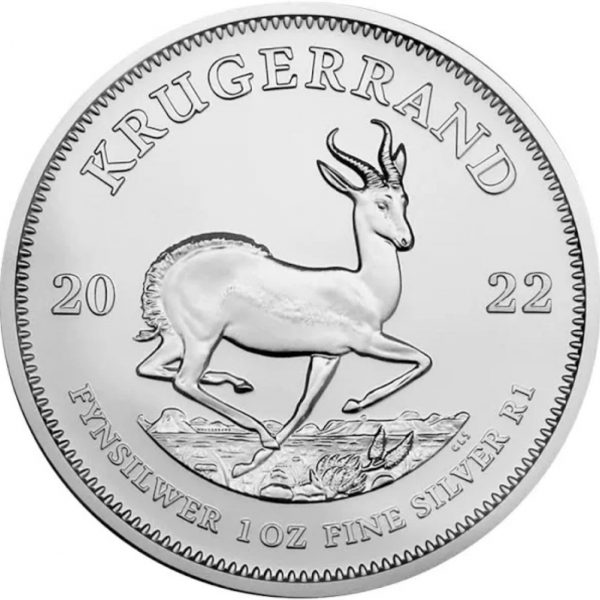
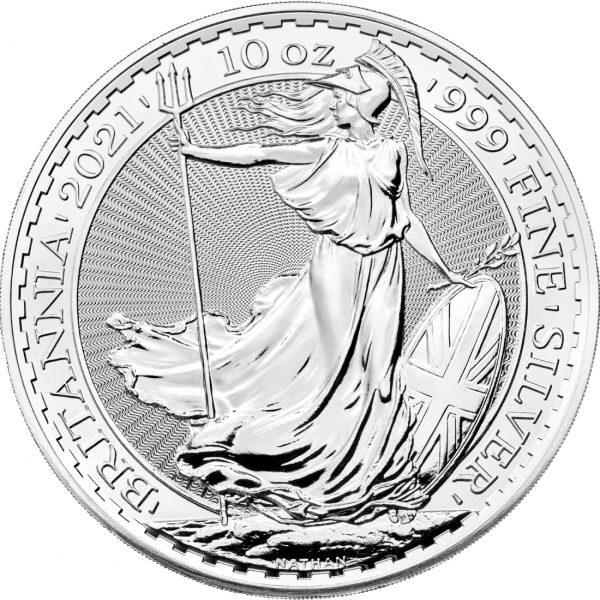
Silver Britannias can be an attractive choice for UK investors who want physical exposure to silver. They’re widely recognised, relatively easy to trade and, because they are UK legal tender, gains are exempt from UK Capital Gains Tax. Investors should nevertheless remember that silver prices can fall as well as rise and that premiums, VAT and the buy/sell spread affect overall returns.
For most investors, we’d recommend an established specialist bullion dealer with transparent pricing, a strong track record and a clear buyback service. Dealers can also offer pre-owned Britannias, which may cost considerably less than buying the latest issue.
For pure investment, pre-owned Britannias can offer better value because their premiums are generally lower. Provided the coins are genuine and in suitable bullion condition, an older year doesn’t necessarily make them less useful or less valuable when you eventually sell.
Usually. Tubes of 25 and monster boxes of 500 generally provide a lower premium per coin than small purchases. However, compare the final prices across different quantity options rather than assuming the largest pack automatically represents the best deal.
Yes. Unlike investment gold, physical silver supplied to UK investors is generally subject to VAT. This is an important consideration because the VAT and dealer premium increase the initial spread that the silver price needs to overcome before an investment becomes profitable.
UK legal tender Silver Britannias are exempt from Capital Gains Tax for UK investors. This is one of their major advantages over many alternative silver bullion products, particularly for investors building larger holdings.
Modern Britannias incorporate several security features, including a latent image, micro-text and surface animation. Weight and dimensions can also be checked. The simplest way to reduce counterfeit risk, however, is to buy from an established bullion dealer that verifies the coins it sells.

Live Gold Spot Price in Sterling. Gold is one of the densest of all metals. It is a good conductor of heat and electricity. It is also soft and the most malleable and ductile of the elements; an ounce (31.1 grams; gold is weighed in troy ounces) can be beaten out to 187 square feet (about 17 square metres) in extremely thin sheets called gold leaf.
Live Silver Spot Price in Sterling. Silver (Ag), chemical element, a white lustrous metal valued for its decorative beauty and electrical conductivity. Silver is located in Group 11 (Ib) and Period 5 of the periodic table, between copper (Period 4) and gold (Period 6), and its physical and chemical properties are intermediate between those two metals.


