Fiat Currency Explained
18/02/2026Daniel Fisher

Accumulate gold coins on a regular basis for home delivery or storage.
Let our experts hand-pick a gold investment portfolio for you.
Free & fully insured UK Delivery. Learn more

Secure & flexible payments. Learn more

Buyback Guarantee Learn more

A cost-effective way to buy silver bullion with off-shore storage
Let our experts hand-pick a silver investment portfolio for you.
Free & fully insured UK Delivery. Learn more
Secure & flexible payments. Learn more
Buyback Guarantee Learn more
Free & fully insured UK Delivery. Learn more
Secure & flexible payments. Learn more
Buyback Guarantee Learn more


Accumulate gold coins on a regular basis for home delivery or storage.
Let our experts hand-pick a gold investment portfolio for you.
A cost-effective way to buy silver bullion with off-shore storage
Let our experts hand-pick a silver investment portfolio for you.
Free & fully insured UK Delivery. Learn more
Secure & flexible payments. Learn more
Buyback Guarantee Learn more
Free & fully insured UK Delivery. Learn more
Secure & flexible payments. Learn more
Buyback Guarantee Learn more
Fiat Currency Summary
Many gold bugs will cite their prediction that fiat money is dead. But what is fiat currency and is there still a role for it in today’s modern world?
Fiat currency underpins the entire modern financial system. Every pound in your bank account, every card payment, and every digital transfer is based on a simple principle: money has value because the state declares that it does.
But how did we move from gold coins with intrinsic value to a monetary system backed only by trust? And what are the risks and advantages of fiat money today?
This guide explores the history, mechanics and economic consequences of fiat currency, and how it compares with gold-backed systems.

A fiat currency is money that has value because a government declares it to be legal tender. It is not backed by a physical commodity such as gold or silver.
The word fiat comes from Latin, meaning ‘let it be done’ – value by decree.
The modern British pound, US dollar and euro are all fiat currencies. Their value is not fixed to gold reserves or any tangible asset. Instead, they derive their worth from:
Unlike commodity money, fiat currency has no intrinsic value. A £20 note costs only pennies to produce, yet it represents purchasing power because society accepts it as payment.
For most of recorded history, money was tied directly to precious metals. Early civilisations used gold and silver coins whose value matched their metal content.
The first known gold coins were minted in Lydia in the 6th century BC. For centuries, monetary systems operated on variations of metallic standards.
If you want a deeper historical explanation of metal-backed systems, see What is the gold standard?
By the 18th and 19th centuries, many countries formally adopted gold standards. Britain effectively moved to gold in 1717 and formally adopted it in 1821. Under this system:
This created stability – but also rigidity.

The First World War placed enormous strain on gold reserves. Governments suspended convertibility to finance military spending.
The interwar period exposed serious flaws in the gold standard. Economic imbalances, deflation and rigid monetary policy contributed to instability. Britain left gold in 1931 during the Great Depression.
After the Second World War, the Bretton Woods system attempted a compromise: currencies were pegged to the US dollar, and the dollar was convertible to gold at $35 per ounce.
This arrangement ended in 1971 when President Nixon suspended dollar convertibility – the so-called ‘Nixon Shock’. By 1973, the world had moved decisively to floating fiat currencies.
For context on how the UK monetary system evolved through these changes, see Decimalisation in the UK.

Modern fiat systems operate through central banking and active monetary policy. Rather than relying on gold reserves locked in vaults, today’s system is managed by institutions designed to maintain stability, control inflation and support economic growth.
In the UK, the Bank of England plays a central role. It does not simply print money – it carefully manages financial conditions across the entire economy. It does this through several key tools:
Unlike a gold standard, fiat currency is not limited by physical bullion reserves. The money supply can expand when needed. For example during a recession or financial crisis. This flexibility is one of the defining features of modern monetary systems.
However, expansion is not unlimited. If too much money is created too quickly, inflation erodes purchasing power. The balancing act between growth and price stability is at the heart of central banking.
If you would like to explore how economists measure money – from notes and coins to digital deposits and broader liquidity aggregates – read What is the UK monetary supply?
It is also important to recognise how digital modern money has become. Physical notes and coins account for only a small proportion of total money in circulation. The vast majority exists electronically – as bank deposits, transfers and balances recorded on financial institution ledgers. In practical terms, most fiat money today is simply numbers on screens, backed not by gold, but by confidence in the system itself.

Supporters of fiat currency argue that its greatest strength lies in flexibility. Unlike a gold-backed system, where the money supply is constrained by physical reserves, fiat money allows policymakers to respond actively to changing economic conditions.
In a downturn, governments and central banks can lower interest rates to encourage borrowing, investment and spending. They can also increase liquidity in the financial system through tools such as asset purchases or targeted lending schemes. Under a strict gold standard, expanding the money supply required additional gold reserves -something that could not be achieved quickly during a crisis.
Modern central banks act as lenders of last resort. If commercial banks face sudden liquidity shortages, central banks can provide emergency funding to prevent panic and contagion spreading through the financial system. This capacity is widely seen as one of the reasons major banking systems have avoided the kind of collapses witnessed in earlier centuries.
As populations expand and trade increases, economies require more money to facilitate transactions. A flexible monetary system can accommodate growth without being constrained by mining output or gold flows between nations. This adaptability supports modern global trade and complex financial markets.
Economists such as John Maynard Keynes argued that rigid adherence to the gold standard intensified economic contractions, particularly during the interwar period. By limiting governments’ ability to stimulate demand, gold-backed systems could amplify deflation and unemployment. In contrast, fiat systems are designed to provide policymakers with the tools to smooth economic cycles, though their effectiveness ultimately depends on prudent and disciplined management.
Free ultimate guide for keen precious metals investor
Critics argue that fiat systems are only as strong as the institutions that manage them. Because fiat money is not anchored to a physical commodity, it depends heavily on credibility, restraint and public trust. When those foundations weaken, instability can follow.
If governments or central banks expand the money supply too rapidly relative to economic output, prices tend to rise. Moderate inflation is common, and often targeted deliberately, but sustained increases erode purchasing power over time. Savers, pensioners and those on fixed incomes can be particularly affected if wages fail to keep pace with rising costs.
In extreme circumstances, loss of confidence can spiral into hyperinflation. Historical examples such as Weimar Germany in the 1920s or Zimbabwe in the 2000s demonstrate how rapid money creation, fiscal mismanagement and collapsing trust can render a currency virtually worthless. In such cases, citizens often turn to foreign currencies, tangible assets or precious metals as alternative stores of value.
Although many central banks are formally independent, monetary policy does not operate in a vacuum. Governments facing elections or fiscal pressure may favour looser monetary conditions to stimulate short-term growth. If discipline weakens, long-term stability can suffer. The credibility of a fiat system therefore relies not just on economic expertise, but on institutional independence and transparency.
Ultimately, because fiat currency is not backed by gold or another tangible asset, its value rests on collective confidence. When people believe in the stability of the system, it functions smoothly. When trust erodes, volatility increases. In that sense, the strength of fiat money is inseparable from the strength of the institutions that support it.
The debate between fiat and gold-backed money is ultimately a debate about stability versus flexibility, and discipline versus discretion. Both systems aim to facilitate trade and preserve value, but they achieve this in very different ways.
Supporters argue this creates built-in discipline. Governments cannot simply create more money at will, which reduces the risk of currency debasement.
Supporters of fiat argue that modern economies are too complex and dynamic to be constrained by gold supply. The apparent obsession with achieving growth at any cost, lends itself more to a fiat-based financial system. Critics counter that flexibility can slide into overexpansion.
For a deeper side-by-side analysis, see Gold vs paper money.
This debate also raises an important conceptual question: Is gold a commodity or currency? Gold occupies a unique position. It is traded like a commodity, yet held by central banks as a monetary reserve. Understanding this dual role helps explain why gold remains central to monetary discussions – even in a world where no major economy formally ties its currency to it.
Even though the global economy now operates under a fiat regime, gold has not disappeared from the monetary landscape. In fact, central banks around the world continue to hold substantial gold reserves as part of their official assets. This alone signals that gold still carries monetary relevance.
Gold performs three key roles:
Across centuries, empires and currencies have risen and fallen, yet gold has consistently retained purchasing power over the long term. Unlike paper money, it cannot be created by policy decision. Its physical scarcity underpins its enduring appeal.
When inflation erodes the value of currency, tangible assets often become more attractive. Gold has historically been viewed as a hedge against currency debasement because its supply grows slowly and predictably compared to fiat money.
Gold is not tied to the creditworthiness of any single government. It does not depend on central bank promises or fiscal discipline. For this reason, it is often described as a form of financial insurance – an asset held not necessarily for daily transactions, but for protection against systemic risk.
During periods of financial stress, geopolitical uncertainty or rapid monetary expansion, investors frequently move towards physical precious metals. This behaviour reflects a broader truth: gold operates outside the fiat system, yet alongside it.
In a fiat-based economy, confidence is crucial. Gold provides an anchor of tangible value within that confidence-based framework, which is precisely why it remains central to both private portfolios and national reserves.

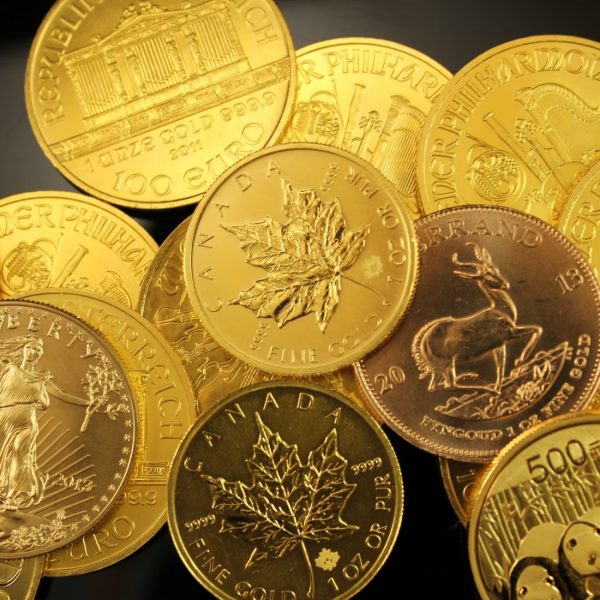
At present, no major economy operates under a classical gold standard. Every leading currency, from the pound to the dollar and euro, functions within a fiat framework. A return to gold backing would not be a minor policy adjustment; it would represent a fundamental restructuring of the global financial system.
Such a shift would likely require:
In an interconnected global economy with complex credit markets and digital payment systems, implementing such changes would be extraordinarily disruptive.
For these reasons, fiat currency remains the foundation of global finance. It supports modern banking, international trade, sovereign debt markets and digital payment networks. The scale and speed of today’s economy would be difficult to reconcile with a rigid commodity constraint.
However, fiat’s long-term sustainability is not automatic. It depends on disciplined monetary policy, credible institutions, political stability and – above all – public confidence. When trust in currency weakens, volatility rises. History demonstrates that monetary systems evolve when economic or political pressures make existing arrangements untenable.
Fiat currency may be dominant today, but its durability ultimately rests on the strength of the institutions and governance that sustain it.
Fiat currency is money that has value because a government declares it to be legal tender, not because it is backed by a physical commodity like gold or silver. Its value depends on public confidence, economic stability and central bank policy rather than intrinsic metal content.
Under a gold standard, money is backed by physical gold reserves and can be converted into gold. Under a fiat system, money is not backed by any commodity and its supply is controlled by central banks. Gold-backed systems prioritise stability and constraint, while fiat systems prioritise flexibility and economic management.
Governments use fiat currency because it allows greater flexibility in managing the economy. Central banks can adjust interest rates, increase liquidity and respond to financial crises without being limited by gold reserves. This flexibility supports modern banking systems and global trade.
Yes, fiat currency can lose significant value if confidence collapses. In cases of hyperinflation – such as Weimar Germany or Zimbabwe – excessive money creation and economic instability led to currency failure. However, in stable economies with credible institutions, fiat currencies generally maintain value.
Yes. Even in a fiat system, central banks hold gold reserves as a store of value and financial safeguard. Gold acts as a hedge against inflation and currency instability, which is why it remains relevant despite no longer formally backing modern currencies.

Share this post on:


Latest Posts:
Live Gold Spot Price in Sterling. Gold is one of the densest of all metals. It is a good conductor of heat and electricity. It is also soft and the most malleable and ductile of the elements; an ounce (31.1 grams; gold is weighed in troy ounces) can be beaten out to 187 square feet (about 17 square metres) in extremely thin sheets called gold leaf.
Live Silver Spot Price in Sterling. Silver (Ag), chemical element, a white lustrous metal valued for its decorative beauty and electrical conductivity. Silver is located in Group 11 (Ib) and Period 5 of the periodic table, between copper (Period 4) and gold (Period 6), and its physical and chemical properties are intermediate between those two metals.