






With the financial world as we know it crumbling all around us, it is difficult to know where to put your money to preserve its value and secure your wealth and future.
Gold has always been the obvious investment in unstable times, but the price of gold fell 20% at one point in September while the stock markets also tumbled. Does this signal the end of gold’s meteoric rise or does it represent a fantastic buying opportunity?
Here are the reasons why the time is right to buy gold now
- Despite its volatility in September, gold still ended the 3rd quarter up 11% – far outperforming any other asset class yet again
- Gold fell due to investors selling their gold holdings to pay for losses in other assets like equities and bonds. It has since recovered some of that lost ground
- The fundamental issues in the global economy which have pushed gold upwards have intensified with the Euro currency on the verge of collapse and several countries about to default on their debts
- Inflation is still rising due to increasing commodity prices, meaning cash in the bank loses value. Gold protects against the effects of high inflation
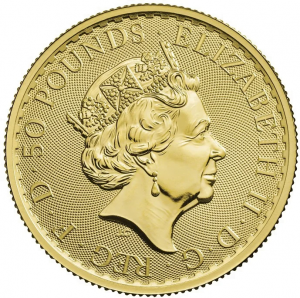
- There remains a distinct lack of gold supply. There have been no major discoveries in the past 5 years and demand for tax free gold coins far outstrips supply

So what can gold do for you?
Owning gold means you have portfolio insurance against any catastrophes threatening your investments. If there is a terror attack, currency collapse, escalating Government debt, high inflation or record unemployment – gold tends to increase in value as a safe haven asset.
Reduce your tax bills!
You could achieve a 40% discount off the gold price through tax relief whilst also protecting your profits from tax by purchasing gold bullion as part of your Self Invested Personal Pension (SIPP). Investing in certain UK gold coins is VAT exempt and Capital Gains Tax (CGT) free, a great opportunity to diversify AND reduce your Inland Revenue exposure.
How much should be invested and for how long?
Experts agree that to achieve a diversified portfolio, 10-30% of your liquid assets should be held in gold. This should ideally be held for a minimum of 3-5 years plus, but the great thing about gold is that it’s incredibly liquid and easy to sell at any time.
Gold’s outlook for next year
So what do we see for gold performance in 2011?
Already in the first month we’ve experienced a strong price correction downwards which has concerned some that we may be near the end of the current bull run. Firstly it’s important to put the recent price fall into perspective. Gold by its nature can be volatile and the price drop seen between the December price and now is around 6%. This represents less than 1-standard deviation move for a given month, for which the average volatility has been 4.9% over the previous 10 year period. As we say with all prospective investors, it’s important to view gold in the medium and long term rather than in the short term. All the market fundamentals are still very much in place for gold to continue its upward motion over the next year. The fact that we’ve had a huge influx of buyers in January, usually a very quiet month after Christmas spending, suggests that most see this as a buying opportunity.
If anything, the UK economy now feels worse than it did a year ago because we’re starting to feel the pinch from the tax hikes and spending cuts implemented in an attempt to take control of the spiralling national debt. The enormity of this task was made apparent just over a week ago when the official figures for national debt surpassed £1trillion for the first time ever and continues to increase at £7,000/second despite the new austerity measures. At the end of last year the Bank of England’s Mervyn King slashed UK growth forecasts from 3.5% down to 2.5% for 2011, and said inflation would remain high until 2012. In fact, on the 19th January figures revealed that December inflation soared. All help to improve gold’s outlook for next year.
to 3.7% from 3.3%, way above expectations and worryingly above that of Zimbabwe. Meanwhile the more recognised measure of Inflation RPI stood at 4.8% and real inflation at 6.46%, as the official inflation indices have been systematically doctored to under report real inflation by successive governments.
On the same day unemployment figures revealed youth unemployment jumped to the highest since records began. Meanwhile total unemployment increased 49,000 to 2.5m, suggesting the private sector is failing to create enough jobs to compensate for public sector casualties.
Finally, towards the end of the month Q4 2010 GDP figures revealed the UK economy has reverted back to contraction. If the first quarter of this year continues in that vein then we’ll be officially back in recession and our ‘double dip’ fears will be realised.
Download our FREE 7 step cheat sheet to successful gold investing here
Existing debt problems linger
On the bigger stage none of the European Sovereign debt problems of last year have gone away. Anecdotal evidence suggests that we’re likely to see a re-emergence of bailout requirements from the usual suspects of Spain, Portugal and Ireland.
The year has also started off where last year finished with terror threats and political unrest. There have been terror strikes in Moscow causing many deaths and the threat to the UK and other European countries remains high. Global political instability has worsened with the revolts in Egypt, Tunisia and Jordan.
Clearly then, the very fundamentals that have driven gold to such huge returns over the past decade are still very much in existence. Importantly, these economic and political problems are unlikely to go away any time soon – great for gold’s outlook.
So you should see the current price correction as a buying opportunity and view gold as a valuable store of wealth and portfolio insurance in what are very challenging times.
Happy investing for 2011!
Indian Festival Season
We typically see gold sales in India peak in October and November due to the metals popularity as a gift in the marriage and Indian festival season. This period sees the festivals of Navrati, Dussehra and Diwali. Generally the price of gold pushes higher during these months and then falls back after mid-December when its deemed bad luck for Indians to marry.
However, the continuing surge in the gold price has left gold jewellery beyond the means of the average man in India. This has seen jewellery demand down 25-30% on average across the country with the South particularly badly hit with a 30-40% decline.
Wed expect with these figures from the number 1 global consumer of gold jewellery that the price of the precious metal would have fallen over recent weeks.
 Although gold utilization within cities has fallen back, trade officials are up beat on rural demand because a helpful monsoon season has produced jumbo crops, improved cost realisation and rises in land value will boost consumption of physical gold. In general, about 60% of physical gold purchases are from smaller towns and villages.
With the Indian middle classes expanding, demand for non jewellery gold in the shape of investment coins and bars has in fact risen.
I think the general resilience of the gold price demonstrates the depth of gold demand that has now developed, and it shows that the price is less reliant on the Indian festival season.
My advice is to look at the medium term picture for gold which is very supportive of further significant gains due to the economic and political environment. This should mould your decision on investment rather than the short term picture. Clearly if you can buy on a dip day that always helps.
Happy festival season!
Soros the conductor
It’s a great power to have as an investor when the market reacts to your every word. George Soros is one of those investors, and when he recently talked down gold as a bubble the market took note.
However, reading between the lines Soros actually sees the gold price rising significantly over the foreseeable future, and this was supported by him increasing his gold holdings after his comments, albeit at a new slightly lower price! Maybe the bubble will burst one day but not in the next few years at least.
So why was Soros right to increase his gold holdings and have you missed the boat with gold at record highs?
1. Performing as expected
The fact that gold is continuing to perform well is reassuring to investors. As the ultimate safe haven asset it should be performing well in the worst economic crisis in living history. If gold had fallen 30% in the past year I wouldn’t see this as a buying opportunity, I’d be worried why it wasn’t ‘doing what it says on the tin’.
Download our Ultimate Insiders Guide to Gold. Free PDF here
2. Perfect global conditions for gold
If anything the global economic environment for gold investment is even stronger now than it was 2 years ago. We are continuing to see bank closures and restricted lending. This year has seen the shift from personal debt to Sovereign debt. Countries such as Greece, Spain, Portugal and Ireland are struggling to repay debts and the very existence of the Euro is under threat. As faith in traditional currencies diminishes, more investors are turning to gold as an alternative store of wealth.
3. Dealing with debt
You have to ask yourself the honest question – are we likely to see recovery any time soon? In the UK, where we have the instability of the first coalition Government since 1945, tax hikes and spending cuts will undoubtedly see a squeeze on disposable income. The abolition of child benefit for higher rate tax payers will hit the middle classes. The healing process is a slow one which is impossible without any pain. The interest on the UK’s debt alone amounts to £75b/year, more than we spend on defence and education combined.
4. Terror threat
Continued political unrest has uncovered terrorist threats targeting atrocities in the UK, France and Germany. North Korea has become a possible nuclear threat, and Middle Eastern tensions continue. It only takes one of these attempts of terror to succeed and equity markets around the world will plunge, sending gold higher.
5. No alternative
The alternatives to gold are poor right now. While many people like to hold their wealth in cash savings during economic downturns, the situation we find ourselves in means we receive far less in interest than the current inflation rate. A saver lucky to receive over 1% with their bank will find their money losing over 2% in value once inflation is considered. Many of these savers are now turning to gold so not all their liquid assets are held in Sterling, further supporting the gold price. Equity markets are unlikely to provide sustained returns with less money in consumers’ pockets to spend and they remain vulnerable to a double dip recession or terror attack. The risk of bonds not repaying capital (or even their coupon) has increased even with Sovereign debt bonds.
6. Inflation
There remains a major threat of high inflation once the global economy does start to recover. It is universally agreed that the combination of record low interest rates and huge stimulus programs is likely to lead to high inflation. In the UK, we have already injected £200b of Quantitative Easing (QE) into the economy with more likely over the coming months. This strategy has never been attempted in the UK so the outcome is unknown. Zimbabwe was the last nation to use QE and we all know where their inflation is! Gold has long been seen as a great way of protecting against inflation and currency weakness as it’s an independent tangible asset.
7. Supply/demand
Finally, one of the main forces which drives the price of an asset is supply and demand. This is where gold comes into its own. Demand is at unprecedented levels with new buyers discovering the asset class all the time. In the last couple of years pension, insurance and hedge funds have started buying physical gold. China has lifted restrictions on domestic investors to encourage more of the largest population on earth to buy gold. And the central banks themselves are looking to aggressively increase their holdings of gold to balance their reserves and reduce exposure to the Dollar.
 Supply on the other hand is flat to negative. The latest stats can be found on the World Gold Council’s website and there have been no major discoveries of gold over the past few years. It takes around 7-10 years from discovering gold to producing investment gold due to the bureaucracy and infrastructure needs. This means we enjoy a window into the next 7-10 years supply and right now there is no significant supply coming into the market.
So while it would have been perfect to buy gold 10 years ago, it’s still a great time to buy. As an investor, it’s all about having portfolio balance and gold provides a unique balance and protection in these turbulent times. That’s the same for experts like Soros, and the man on the street.
Is it the right time to buy gold?
London, October 1 – While most retail investors now recognise the benefits of gold within their portfolio, many are now asking us at Physical Gold Ltd whether it is the right time to buy gold with the current price of around $1,000/oz.
To analyse this we need to look at two elements; the underlying gold price, and the GBP/USD exchange rate.
Firstly, with the $ spot gold price hovering around the $1,000/oz level, we’re pretty near the highest ever level of $1,023 achieved last year. Then, the magic $1,000 fixing was only achieved twice before the price fell away sharply. This year, there seems to be far greater support at this level, laying a good foundation to move onwards and upwards from here.
The fundamentals which support the gold price are still firmly in place. The world economy still has some time to run in its current cycle with record debt levels and unemployment, and increasing talk of the dollar’s status as the world’s reserve currency being threatened.
Download our FREE Insider’s Guide to gold investing here
Gold supply and demand
The supply/demand equation also continues to support the rise of the yellow metal.
Supply figures still remain limited, down for the 3rd consecutive year, with predictions of further falls due to poor exploration investment. There was only 1 major new gold discovery in 2007 (defined as >2.0 million ounces), and none last year, which compares starkly with more than 15 a year being made a decade ago. This lack of new supply is exacerbated by the diminishing secondary supply due to more central banks hoarding and indeed building their gold reserves.
Demand on the other hand, was up 280% year on year for investment gold in the first quarter of this year, and continues to go from strength to strength in the current climate. With an increasing retail awareness of gold as an investment product with schemes such as Physical Gold’s SIPP partnership with Pointon York, we expect demand to remain robust. With limited supply and increasing demand, it could well be the right time to buy gold.
Even more poignant for a sustained gold run is the expectation once economies pull out of recession and into growth. Most literally, there will likely be an increase in industrial demand for gold, with its use in the electronics world. But it is the threat of inflation which will provide the most significant support for the gold price. With such a deep trough, and the associated size of the stimulus packages used to emerge from these, the ensuing growth may succumb to inflationary pressures. While this would erode the value of paper currencies, gold provides a protection against inflation.
Our price target in $ over the next 6 months is $1,400/oz.
Sterling value
The other crucial element for UK investors to consider is the value of Sterling. While the $ price of gold may be testing new highs, the price in Sterling is not near its peak. Currently trading at around £620/oz, it hit a peak this year of £687/oz. This is due to Sterling strengthening earlier in the year on the back of optimists seeing ‘green shoots’.
However, the housing figures that stimulated this appreciation are now being overshadowed by the fundamental weakness of the UK economy and the Pound is starting to fall back, and consequently increase the price of gold in the UK. People are realising that the steady house prices are more indicative of a lack of housing supply than an economic recovery.
The fundamentals that Physical Gold believes will contribute to a weakening Pound are record unemployment, record borrowing, and a weakening Government under pressure. There has even been talk of the Sovereign’s AAA rating being under threat, which would add further expense to our borrowings. We feel all these factors will contribute to Sterling falling back further against the Dollar.
Even more worrying, is the £200b of Quantitative Easing in the UK, already £50b over the original ceiling, with suggestions of another £25b injection to come. Combined with record low interest rates, this provides the lethal cocktail for high inflation which will further fuel demand for UK gold to protect the value of savings.
We feel it is still the right time to buy gold for UK retail investors to provide balance to their portfolios.
Our price target for UK investors over the next 6 months is £900/oz.
Physical Gold Limited is one of the premier providers of physical gold and other precious metal assets in the UK. With headquarters at Tower 42, in the City of London, they can be reached on 020 7060 9992.
Website: www www.physicalgold.com
SOURCE: Physical Gold Limited